
Study summary for food formulators
How much curdlan gives a sweet potato starch gel the firmest bite? Wang and colleagues tested five dry blends. The 95:5 sweet potato starch-to-curdlan blend produced the highest hardness and chewiness. Increasing curdlan to 10% or 20% of the blend raised hot-paste viscosity, but the cooled gels had larger pores and lost some of the firmness seen at 5%.
What 5% means in a formulation. The researchers dispersed 5 g of powder blend in 95 g of water. At the 95:5 ratio, a 100 g batch therefore contained 4.75 g sweet potato starch, 0.25 g curdlan powder and 95 g water. They heated the mixture to 95 °C, held it for 30 minutes, cooled it to 50 °C, held it for another 30 minutes and refrigerated it at 4 °C for 12 hours.
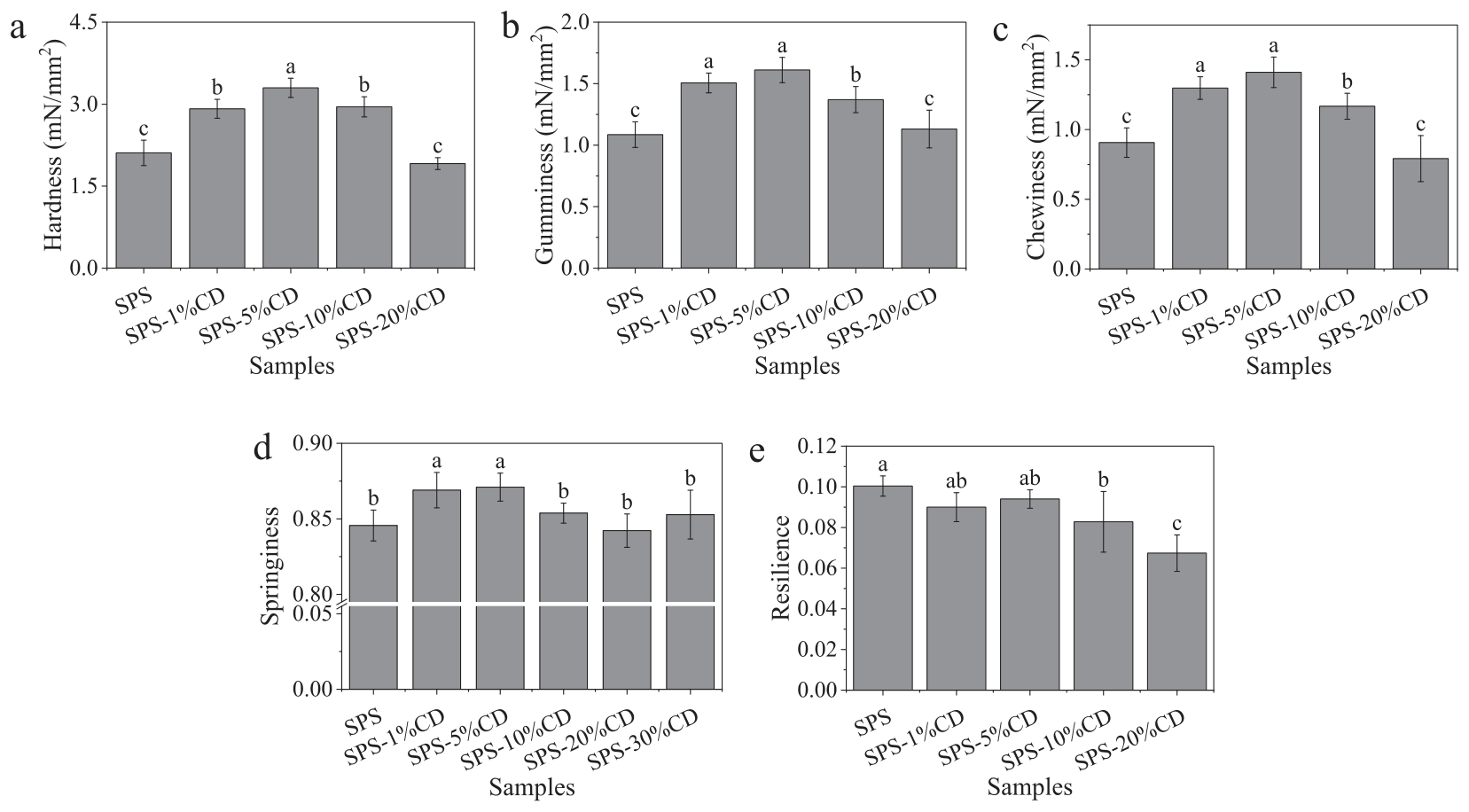
What changed. Compared with the starch-only control, the authors reported 56.43% higher hardness, 55.62% higher chewiness, 15.09% higher water retention and 18.31% higher gel thermal stability at the 95:5 ratio. One direct measure of the change in water mobility was the LF-NMR relaxation time for free water, which fell from 988.50 to 714.94 milliseconds.
Why the ratio matters. The authors propose that curdlan competes with starch for water during heating. During cooling, hydrogen bonding helps the two polymers form a tighter network. Microscopy showed the smallest pores at the 95:5 ratio in a separate test at 8% total solids. For developers of sweet potato noodles or vermicelli, this ratio offers a starting point for texture trials. The study measured laboratory gels. Cooking loss, strand breakage and shelf life in finished noodles still need product-specific testing. Download the full PDF file of the Curdlan enhances the structural stability and functional properties of sweet potato starch gels: Mechanistic insights from gelatinization, retrogradation, and multiscale characterization
Curdlan enhances the structural stability and functional properties of sweet potato starch gels: Mechanistic insights from gelatinization, retrogradation, and multiscale characterization
Yanfei Wanga,b,c,1, Ting Weib,1, Wenlong Zhangc, Xinyu Sunb, Litao Mad, Fenghuan Wanga, Qingjie Sunb, Jinwei Wangc, Man Lib,*, Fengwei Xiee,*
a School of Light Industry, Beijing Technology & Business University (BTBU), Beijing 100048, China
b College of Food Science and Engineering, Qingdao Agricultural University, Qingdao, Shandong 266109, China
c Shandong Ensign Industry Co., Ltd., Weifang, Shandong, 262409, China
d Institute of Chemistry, Henan Academy of Sciences, Zhengzhou, 450002, China
e Nottingham Ningbo China Beacons of Excellence Research and Innovation Institute, University of Nottingham Ningbo China, 211 Xingguang Road, Ningbo, 315048, China
1 Yanfei Wang and Ting Wei contributed equally. * Corresponding authors: Man Li (manli@qau.edu.cn) and Fengwei Xie (david.xie@nottingham.edu.cn).
International Journal of Biological Macromolecules, volume 330 (2025), article 148119. Received 20 August 2025, revised 24 September 2025, accepted 4 October 2025 and published online 5 October 2025. doi:10.1016/j.ijbiomac.2025.148119
© 2025 The Authors. Published by Elsevier B.V. The article and figures are reproduced under Creative Commons Attribution 4.0 International. CurdlanGum.com prepared the opening summary and reformatted the paper, equations, tables and figures for online reading.
Keywords · Sweet potato starch · Curdlan · Composite gel · Polysaccharide molecular interaction · Structural reorganization · Functional enhancements
Abstract
Sweet potato starch (SPS) gels often exhibit poor thermal stability and textural quality at low solid concentrations. This study investigated the mechanism by which curdlan (CD), a microbial β-(1,3)-glucan with unique thermoirreversible gelling properties, modulates the gelatinization, retrogradation, rheology, structure, and gel properties of SPS. Incorporating CD delayed SPS gelatinization, reduced gelatinization enthalpy (ΔH), and enhanced the thermal and shear stability of the paste, attributed to competitive hydration and robust SPS-CD interactions. Crucially, CD accelerated gel network formation during cooling, fostering stronger intermolecular hydrogen bonding (confirmed by FTIR redshift) and hydrophobic associations. Multi-scale structural analysis (SEM, SAXS) revealed that 5 % CD produced a composite gel with a significantly denser microstructure, smaller pore size, and higher fractal dimension. Consequently, this optimized structure yielded superior mechanical properties (increased storage modulus G′, hardness, chewiness), enhanced water retention (LF-NMR), and improved gel stability. Composite gels with 5 % CD exhibited optimal overall properties (hardness ↑ 56.43 %, chewiness ↑ 55.62 %, water retention ↑ 15.09 %, gel thermal stability ↑ 18.31 %). These findings demonstrate that CD effectively modifies the structural assembly dynamics and intermolecular interactions within SPS gels, providing a fundamental basis for developing high-quality, stable SPS-based gel products with enhanced functional attributes.
1. Introduction
Food gels constitute a vital component of human nutrition, as numerous dietary staples—including jelly, bread, and noodles—exist in gel form. These semi-solid polymeric materials, derived from food polysaccharides or proteins, exhibit soft and flexible mechanical properties [1]. Starch, a plant polysaccharide capable of forming three-dimensional networks through gelatinization, gelation, and retrogradation, serves as a fundamental building block for food gel development [2,3]. Sweet potato, a globally significant crop with annual production exceeding 90 million tons in China alone, yields starch (namely sweet potato starch, or SPS) comprising 50–80 % of the tuber’s dry matter [4]. This starch finds extensive application in gel-based products such as noodles, vermicelli, confectionery, and jellies [5,6]. Nevertheless, starch gels with low solid content face substantial limitations in stability and textural properties due to insufficient molecular cross-linking opportunities [7,8].
The incorporation of non-starch polysaccharides represents a viable strategy for enhancing the quality and stability of starch gel products [9]. Mesona chinensis Benth polysaccharide with a suitable concentration improved the microstructure and properties of SPS gels [10]. Medium-molecular-weight konjac glucomannan facilitates effective cross-linking within composite systems, thereby improving the network structure and functional properties of SPS gels [11]. High-concentration mangosteen polysaccharide blends with SPS substantially increase gel strength and hardness [10], while Huangjing polysaccharides promote greater structural order and density in SPS gels [12]. These findings collectively demonstrate that non-starch polysaccharides effectively mitigate the inherent limitations of SPS gels, particularly their poor textural properties and structural instability. Although blending with the aforementioned non-gelling, cold-set gelling, or alkali-induced thermo-set gelling non-starch polysaccharide has been widely explored to enhance the network structure and functional properties of SPS gels, issues of structural instability and poor texture remain unresolved.
Curdlan (CD), a linear microbial homopolysaccharide composed of β-(1,3)-glucan, serves as a multifunctional food additive with gelling, quality-enhancing, water-retention, emulsifying, and stabilizing properties [13–15]. Its unique thermal behavior enables the formation of thermally reversible gels at 55–60 °C and irreversible gels above 80 °C [16]. Notably, the irreversible gels maintain structural integrity at elevated temperatures and exhibit increased network density upon repeated heating cycles [1,17]. These exceptional thermoreversible and thermostable gelling characteristics position CD as an ideal modifier for improving the mechanical properties, extensibility, and stability of SPS gels in food applications.
Recent research demonstrates that CD can enhance the mechanical properties and thermal stability of rice starch gels [18], along with the freeze-thaw stability of SPS noodles [19]. However, the influence of CD on the structural and functional properties of low-concentration wet SPS gels and its underlying mechanism remains unexplored. We hypothesize that CD’s thermoirreversible gelation properties facilitate robust interactions with SPS, promoting enhanced cross-linking and intermolecular polymerization between biopolymers, thereby improving the quality attributes of high-moisture SPS gels. This study systematically investigated CD-SPS interactions during gel formation and their impact on gel microstructure and performance using multiple analytical techniques. The insights obtained may advance the development of superior-quality SPS gel-based food products.
2. Materials and methods
2.1. Materials
The food-grade sweet potato starch (SPS) used in this study, containing <0.1 % protein, 0.3 % fat, and 0.18 % ash, was supplied by Shucheng Dahai Starch Technology Co., Ltd. (Liuan, China). Curdlan (CD) with 87.6 % purity was obtained from Shandong Qidi Food Technology Co., Ltd. (Heze, China). All other chemicals and reagents were of analytical grade.
2.2. Preparation of SPS/CD composite system
SPS powder was blended with CD powder at weight ratios of 100:0, 99:1, 95:5, 90:10, and 80:20 (w/w), then dispersed in water under continuous stirring for 2 h to prepare 5 wt% composite suspensions. The suspensions underwent sequential thermal treatments: heating (25–95 °C), holding (95 °C, 30 min), cooling (95–50 °C), and a final holding stage (50 °C, 30 min) to obtain homogeneous SPS/CD composite solutions. The solutions were subsequently transferred to sealed bottles and stored at 4 °C for 12 h to form composite gels. The samples were designated as “SPS”, “SPS-1 %CD”, “SPS-5 %CD”, “SPS-10 %CD”, and “SPS-20 %CD”, corresponding to their respective CD content (0, 1, 5, 10, and 20 wt%).
2.3. Pasting properties
The pasting properties of the SPS/CD composite system were analyzed using a Rapid Visco Analyzer (RVA-Tec Master, Perten Instruments, Sweden). A 28 g aliquot of the homogeneous composite suspension (prepared as described in Section 2.2) was loaded into the RVA aluminum canister. The measurement protocol consisted of the following steps: (1) equilibration at 50 °C for 1 min, (2) heating to 95 °C at 12 °C/min, (3) holding at 95 °C for 2 min, (4) cooling to 50 °C at 12 °C/min, and (5) maintaining at 50 °C for 2 min.
2.4. Differential scanning calorimetry (DSC)
The thermal properties of the SPS/CD composite system were investigated by differential scanning calorimetry (DSC-1, Mettler Toledo, Switzerland) with a recirculating cooling system (METT FT900). Samples were prepared at SPS:CD mass ratios of 100:0, 99:1, 95:5, 90:10, and 80:20 (w/w). Approximately 4.5 mg of each mixture was combined with twice its weight of deionized water in a hermetically sealed DSC aluminum pan and equilibrated for 12 h at room temperature prior to analysis. The thermal scans were performed from 30 °C to 100 °C at a heating rate of 10 °C/min under a continuous ultra-pure nitrogen purge (20 mL/min), using an empty aluminum pan as reference. Data were processed using STARE software (Mettler Toledo, Switzerland).
2.5. Dynamic rheological measurements
The rheological properties of the SPS/CD composite system were characterized using a rotational rheometer (MCR302, Anton Paar, Austria) equipped with a 50 mm parallel-plate geometry at a fixed gap of 1 mm.
Dynamic temperature sweeps were conducted from 25 °C to 95 °C at a heating rate of 2 °C/min, applying a strain of 0.1 % (within the linear viscoelastic regime) and a frequency of 1 Hz. Liquid paraffin was used to minimize moisture evaporation.
Frequency sweep tests were performed at 25 °C over an angular frequency range of 0.1–100 rad/s with 1 % strain. Storage modulus (G′), loss modulus (G″), and loss tangent (tan δ) were recorded simultaneously.
2.6. Kinetic study of SPS/CD composite gel formation
To investigate the gelation kinetics of the SPS/CD composite system, constant-speed cooling experiments [20] were performed from 95 °C to 25 °C at a rate of 2 °C/min under oscillatory shear (1.0 % strain, 1 Hz frequency). A thin layer of liquid paraffin was applied to the sample periphery to prevent moisture loss.
The gelation process was quantitatively analyzed using two parameters: the average structure development rate (SDRa), representing the overall gel elasticity evolution, and the instantaneous structure development rate (vg), characterizing the local gel strength progression. These parameters were calculated according to Eqs. (1) and (2), respectively:
(1) SDRa = (G′end − G′ist) / (tend − tist)
(2) vg = dG′/dt
In these equations, G′ist and tist represent the storage modulus (Pa) and corresponding time (s) at the initial temperatures, respectively; G′end and tend denote the storage modulus (Pa) and corresponding time (s) at the final temperatures.
2.7. Scanning electron microscopy (SEM)
The fracture surface morphology of SPS/CD composite gels (8 wt% total concentration) was examined using a JSM-7500F scanning electron microscope (JEOL Ltd., Japan) at an accelerating voltage of 10 kV (1000× magnification). Prior to imaging, the samples were cryo-fixed in liquid nitrogen, sputter-coated with gold, and mounted on the sample stage.
2.8. Fourier transform infrared spectroscopy (FTIR)
FTIR spectra of SPS/CD composite gels were acquired from 500 to 4000 cm⁻¹ using a Nicolet iS10 spectrometer (Thermo Fisher Scientific, USA). Prior to analysis, the samples were flash-frozen in liquid nitrogen and lyophilized for 24 h. Spectra were collected at 4 cm⁻¹ resolution with 64 scans, using ambient air as the background reference.
2.9. Small-angle X-ray scattering (SAXS)
SAXS measurements of SPS/CD composite gels were conducted using a Nano-inXider instrument (Xenocs, France) with air as the background reference. Data were collected across a q-range of 0.003–0.368 Å⁻¹ (where q = 4πsinθ/λ, with λ being the X-ray wavelength and 2θ the scattering angle). Samples prepared in Section 2.2 were mounted on the sample stage and exposed for 5 min to acquire 2D scattering patterns, which were subsequently converted to 1D intensity profiles using the XSACT analysis software.
2.10. Low-field nuclear magnetic resonance (LF-NMR)
The water distribution in SPS/CD composite gels was analyzed using a low-field NMR spectrometer (NMI20-040V-I, Suzhou Niumag Analytical Instrument Co., Ltd., China). Samples prepared in Section 2.2 were equilibrated in NMR tubes at 4 °C for 12 h prior to measurement. Transverse relaxation times (T₂) were determined at a proton resonance frequency of 20 MHz with 4 scans, and data were processed using MultiExp Inv Analysis software.
2.11. Textural properties
The textural properties of SPS/CD composite gels were characterized using a texture analyzer (TA.XT PlusC, Stable Micro Systems Ltd., UK) equipped with a cylindrical P/0.5R probe. Samples were prepared as 25 mm diameter × 20 mm height cylinders following the protocol in Section 2.2. Texture profile analysis (TPA) was performed with seven replicates under the following conditions: test speed of 1 mm/s, 50 % strain, and 3 g trigger force.
2.12. Statistical analysis
All measurements were performed at least three times, with results reported as mean ± standard deviation. Statistical analysis was conducted using SPSS 27.0 software, with significance defined at p < 0.05.
3. Results and discussions
3.1. Formation of SPS/CD composite gel systems
3.1.1. Pasting properties
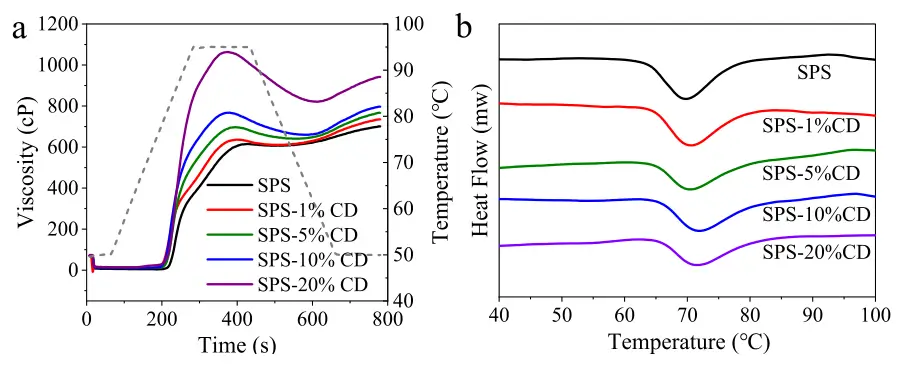
The effect of curdlan (CD) on the pasting properties of sweet potato starch (SPS) is shown in Fig. 1a. The viscosity of the SPS/CD composite system increased significantly with increasing CD content. During heating in water, starch undergoes hydration and granule swelling, leading to viscosity development that reaches a maximum (peak viscosity, PV) at elevated temperatures [21]. PV indicates the point at which starch granules have swollen sufficiently to begin rupturing and releasing amylose.
As shown in Table 1, the PV of SPS increased substantially upon CD incorporation. This enhancement can be attributed to CD’s thermal gelation properties, which promote hydrophobic association and gel network formation. The increased viscosity arises from two key mechanisms: (1) CD gelation within the starch paste directly contributes to higher PV, and (2) hydrophobic interactions between CD molecular chains expose additional hydroxyl groups, strengthening hydrogen bonding with water. This reduces water activity, enhances chain entanglement, and increases the effective amylose concentration in the starch paste.
The trough viscosity (TV) reflects the structural integrity of starch granules after extensive swelling, indicating the paste’s resistance to thermal and shear degradation [22]. The breakdown viscosity (BD) quantifies the disruption rate of swollen starch granules. TV and BD are the core and key auxiliary parameters for evaluating the paste’s thermal stability and shear resistance, respectively. Higher TV values and lower BD values correspond to better thermal stability and shear resistance. As shown in Table 1, although the incorporation of CD increased the BD of SPS, it significantly raised the TV, demonstrating enhanced thermal stability and shear resistance in the composite paste.
The final viscosity (FV) and setback viscosity (SB) reflect the retrogradation tendency of soluble amylose upon cooling and its stability [21,23]. As shown in Table 1, high CD concentrations (>20 %) increased the FV of SPS while minimal change in SB, suggesting that CD promotes short-term retrogradation.
| Parameter | SPS | SPS-1% CD | SPS-5% CD | SPS-10% CD | SPS-20% CD |
|---|---|---|---|---|---|
| PV (cP) | 635 ± 60a | 637 ± 3a | 708 ± 80ab | 782 ± 31b | 1056 ± 13c |
| TV (cP) | 590 ± 53a | 609 ± 9a | 651 ± 61ab | 687 ± 30b | 820 ± 24c |
| FV (cP) | 727 ± 60a | 734 ± 1a | 783 ± 76a | 810 ± 28a | 936 ± 17b |
| BD (cP) | 45 ± 13ab | 30 ± 6a | 57 ± 19b | 95 ± 15c | 236 ± 14d |
| SB (cP) | 136 ± 9a | 127 ± 8a | 132 ± 15a | 123 ± 14a | 116 ± 9a |
| To (°C) | 63.19 ± 0.17a | 63.77 ± 0.12b | 63.95 ± 0.15b | 64.76 ± 0.41c | 65.06 ± 0.14c |
| Tp (°C) | 69.26 ± 0.28a | 69.36 ± 0.16a | 69.56 ± 0.06a | 70.43 ± 0.36b | 70.57 ± 0.23b |
| Tc (°C) | 77.18 ± 0.31a | 77.61 ± 0.34b | 79.50 ± 0.58b | 79.96 ± 0.04b | 80.63 ± 0.18b |
| ΔH (J/g) | 14.48 ± 1.10a | 13.18 ± 0.09ab | 12.52 ± 1.13b | 10.61 ± 0.77c | 8.29 ± 0.69d |
Note: Data are presented in the form of mean ± standard deviation. Different letters (a, b, c, d, and e) mean significant difference (p < 0.05).
3.1.2. Thermal properties
The thermal properties of SPS with CD addition are shown in Fig. 1b, with key parameters including pasting onset temperature (To), peak temperature (Tp), conclusion temperature (Tc), and pasting enthalpy (ΔH) summarized in Table 1. Starch gelatinization is an endothermic process involving granule swelling, starch solubilization, dissociation of amylopectin double helices (crystalline structure), and eventual granule rupture [24]. The pasting temperatures indicate the ease of granule swelling and rupture, while ΔH reflects the extent of hydration and granule disintegration [25].
Increasing CD content in the composite system elevated To, Tp, and Tc values, demonstrating CD’s inhibitory effect on SPS gelatinization. This phenomenon primarily resulted from: (1) reduced SPS concentration upon CD addition [26], (2) competition between CD and SPS for water molecules during gelatinization, decreasing available free water, and (3) restriction of SPS granule expansion by the CD gel network. These combined factors delayed the gelatinization process, as reflected in the increased thermal transition temperatures (To, Tp, and Tc).
The progressive incorporation of CD into the composite system resulted in decreased ΔH values, suggesting that CD reduced the energy required for disrupting the semi-crystalline amylopectin structure. This effect stemmed from: (1) competitive water binding between SPS and CD, and (2) CD’s superior water absorption capacity, which diminished the system’s free water content. These observations align with reported behavior in potato starch/chitosan systems [27], confirming that CD enhances the susceptibility of SPS crystalline domains to thermal disintegration during gelatinization.
3.2. Dynamic rheological characteristics of SPS/CD composite gel system
3.2.1. Temperature sweep
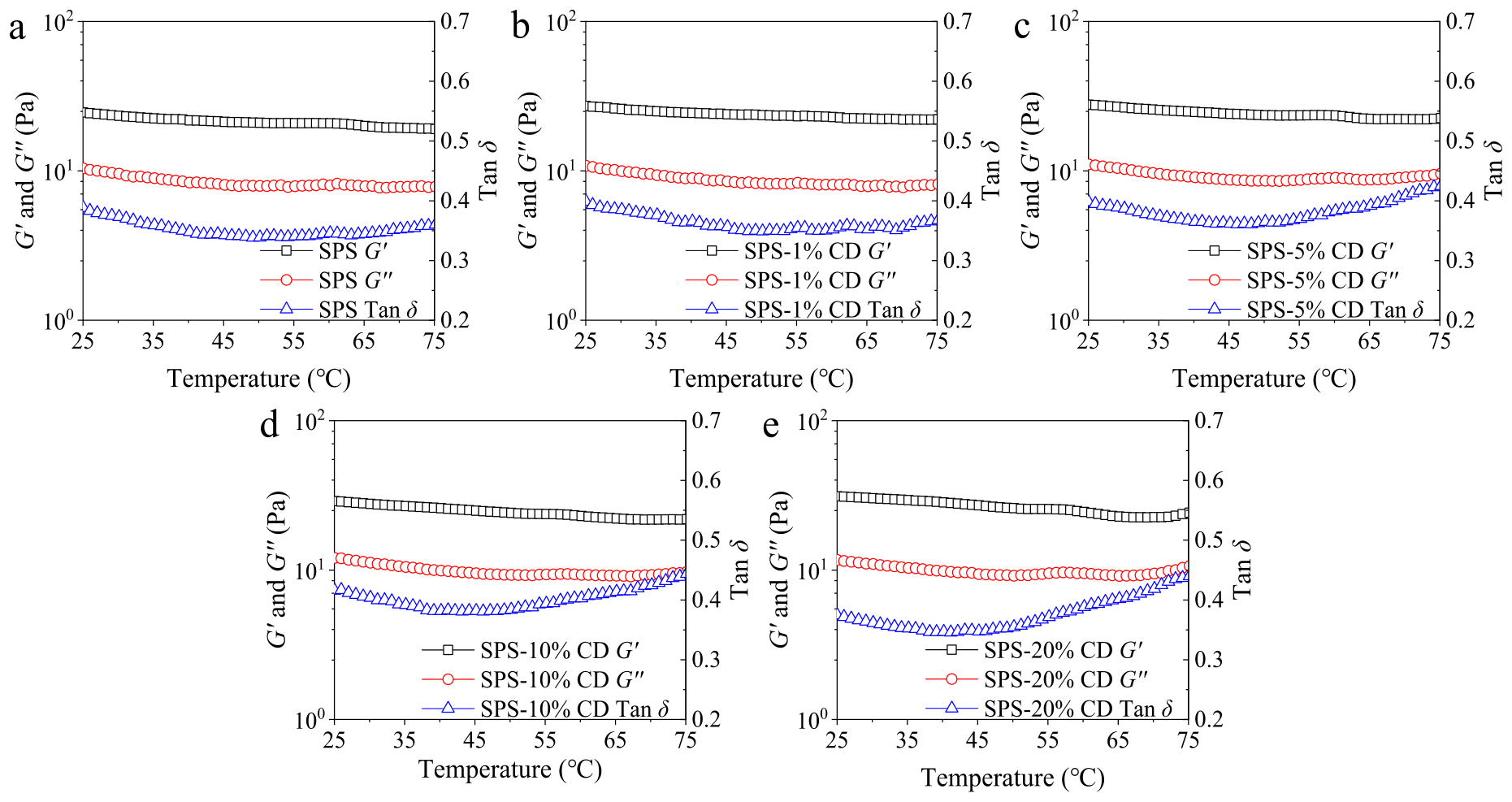
Fig. 2 illustrates the temperature-dependent variations of G′, G″, and tan δ for SPS/CD composite gels. The pure SPS sample exhibited typical viscoelastic gel behavior, with both G′ and G″ decreasing with increasing temperature while maintaining G′ > G″ throughout the temperature range, reflecting enhanced chain mobility and weakened intermolecular interactions at elevated temperatures [28]. All composite samples similarly maintained G′ > G″, confirming their gel state across the entire temperature range.
At lower temperatures, the G′ and G″ trends for CD-containing samples mirrored those of pure SPS, as SPS dominated the composite’s rheological behavior. However, at higher temperatures, the rate of modulus decrease diminished with increasing CD content, eventually transitioning to an increasing trend. This shift arises from the contrasting thermal responses of the components: SPS, a cooling-set gel, tends to solate at high temperatures, whereas CD, forming a thermally irreversible gel, maintains its structure and increasingly governs the viscoelastic properties.
The tan δ profiles exhibited an initial decrease followed by an increase with temperature, with the transition point shifting to lower temperatures at higher CD concentrations, indicating an expansion of the temperature range where CD dominates. Compared to pure SPS, the composite gels demonstrated higher G′ values, particularly at elevated temperatures, with a positive correlation to CD content. This enhanced thermal stability likely stems from (1) strengthened interchain hydrogen bonding (supported by FTIR) and (2) the formation of CD’s thermally stable gel network.
3.2.2. Frequency sweep
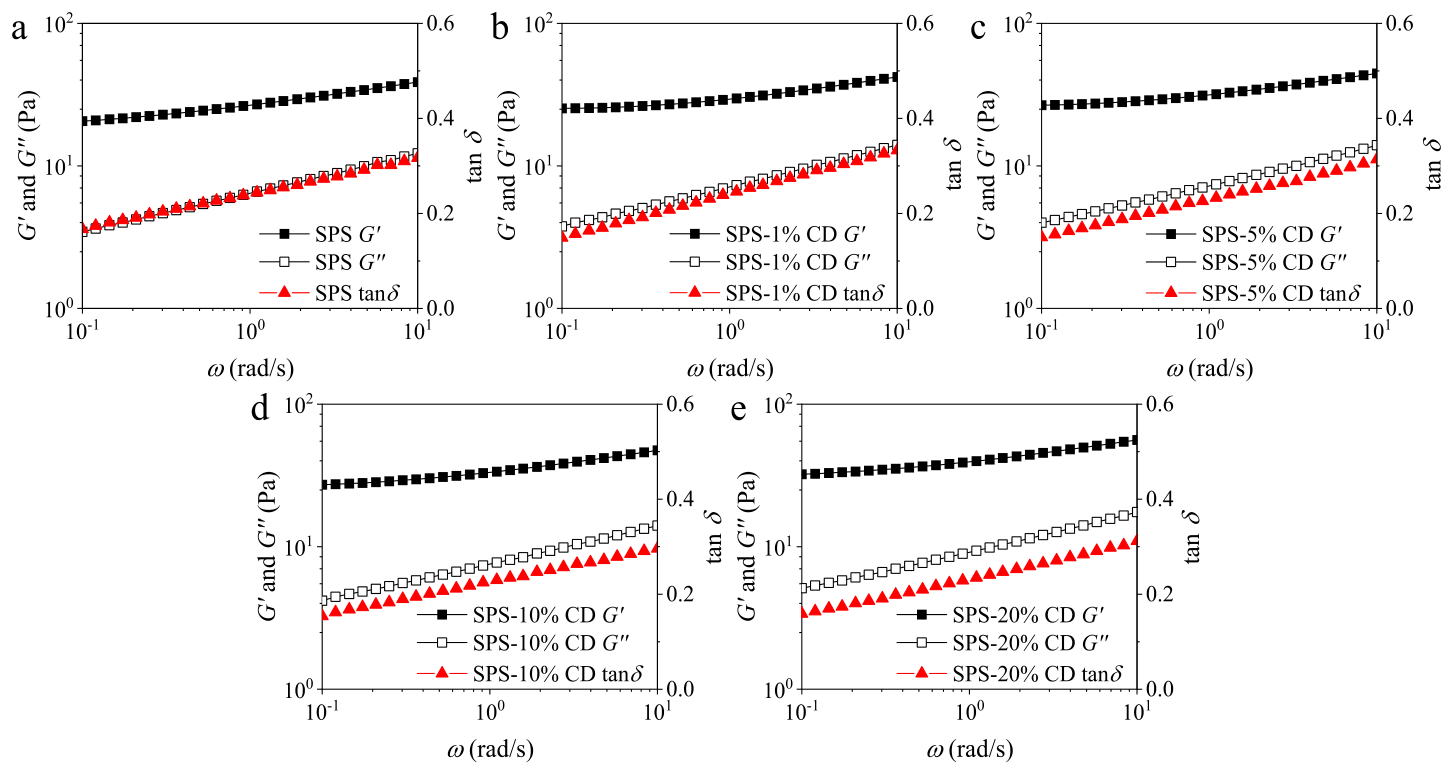
Fig. 3 presents the frequency-dependent profiles of G′, G″, and tan δ for SPS/CD composite gels. All samples exhibited G′ > G″ and tan δ < 1 throughout the frequency range, confirming their weak gel characteristics. Both moduli demonstrated significant frequency dependence, with G′ showing less pronounced variation than G″, consistent with the formation of a three-dimensional gel network in the composite system.
Compared to pure SPS, the composite samples containing CD exhibited higher moduli and lower tan δ values, demonstrating CD’s enhancement of the SPS gel’s mechanical properties. As the CD content increased, the G′ values, which reflect intermolecular crosslinking density, rose progressively, indicating CD promotes the formation of a more compact network structure in the SPS gel [27].
3.3. Structure formation kinetic of SPS/CD composite gels
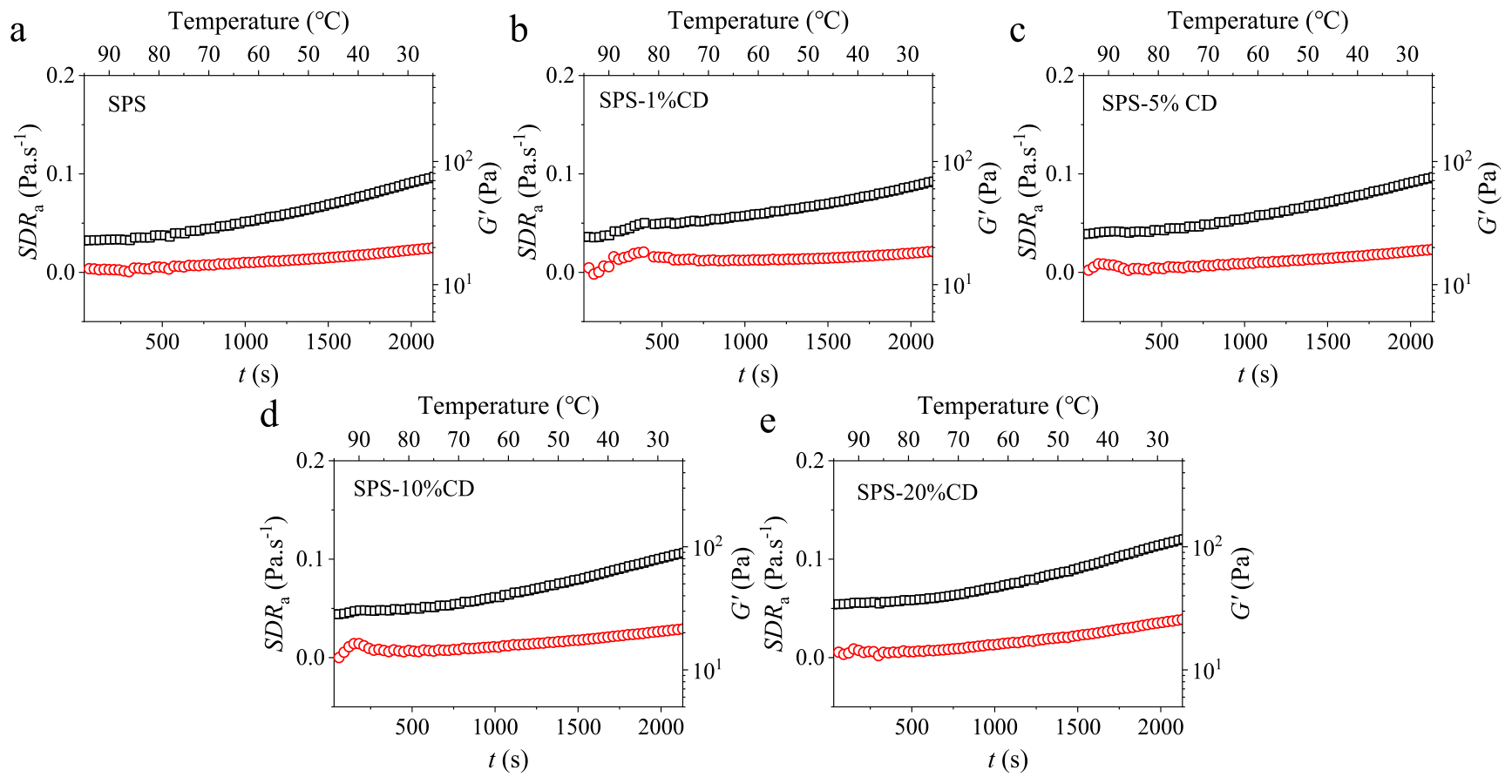
Fig. 4 presents the G′ and SDRa curves for SPS/CD composites with varying CD content. Given SPS’s cooling-induced gelation behavior and the critical influence of hardness, effective molecular chain binding, and junction zone strength on hydrogel G′, we employed the average G′ increase rate (SDRa) to analyze gel structure formation during cooling [18]. Pure SPS exhibited SDRa values consistently above zero, confirming its thermoreversible gelation. The CD-containing composites showed analogous G′ trends and positive SDRa values, demonstrating SPS’s dominant role in the composite system’s gelation behavior.
During the initial gel formation stage, SPS/CD composite gels exhibited higher SDRa values with greater fluctuations compared to pure SPS, likely attributable to CD’s heating-induced gelation properties. As temperature decreased further, the SDRa values for composite gels increased progressively, mirroring the behavior of pure SPS. For composites containing ≤5 % CD, minimal changes in SDRa values were observed. However, when CD content exceeded 5 %, SDRa values demonstrated a marked concentration-dependent increase. This enhancement may stem from CD’s ability to promote intermolecular hydrogen bonding during cooling, as CD’s gelation via hydrophobic interactions simultaneously exposes hydroxyl groups that facilitate hydrophilic interactions.
3.4. Characteristics of SPS/CD composite gels
3.4.1. FTIR analysis
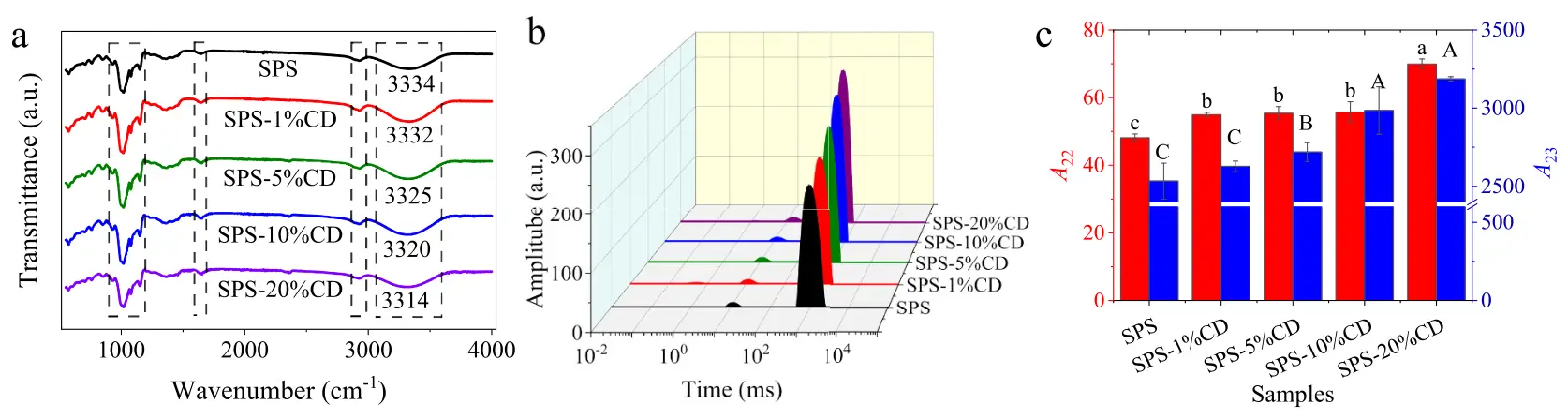
FTIR spectroscopy was employed to investigate molecular interactions between CD and SPS in the composite gels (Fig. 5a). The spectra revealed characteristic polysaccharide fingerprint regions, with distinct peaks at 930 cm⁻¹ (β-glycosidic bonds), 1015 cm⁻¹ (C–O stretching), and 1150 cm⁻¹ (C–O–C stretching) [29]. A prominent absorption peak at 2925 cm⁻¹ corresponded to C–H (CH₂) stretching and bending vibrations. The expected –OH stretching vibration (3600 cm⁻¹ ) [30], appeared as a broadened peak at 3300 cm⁻¹ , indicative of hydrogen bonding interactions that typically induce a red shift in hydroxyl group vibrations [31]. This spectral shift suggests significant intermolecular hydrogen bond formation between the components.
The FTIR spectra of composite gels exhibited consistent trends compared to pure SPS, with no new peaks emerging, indicating the absence of covalent bonding and minimal chemical structure alteration during gel formation [18]. Notably, the –OH stretching vibration progressively shifted to lower wavenumbers (from 3334 cm⁻¹ to 3314 cm⁻¹ ) with increasing CD content. This systematic redshift demonstrates that CD incorporation strengthens both intermolecular and intramolecular hydrogen bonding within the SPS gel network.
3.4.2. Water distribution of SPS/CD composite gels
Water state and activity significantly influence the textural and cooking properties of gel-based foods by modulating starch cross-linking within the gel network [32]. We employed low-frequency nuclear magnetic resonance (LF-NMR) spectroscopy to characterize water phase states and distribution in SPS/CD composite gels through transverse relaxation time (T₂) measurements.
Fig. 5b presents the T₂ distribution profiles, which reflect water-binding strength in the gels. The T₂ spectrum comprises three distinct populations:
- T₂₁ (0–10 ms): Strongly bound water tightly associated with macromolecules;
- T₂₂ (10–100 ms): Weakly bound water adsorbed on macromolecular surfaces; and
- T₂₃ (100–1000 ms): Free water entrapped within the gel network [3,33].
The peak area (A₂) corresponds to the relative content of each water state [34], providing quantitative insights into hydration dynamics.
As the CD content increased, T₂₃ decreased significantly while T₂₂ increased gradually, with no notable changes observed in T₂₁ (Table 2). The rise in T₂₂ suggests a reduction in the binding strength of water to macromolecules, attributed to hydrogen bonding between SPS and CD, which weakened SPS-water interactions [25]. Concurrently, the increase in A₂₂ (Fig. 5c) indicates that CD incorporation elevated the weakly bound water content within the gel network, despite decreasing water-macromolecule binding affinity. Moreover, the decline in T₂₃ and rise in A₂₃ demonstrate that CD reduced the mobility of immobilized water while increasing its content in the SPS gel network. These findings suggest that CD enhances the water retention capacity of SPS gels, likely due to CD’s strong water absorption properties, which facilitate water molecule penetration. This aligns with prior studies reporting improved water retention in potato starch gels through gelatin and ferulic acid incorporation [25,35].
| Sample | T21 (ms) | T22 (ms) | T23 (ms) |
|---|---|---|---|
| SPS | 0.50 ± 0.32a | 11.81 ± 0.56a | 988.50 ± 0.00a |
| SPS-1% CD | 0.44 ± 0.40a | 11.81 ± 0.56a | 840.67 ± 0.00b |
| SPS-5% CD | 0.96 ± 0.90a | 12.14 ± 0.56a | 714.94 ± 0.00c |
| SPS-10% CD | 0.82 ± 0.28a | 14.27 ± 0.66b | 608.02 ± 0.00d |
| SPS-20% CD | 0.97 ± 0.16a | 16.33 ± 0.77c | 439.76 ± 0.00e |
Note: Data are presented in the form of mean ± standard deviation. Different letters (a, b, c, d, and e) mean significant difference (p < 0.05).
3.4.3. Microstructure of SPS/CD composite gels
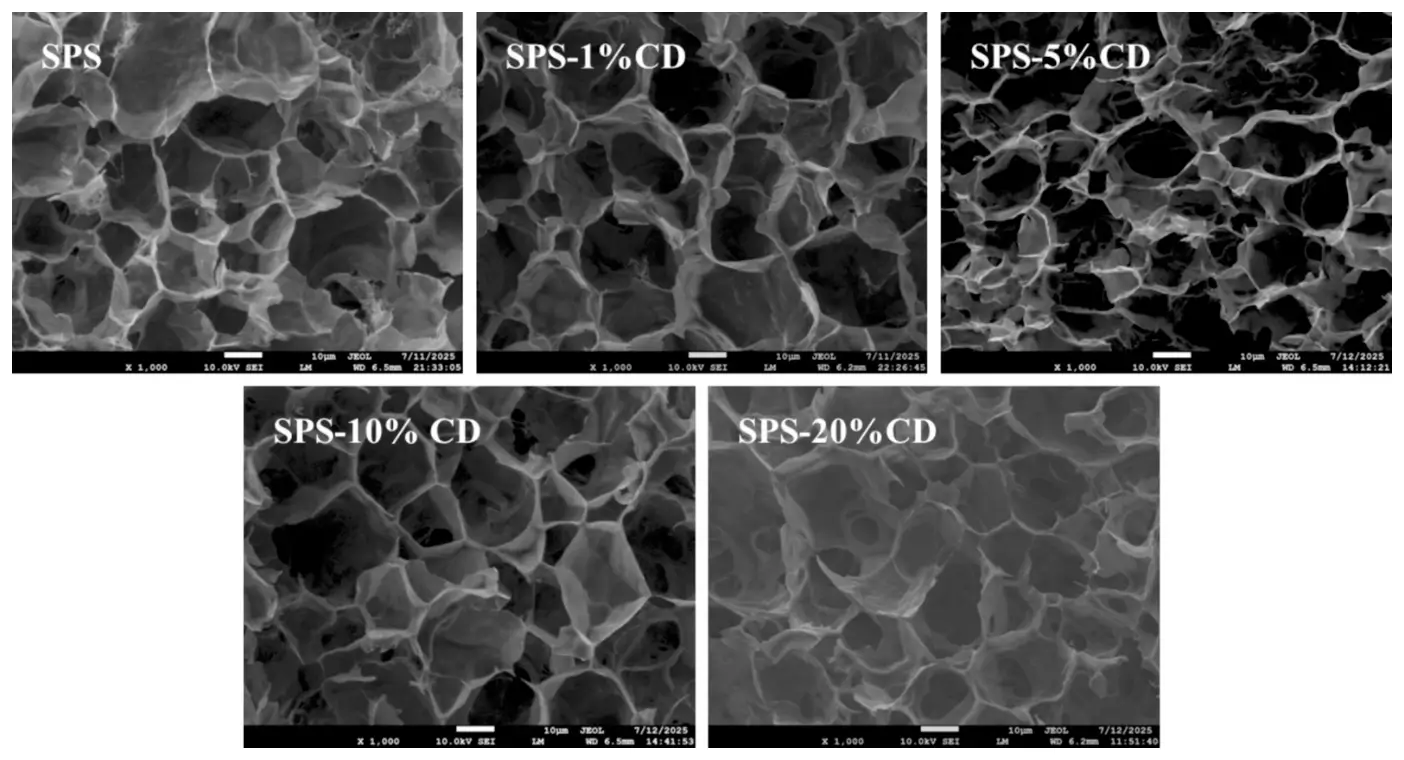
The effect of curdlan on the microstructure of SPS gels was investigated using SEM (Fig. 6). All samples exhibited a similar honeycomb-like structure with no residual SPS granules, confirming complete gelatinization of SPS in the composite system.
Upon gelatinization and retrogradation, SPS molecules formed a three-dimensional network that entrapped free water. During freeze-drying, this free water crystallized into ice and subsequently sublimated, leaving behind the porous honeycomb structure observed in the SEM images.
The hole size of the honeycomb structure initially decreased and then increased with higher CD addition levels, reaching a minimum at 5 % CD. The initial reduction in hole size likely stems from enhanced interactions between CD and SPS molecular chains, as well as the formation of a CD gel network, leading to a denser structure.
However, excessive CD addition (>5 %) appeared to inhibit SPS gel network formation, resulting in larger pores. These findings align with subsequent fractal structure and textural property analyses.
3.4.4. Fractal structure of SPS/CD composite gels
The SAXS profiles of SPS/CD composite gels are presented in Fig. 7a. The scattering intensity (I) exhibited a pronounced decrease with increasing scattering vector (q) in the low-angle region, indicating the formation of large-scale networks or enhanced intermolecular aggregation [36]. The Porod equation: I(q) ∝ q−α, where α represents the scattering exponent, describes this relationship. As shown in Fig. 7b, all SPS/CD composites displayed self-similar structures within a defined q-range, with α < 3 confirming their mass fractal nature.
Fig. 7c displays the fractal dimension (D), representing the density of the self-similar structure, for SPS/CD composite gels. Compared to pure SPS gel, minimal CD incorporation (≤5 %) substantially increased the D value, attributed to CD-SPS hydrogen bonding and interpenetrating network formation that enhanced structural compactness. However, when CD content exceeded 5 %, the thermally formed CD network impeded subsequent SPS gelation during cooling, resulting in progressively reduced D values.
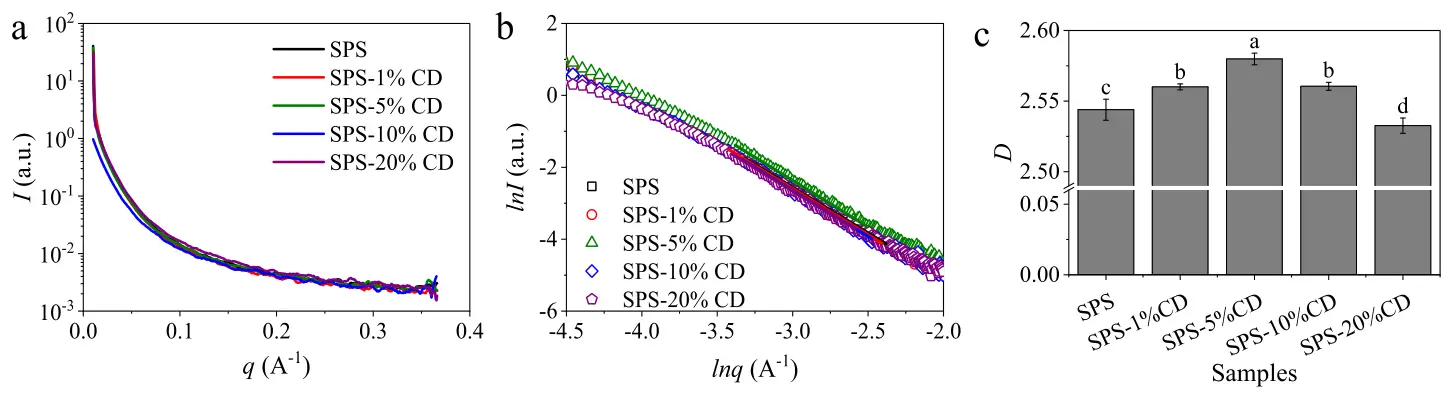
Editorial note from CurdlanGum.com. The published caption calls panel (a) “FTIR curves.” The panel plots scattering intensity against q, and section 3.4.4 identifies these data as SAXS. The FTIR spectra appear in Figure 5a.
3.4.5. Textural properties of SPS/CD composite gels
Fig. 8 presents the textural parameters (hardness, gumminess, chewiness, springiness, and resilience) of SPS/CD composite gels with varying ratios. Hardness, representing the force required for gel deformation [11], initially increased with CD content up to 5 % before declining. This biphasic response stems from competing mechanisms: at low concentrations, CD (a colloidal polysaccharide) (1) elevates effective starch concentration by competing for water, (2) enhances intermolecular interactions via hydrogen bonding with SPS, and (3) contributes its own gel network. However, beyond 5 % CD, excessive thickening effects may (1) hinder amylose leaching, (2) increase intermolecular spacing, and (3) reduce SPS chain entanglements, ultimately impairing network formation.
Gumminess and chewiness followed identical trends to hardness, peaking at 5 % CD. Resilience, indicating permanent deformation during initial compression [27], progressively decreased with CD incorporation, demonstrating enhanced pressure resistance in the composite gels.
3.4.6. Interaction of CD with SPS and its impact on gel structure and function
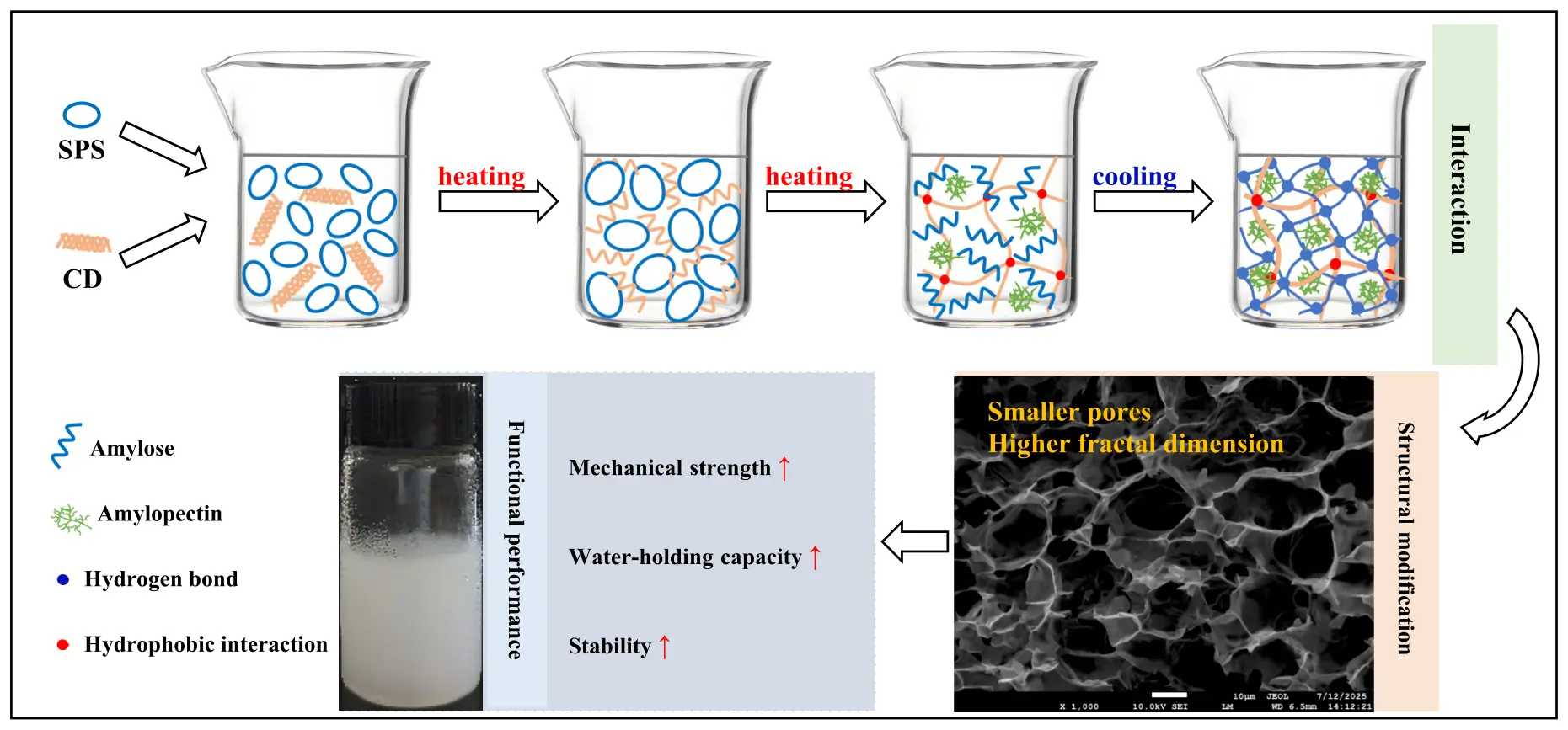
Based on the results discussed above, we propose a schematic representation of the SPS-CD interaction and the resulting structural modifications and functional performance enhancement, as depicted in Fig. 9. The gel formation process involves a dual role of CD: (1) During heating, CD competes with SPS for water hydration and forms a thermally-induced network that confined the swelling of SPS granules, thus delaying the gelatinization process of SPS. (2) During cooling, the greater number of hydroxyl groups that expose during CD’s gelation via hydrophobic interactions form extensive intermolecular hydrogen bonding with leached amylose and amylopectin chains, ultimately accelerating the formation of the gel network.
Based on the complex interactions described above, the addition of CD at an appropriate concentration (5 %) promotes the formation of a denser microstructure with smaller pores and a higher fractal dimension by facilitating CD-SPS hydrogen bonding and forming an interpenetrating network. However, excessive CD addition results in an overly developed thermally-induced CD network that impedes the subsequent formation of the SPS network during the cooling process, ultimately yielding a looser microstructure with larger pores and a reduced fractal dimension.
These profound structural modifications directly translate into the evolution of functional performance. The mechanical strength, (G′, hardness, and chewiness), water-holding capacity, and stability (including the thermal stability and shear resistance of SPS paste, as well as thermal stability of the gel) were all enhanced with increasing CD concentration. The optimum overall performance was achieved at a 5 % CD addition, which corresponds to the finest microstructure characterized by the smallest pores and the highest fractal dimension.
4. Conclusion
This study provides comprehensive mechanistic insights into how curdlan (CD), a thermoirreversible gelling β-glucan, modifies the structural assembly and functional performance of sweet potato starch (SPS) gels. CD competes with SPS for water during gelatinization, delaying granule swelling and reducing the enthalpy required for crystalline disruption, while simultaneously forming an initial gel network via hydrophobic association. During the critical cooling/retrogradation phase, CD promotes extensive intermolecular hydrogen bonding with leached amylose and amylopectin chains, as evidenced by FTIR spectroscopy and altered water dynamics (LF-NMR). This synergistic interaction accelerates the formation of a cohesive gel network, culminating in a significantly denser microstructure with reduced pore size and higher fractal dimension, particularly at the optimal 5 % CD inclusion level. These profound structural modifications directly translate to enhanced functional properties: superior mechanical strength (increased G′, hardness, chewiness), improved water-holding capacity, and greater overall gel stability. The findings establish that targeted incorporation of CD fundamentally alters the molecular interactions and hierarchical structure development within SPS gels. This knowledge offers a robust scientific foundation for designing novel SPS-based gel products with tailored textures, extended shelf-life, and improved quality, meeting the demand for stable, high-moisture starch foods.
CRediT authorship contribution statement
Yanfei Wang: Validation, Resources, Methodology, Investigation, Funding acquisition, Data curation, Conceptualization, Writing – original draft. Ting Wei: Visualization, Validation, Methodology, Investigation, Formal analysis, Data curation. Wenlong Zhang: Resources, Methodology. Xinyu Sun: Investigation, Data curation. Litao Ma: Methodology, Funding acquisition. Fenghuan Wang: Resources, Methodology. Qingjie Sun: Methodology, Formal analysis. Jinwei Wang: Resources, Methodology. Man Li: Visualization, Supervision, Resources, Funding acquisition, Writing – review & editing. Fengwei Xie: Visualization, Supervision, Methodology, Conceptualization, Writing – review & editing.
Declaration of competing interest
The authors declare the following financial interests/personal relationships which may be considered as potential competing interests: Yanfei Wang reports financial support was provided by National Natural Science Foundation of China. Man Li reports financial support was provided by National Natural Science Foundation of China. Man Li reports financial support was provided by Special Funds for Taishan Scholar Projects of Shandong Province. If there are other authors, they declare that they have no known competing financial interests or personal relationships that could have appeared to influence the work reported in this paper.
Acknowledgements
This work was financially supported by the National Natural Science Foundation of China (Grant No. 32302145), the Natural Science Foundation of Shandong Province (Grant No. ZR2025MS409), the National Natural Science Foundation of China (Grant No. 32372262), and the Special Funds for Taishan Scholar Projects of Shandong Province (No. tsqn202408234). L. Ma acknowledges the support via an International Science and Technology Cooperation (Cultivation) Project of Henan Province (242102520053).
Data availability
Data will be made available on request.
References
- J. Wang, Y. Liu, M. Zhao, Q. Sun, M. Li, Y. Wang, Y. Zhang, F. Xie, Effect of curdlan addition and thermal sterilization on the structural and properties of rice starch gel, Int. J. Biol. Macromol. 271 (2024) 132593, https://doi.org/10.1016/j.ijbiomac.2024.132593.
- F. Wang, R. Ma, J. Zhu, J. Zhan, J. Li, Y. Tian, Physicochemical properties, in vitro digestibility, and pH-dependent release behavior of starch-steviol glycoside composite hydrogels, Food Chem. 434 (2024) 137420, https://doi.org/10.1016/j.foodchem.2023.137420.
- J. Huang, C. Ying, X. Li, J. Kuang, J. Li, T. Huang, J. Li, Study on structure, properties and formation mechanism of cassava starch-faba bean protein heat-induced gel, Int. J. Biol. Macromol. 300 (2025) 140216, https://doi.org/10.1016/j.ijbiomac.2025.140216.
- M.K. Alam, A comprehensive review of sweet potato (Ipomoea batatas [L.] Lam): revisiting the associated health benefits, Trends Food Sci. Technol. 115 (2021) 512–529, https://doi.org/10.1016/j.tifs.2021.07.001.
- C. Ma, J. Sun, R. Yue, Y. Zhang, Y. Zhang, F. Niu, H. Zhu, W. Zhang, S. Deng, Quality correlation network analysis between the multiscale microstructure, physicochemical properties of sweetpotato starch, cooking properties, and textural properties of sweetpotato starch noodles, LWT-Food Sci. Technol. 206 (2024) 116540, https://doi.org/10.1016/j.lwt.2024.116540.
- Y. Li, L. Niu, L. Wu, D. Li, C. Sun, J. Xiao, Polyphenol-fortified extruded sweet potato starch vermicelli: slow-releasing polyphenols is the main factor that reduces the starch digestibility, Int. J. Biol. Macromol. 253 (2023) 127584, https://doi.org/10.1016/j.ijbiomac.2023.127584.
- D. Donmez, L. Pinho, B. Patel, P. Desam, O.H. Campanella, Characterization of starch-water interactions and their effects on two key functional properties: starch gelatinization and retrogradation, Curr. Opin. Food Sci. 39 (2021) 103–109, https://doi.org/10.1016/j.cofs.2020.12.018.
- X. Wei, G. Ren, X. Duan, L. Li, W. Cao, J. Chen, X. Sun, L. Zhao, W. Liu, Quality enhancement of sweet potato puree oat mixed-grain noodles based on curdlan: recommended addition level and mechanism, Int. J. Food Sci. Technol. 59 (7) (2024) 4892–4906, https://doi.org/10.1111/ijfs.17218.
- N. Xu, P. Yu, H. Zhang, X. Ji, P. Wu, L. Zhang, X. Wang, Effects of Laminaria japonica polysaccharide and coumaric acid on pasting, rheological, retrogradation and structural properties of corn starch, Int. J. Biol. Macromol. 263 (2024) 130343, https://doi.org/10.1016/j.ijbiomac.2024.130343.
- Y. Ren, L. Jiang, W. Wang, Y. Xiao, S. Liu, Y. Luo, M. Shen, J. Xie, Effects of Mesona chinensis Benth polysaccharide on physicochemical and rheological properties of sweet potato starch and its interactions, Food Hydrocoll. 99 (2020) 105371, https://doi.org/10.1016/j.foodhyd.2019.105371.
- T. Li, Y. Zhang, X. Yu, J. Chen, C. Wang, D. Zhang, C. Ma, Konjac glucomannan molecular weight: a critical factor in shaping the physicochemical and digestive properties of sweet potato starch matrices, Int. J. Biol. Macromol. 305 (2025) 140953, https://doi.org/10.1016/j.ijbiomac.2025.140953.
- M. Zhang, J.B. Golding, P. Pristijono, Y. Yu, P. Wang, G. Chen, Y. Li, J. Si, H. Yang, Effects of Huangjing polysaccharides on the properties of sweet potato starch, LWT–Food Sci. Technol. 204 (2024) 116474, https://doi.org/10.1016/j.lwt.2024.116474.
- S.A. Ganie, L.J. Rather, M.A. Assiri, Q. Li, Recent innovations (2020–2023) in the approaches for the chemical functionalization of curdlan and pullulan: a mini-review, Int. J. Biol. Macromol. 260 (2024) 129412, https://doi.org/10.1016/j.ijbiomac.2024.129412.
- L. Zhang, X. Han, K.-J. Guo, Y.-P. Ren, Y. Chen, J. Yang, J.-Y. Qian, Pickering emulsion gels with curdlan as both the emulsifier and the gelling agent: emulsifying mechanism, gelling performance and gel properties, Food Chem. 465 (2025) 141971, https://doi.org/10.1016/j.foodchem.2024.141971.
- G. Hou, Y. Han, F. Zhou, Y. Li, Z. Zou, L. Zhang, B. Zheng, Enhancing pork meat batter with curdlan gum-guar gum composite microgels: impact of fat replacer on gel properties, water distribution, and sensory perception, Food Chem. 470 (2025) 142706, https://doi.org/10.1016/j.foodchem.2024.142706.
- M. Xiao, M. Jiang, K. Wu, H. Yang, X. Ni, W. Yan, G.O. Phillips, F. Jiang, Investigation on curdlan dissociation by heating in water, Food Hydrocoll. 70 (2017) 57–64, https://doi.org/10.1016/j.foodhyd.2017.03.018.
- L. Zhang, L.-N. Yue, J.-Y. Qian, X.-L. Ding, Effect of curdlan on the rheological properties of hydroxypropyl methylcellulose, Foods 10 (1) (2021), https://doi.org/10.3390/foods10010034.
- J. Wang, Q. Ma, P. Cai, X. Sun, Q. Sun, M. Li, Y. Wang, L. Zhong, F. Xie, On the investigation of composite cooling/heating set gel systems based on rice starch and curdlan, Food Chem. 438 (2024) 137960, https://doi.org/10.1016/j.foodchem.2023.137960.
- X. Li, S. Liu, L. Niu, S. Hu, C. Sun, Z. Zeng, J. Xiao, Improvement in quality of frozen sweet potato starch vermicelli during freeze-thaw cycles by curdlan addition and its mechanism, LWT-Food Sci. Technol. 214 (2024) 117161, https://doi.org/10.1016/j.lwt.2024.117161.
- H. Kastner, K. Kern, R. Wilde, A. Berthold, U. Einhorn-Stoll, S. Drusch, Structure formation in sugar containing pectin gels – influence of tartaric acid content (pH) and cooling rate on the gelation of high-methoxylated pectin, Food Chem. 144 (2014) 44–49, https://doi.org/10.1016/j.foodchem.2013.06.127.
- R. Kumar, K.J. Kumar, Exploring effect of uniform dry ball-milling duration on pasting and rheological properties of pink potato and maize starch mixtures, Int. J. Biol. Macromol. 273 (2024) 132900, https://doi.org/10.1016/j.ijbiomac.2024.132900.
- H. Zhang, H. Sun, M. Ma, T. Mu, Dough rheological properties, texture, and structure of high-moisture starch hydrogels with different potassium-, and calcium-based compounds, Food Hydrocoll. 137 (2023) 108337, https://doi.org/10.1016/j.foodhyd.2022.108337.
- J. Tu, B. Adhikari, M.A. Brennan, P. Cheng, W. Bai, C.S. Brennan, Interactions between sorghum starch and mushroom polysaccharides and their effects on starch gelatinization and digestion, Food Hydrocoll. 139 (2023) 108504, https://doi.org/10.1016/j.foodhyd.2023.108504.
- X. Sun, Y. Liu, X. Li, L. Chen, M. Li, Q. Sun, F. Wang, J. Hao, F. Xie, Y. Wang, Curdlan inclusion modifies the rheological properties and the helix-coil transition behavior of gelatin and increases the flexibility of gelatin films, Food Chem. 469 (2025) 142567, https://doi.org/10.1016/j.foodchem.2024.142567.
- N. Meng, Z. Kang, P. Jiang, Y. Liu, M. Liu, Q. Li, Effects of fucoidan and ferulic acid on potato starch: pasting, rheological and retrogradation properties and their interactions, Food Hydrocoll. 150 (2024) 109635, https://doi.org/10.1016/j.foodhyd.2023.109635.
- Y. Zhang, Y. Wang, B. Yang, X. Han, Y. He, T. Wang, X. Sun, J. Zhao, Effects of zucchini polysaccharide on pasting, rheology, structural properties and in vitro digestibility of potato starch, Int. J. Biol. Macromol. 253 (2023) 127077, https://doi.org/10.1016/j.ijbiomac.2023.127077.
- X. Zhang, X. Mao, H. Han, S. Wang, X. Lei, Y. Li, Y. Ren, Effect of chitosan and its derivatives on food processing properties of potato starch gel: based on molecular interactions, Food Hydrocoll. 159 (2025) 110596, https://doi.org/10.1016/j.foodhyd.2024.110596.
- Y. Wang, J. Wang, Q. Sun, X. Xu, M. Li, F. Xie, Hydroxypropyl methylcellulose hydrocolloid systems: effect of hydroxypropy group content on the phase structure, rheological properties and film characteristics, Food Chem. 379 (2022) 132075, https://doi.org/10.1016/j.foodchem.2022.132075.
- H. Wei, Q. Ma, R. Gao, J. Fan, M. Zhao, M. Li, Q. Sun, X. Xu, F. Xie, Y. Wang, Tailoring hydroxypropyl starch films with curdlan for enhanced properties for edible packaging, Int. J. Biol. Macromol. 274 (2024) 133260, https://doi.org/10.1016/j.ijbiomac.2024.133260.
- N.J. Elizondo, P.J.A. Sobral, F.C. Menegalli, Development of films based on blends of Amaranthus cruentus flour and poly(vinyl alcohol), Carbohydr. Polym. 75 (4) (2009) 592–598, https://doi.org/10.1016/j.carbpol.2008.08.020.
- X. Li, Y. Han, Y. Chen, W. Liu, L. Li, J. Chen, G. Ren, X. Li, Z. Luo, L. Pan, J. Zhang, X. Duan, W. Cao, Effects of chlorogenic acid on the physicochemical properties, 3D printing characteristics, and anti-digestive properties of sweet potato starch, Int. J. Biol. Macromol. 288 (2025) 138726, https://doi.org/10.1016/j.ijbiomac.2024.138726.
- Y. Fu, J. Zhou, D. Liu, J.M. Castagnini, F.J. Barba, Y. Yan, X. Liu, X. Wang, Effect of mulberry leaf polysaccharides on the physicochemical, rheological, microstructure properties and in vitro starch digestibility of wheat starch during the freeze-thaw cycles, Food Hydrocoll. 144 (2023) 109057, https://doi.org/10.1016/j.foodhyd.2023.109057.
- Z. Zhang, Q. Liu, L. Zhang, W. Liu, A. Richel, R. Zhao, H. Hu, Potato dietary fiber effectively inhibits structure damage and digestibility increase of potato starch gel due to freeze-thaw cycles, Int. J. Biol. Macromol. 279 (2024) 135034, https://doi.org/10.1016/j.ijbiomac.2024.135034.
- Y. Lin, Z. Wang, C. Shi, L. Han, Q. Yu, Potentially texture-modified food for dysphagia: impact of Polygonatum sibiricum polysaccharide addition on gelling properties, microstructure and digestibility of bovine tendon collagen-cassava starch composite gels, Food Hydrocoll. 164 (2025) 111164.
- Y. Li, Z. Wang, Y. Qin, N. Ji, L. Xiong, Q. Sun, Preparation of porous-structured flat potato starch noodles with gelatin for shortening cooking time, Food Hydrocoll. 149 (2024) 109573, https://doi.org/10.1016/j.foodhyd.2023.109573.
- M. Tomsic, F. Prossnigg, O. Glatter, A thermoreversible double gel: characterization of a methylcellulose and κ-carrageenan mixed system in water by SAXS, DSC and rheology, J. Colloid Interface Sci. 322 (1) (2008) 41–50, https://doi.org/10.1016/j.jcis.2008.03.013.