
Curdlan for Sausages
- Firmness & Elasticity
- Moisture Retention
- Heat-Set Gel Stability
- Custom Gel Strength
Home / Applications / Curdlan gum for Sausages
CURDLAN IN MEAT PROCESSING
What Does Curdlan Do in Sausages?
Curdlan for sausages helps food manufacturers improve firmness, elasticity, moisture retention, and cooking performance in heat-treated meat products. As a fermentation-derived food hydrocolloid, curdlan forms a gel network during heating. This property makes it useful for cooked sausages, frankfurters, emulsified meat products, and selected low-fat sausage formulations.
Curdlan is a linear β-1,3-glucan (CAS No. 54724-00-4) composed of glucose units linked by β-1,3-glycosidic bonds. Unlike hydrocolloids used mainly to increase viscosity, curdlan is valued for its heat-induced gelation. Depending on the heating temperature and processing conditions, it can form thermoreversible or thermoirreversible gels. These structures can help support the texture and moisture distribution of cooked sausage products.
In emulsified sausage manufacturing, meat proteins, fat, water, salt, and other ingredients form a complex food matrix. Adding curdlan can change the gel structure, water mobility, hardness, and elasticity of the finished product. A study on Frankfurter sausages found that curdlan reduced cooking loss and improved water binding under the tested conditions. The researchers identified 0.3% as a suitable addition level for their specific formulation.
The final performance depends on curdlan concentration, gel strength, meat protein content, salt level, dispersion method, and heating conditions. Sausage manufacturers should select the appropriate grade through formulation trials rather than relying on a fixed dosage.
BSH Ingredients supplies food-grade curdlan with different gel-strength specifications for sausage manufacturers, meat processors, and food ingredient distributors. This guide covers the primary gelation mechanism, formulation methods, research findings, international food additive regulations, and bulk curdlan grade selection.
SAUSAGE FORMULATION BENEFITS
Key Benefits of Curdlan in Sausage Manufacturing
Curdlan helps sausage manufacturers control texture, moisture, and cooking performance through heat-induced gelation. In cooked sausages, frankfurters, and emulsified meat products, its performance depends on the formulation, gel strength, concentration, and thermal processing conditions.
Curdlan can improve firmness, elasticity, and chewiness by strengthening the gel structure during heating. It helps manufacturers control the bite of cooked and emulsified sausages.
Curdlan helps reduce water mobility within the meat protein matrix, supporting moisture retention during cooking. This can help limit moisture loss and improve consistency.
Research on cooked sausages shows that curdlan can reduce cooking loss through improved water binding & gel formation. Lower processing losses support higher cooking yield.
Curdlan forms heat-induced gels that help maintain sausage structure during cooking. Under suitable heating conditions, it can create a stable, thermoirreversible gel network.
In emulsified sausages, curdlan can help stabilize the meat protein, water, and fat system. Its gel network may limit separation and support more uniform finished texture.
Curdlan can help adjust texture in reduced-fat sausages. Research has also explored specially prepared curdlan-based microgels as partial fat replacers.
Curdlan Application in Different Types of Sausages

Frankfurters & Hot Dogs
Frankfurters & Hot Dogs
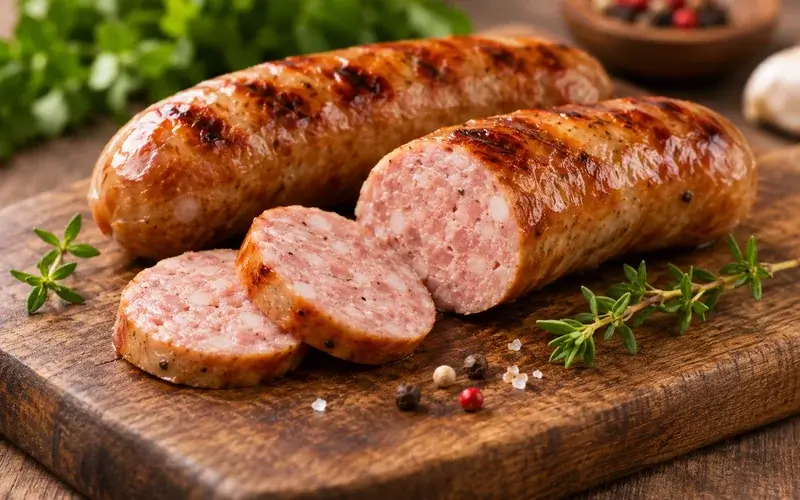
Pork Sausages
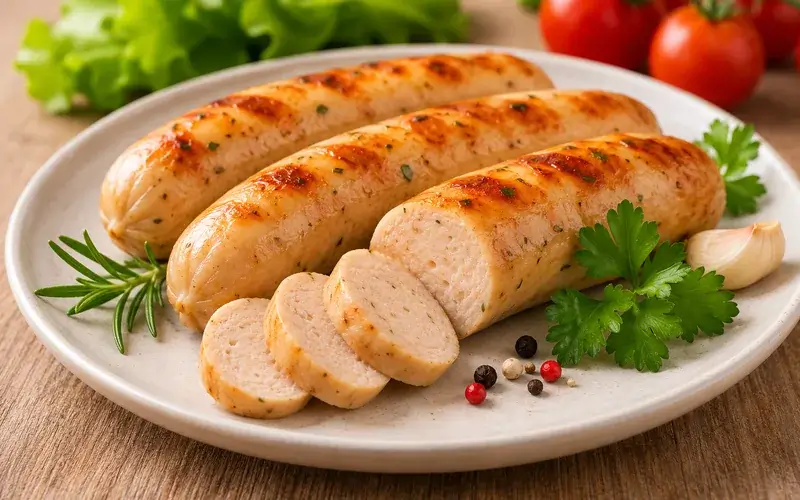
Chicken Sausages
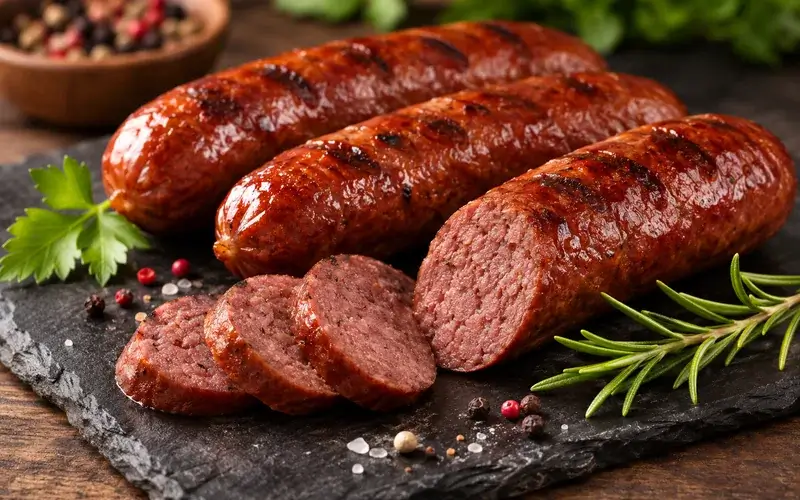
Beef Sausages
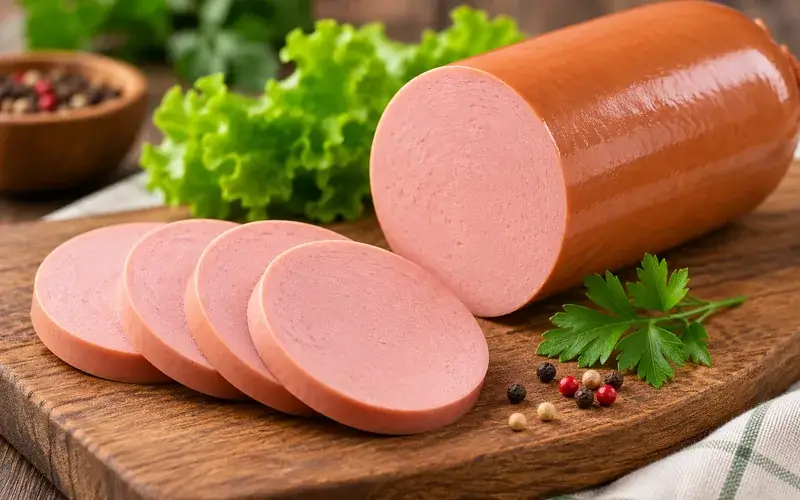
Emulsified Sausages

Reduced-Fat Sausages

Reduced-Salt Sausages
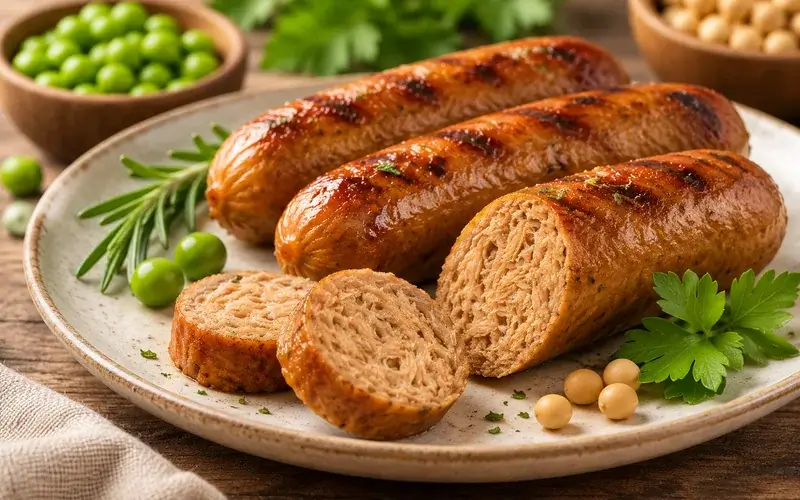
Plant-Based Sausages
HEAT-INDUCED GELATION
How Does Curdlan Work in Sausage Formulations?
Low-Set vs. High-Set Curdlan Gelation
Low-Set Gel (55–65°C): Curdlan is largely insoluble in cold water but can be dispersed in an aqueous suspension. Heating within the typical low-set temperature range, followed by cooling, produces a relatively weak, thermoreversible gel. This structure can change during subsequent heating.
High-Set Gel (80°C and Above): Heating curdlan suspensions to sufficiently high temperatures can form a stronger, thermoirreversible gel. The resulting network offers greater resistance to repeated heating and cooling, making it relevant to food formulations that require stable texture after thermal processing.
Interaction with Meat Proteins and Water
During sausage processing, salt-soluble myofibrillar proteins, especially myosin, contribute to the structure of the cooked meat gel matrix. Curdlan forms a polysaccharide gel network that can interact physically with the protein system. These interactions affect water mobility, viscoelasticity, and the structure of the finished product.
The extent of these effects depends on protein extraction, salt concentration, fat content, water availability, and the heating process. Sausage manufacturers should match curdlan’s gelation behavior with their actual cooking temperatures and formulation requirements.
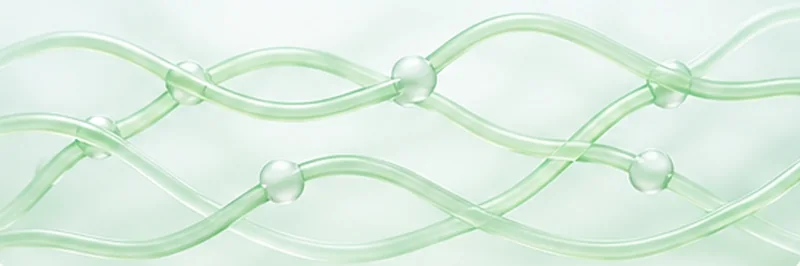
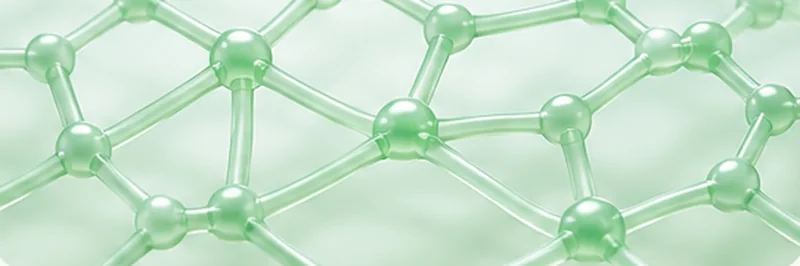
Processing Note: Low-set and high-set temperature ranges describe typical aqueous curdlan systems. Gel formation in sausages also depends on curdlan concentration, meat proteins, salt, water availability, heating time, and the actual product temperature.
SAUSAGE FORMULATION GUIDE
Curdlan Dosage, Formulation & Sausage Processing
| Trial | % of Meat | Per 100 kg Meat |
|---|---|---|
| Control | 0% | 0 g |
| Trial A | 0.1% | 100 g |
| Trial B | 0.2% | 200 g |
| Trial C | 0.3% | 300 g |
| Trial D | 0.4% | 400 g |
| Trial E | 0.5% | 500 g |
Research Note: These concentrations are based on meat weight, not total formulation weight. A published Frankfurter sausage study identified 0.3% as suitable for its specific formulation. These are experimental levels, not universal recommended dosages or regulatory limits. View Research
Dry Premixing: Blend curdlan with compatible dry ingredients before adding it to the meat batter. This can improve powder distribution and reduce localized clumping, provided the mixing sequence is properly controlled.
Cold-Water Dispersion: Disperse curdlan in cold water under suitable agitation, then incorporate the suspension into the meat mixture. Control batter temperature, mixing time, and water addition to achieve uniform distribution.
The best incorporation method depends on the meat composition, mixer design, curdlan grade, and processing conditions. Confirm performance through pilot formulation trials.
Evaluate curdlan performance against a control formulation without curdlan. Keep meat composition, fat content, water addition, salt levels, and cooking conditions consistent during testing.
Key measurements include: cooking loss (%), water-holding capacity (%), hardness, springiness, cohesiveness, chewiness, fat and water separation, slice integrity, and sensory acceptance.
Record test methods, production conditions, and batch results. A successful formulation should balance processing yield, texture, juiciness, and consumer acceptance rather than maximize gel firmness alone.
Scientific Research on Curdlan in Sausages
Published research has examined curdlan’s effects on cooking loss, water-holding capacity, gel strength, texture, and emulsion stability in Frankfurt sausages, low-fat pork sausages, and reduced-salt meat formulations. The findings provide a scientific basis for formulation development, but results depend on dosage, meat composition, and processing conditions.
| Study | Sausage System | Main Findings |
|---|---|---|
| Jiang et al. (2017) View DOI | Frankfurters with 0-0.5% curdlan based on meat weight. | Reduced cooking loss; increased hardness and adhesiveness. The study selected 0.3% for its formulation. |
| Jiang et al. (2018) View DOI | Frankfurters with 0.3% curdlan and different added-water levels. | Lower cooking loss and improved emulsion stability, springiness, and overall acceptability at the tested water levels. |
| Lee & Chin (2019) View DOI | Low-fat model sausages with 0.5-1.5% curdlan. | Reduced cooking loss. The 0.5% and 1.0% treatments increased hardness versus control. Results varied with concentration. |
| Lee & Chin (2019) View DOI | Reduced-salt pork myofibrillar protein gels and model sausages. | Curdlan affected cooking yield, water-holding properties, hardness, and gumminess under different salt conditions. |
| Yang et al. (2025) View DOI | Pork sausages containing curdlan with different gel properties. | High-gelling curdlan improved selected texture and processing properties, including performance after high-temperature treatment. |
Research Note: Findings are summarized from independent published studies. Results depend on formulation, curdlan concentration, gel properties, and processing conditions. They are not BSH Ingredients product performance guarantees.
Bars use a common scale of 0-2,500 gf. Data: Lee & Chin (2019), Table 3, low-fat model sausages (n = 3). Higher curdlan concentrations did not produce a consistent increase in hardness. View Original Study
Published research indicates that curdlan can improve selected properties of cooked and emulsified sausages, including water binding, cooking yield, gel firmness, and texture stability. However, the effects vary with curdlan dosage, meat protein composition, water addition, salt content, and thermal processing.
Studies on low-fat sausage formulations show that increasing curdlan concentration does not always increase hardness. Researchers have also found that high-gelling curdlan can improve selected processing properties of pork sausages, but the results depend on the formulation and testing conditions.
For sausage manufacturers, the evidence supports controlled formulation trials rather than a fixed dosage for every product. Compare cooking loss, water-holding capacity, hardness, elasticity, slice integrity, and sensory quality before selecting a commercial curdlan grade.
Curdlan Regulations for Sausages: EU E424, FDA, China & Japan
Global Curdlan Regulatory Comparison
| Market | Regulation | Sausage-Related Use | Maximum Level |
|---|---|---|---|
| EU | Regulation (EU) 2026/2298 | Eligible heat-treated meat products, category 08.3.2, subject to exclusions. |
20 g/kg (2%)
Effective 8 Nov 2026 |
| USA |
FDA 21 CFR 172.809
USDA-FSIS 9 CFR 424.21 |
Use subject to FDA ingredient conditions, applicable meat-product standards, and USDA-FSIS requirements. |
GMP
No numeric limit in §172.809 |
| China |
GB 2760-2024
CNS 20.042 / INS 424 |
Cooked meat sausages, category 08.03.05, within cooked meat products. | As needed under GMP |
| Japan |
Food Sanitation Act
Official additive specifications |
Curdlan is recognized as a food additive. Verify current sausage-specific use and labeling rules. | Specific sausage limit not confirmed here |
Regulatory Note: EU maximum levels apply only to eligible food categories. GMP does not mean unlimited use. Experimental dosage levels are not legal limits. Confirm the final product classification before commercial production or import.
Commission Regulation (EU) 2026/2298 authorizes curdlan (E424) at a maximum of 20,000 mg/kg in three designated meat-related food categories, subject to their specific conditions.
| Category | Food Description | Maximum |
|---|---|---|
| 08.2 |
Meat preparations
Only specified preparations heat-treated before consumption. Other conditions and exclusions apply. |
20,000 mg/kg |
| 08.3.2 |
Heat-treated meat products
Includes eligible cooked sausage products; specified foie gras and related liver products excluded. |
20,000 mg/kg |
| 08.3.3 | Casings, coatings and decorations for meat | 20,000 mg/kg |
Important: Category 08.2 is not a general authorization for all fresh sausages or raw meat preparations. The exact production method and food category determine whether E424 is permitted.
Besides permitted dosage, curdlan must meet the target market's identity, purity, manufacturing-source and quality requirements.
| Parameter | EU | USA |
|---|---|---|
| Curdlan assay | ≥80% | ≥80% |
| Total nitrogen | ≤0.3% | ≤0.2% |
| Lead | ≤0.2 mg/kg | ≤0.5 mg/kg |
| Gel strength | ≥600 g/cm² | ≥600 × 10³ dyne/cm² |
Fermentation source matters: The EU E424 definition identifies Rhizobium radiobacter biovar 1 strain NTK-u. FDA §172.809 identifies Alcaligenes faecalis var. myxogenes. The regulations also define testing and other purity requirements.
Buyer Checklist: Request the production-strain information, specification sheet, batch-specific COA, microbiological results, and applicable market-compliance documentation.
Regulatory Considerations for Sausage Manufacturers
European Union – E424 Food Category Classification
Under Regulation (EU) 2026/2298, curdlan has a maximum permitted level of 20 g/kg in eligible heat-treated meat products. This authorization includes category 08.3.2, subject to specified exclusions. Meat preparations under category 08.2 have narrower conditions. Manufacturers must determine whether their product is a cooked meat product or a meat preparation before applying the relevant limit. The new authorization takes effect on November 8, 2026.
United States – FDA and USDA-FSIS Requirements
FDA 21 CFR §172.809 permits curdlan under good manufacturing practice for specified technological functions, subject to applicable standards of identity. However, meat and poultry products also fall under USDA-FSIS rules. Manufacturers should verify ingredient eligibility, product-specific standards, formulation levels, and labeling requirements. The FDA curdlan specification also requires total nitrogen not exceeding 0.2%.
China – GB 2760-2024 and GB 28304
China lists curdlan as food additive CNS 20.042 (INS 424). Under GB 2760-2024, it may be used in cooked meat sausages classified under 08.03.05 according to production needs. This does not remove the obligation to follow good manufacturing practice and use an appropriate amount for the intended technical purpose. The food-grade curdlan ingredient must also comply with applicable national quality specifications, including GB 28304.
Japan – Food Additive Specifications
Japan’s official additive specifications recognize curdlan (カードラン), CAS 54724-00-4, and establish identity and quality requirements. These include a minimum curdlan content of 80% and total nitrogen no higher than 0.3%. Manufacturers should confirm the current Japanese standards for use, sausage classification, and labeling before commercial import or production.
Important: Maximum legal use levels and laboratory formulation concentrations are different. Meeting one country’s curdlan standard does not automatically demonstrate compliance in another market.
CURDLAN GRADE SELECTION
Choosing the Right Curdlan Grade for Sausage Manufacturing
Selecting the right curdlan grade is essential for controlling sausage texture, water retention, and thermal processing performance. BSH Ingredients supplies CY-2 standard food-grade curdlan (≥600 g/cm²) and CY-1 high-gel-strength curdlan (≥800 g/cm²). Compare their gel strength, assay, nitrogen levels, and batch-specific COA results to choose suitable grades for formulation trials.
BSH Curdlan Grade Comparison
| Specification | BSH CY-2 | BSH CY-1 |
|---|---|---|
| Grade | Standard Food Grade | High Gel Strength |
| Gel Strength, Minimum | 600 g/cm² | 800 g/cm² |
| Published Batch Gel Strength | 752.7 g/cm² | 815.7 g/cm² |
| Curdlan Assay, Minimum | 80% | 80% |
| Published Batch Assay | 85.6% | 91.9% |
| Total Nitrogen Specification | ≤0.5% | ≤0.3% |
| Published Batch Nitrogen | 0.37% | <0.3% |
| Loss on Drying, Maximum | 10% | 10% |
COA Note: Published batch results represent individual tested batches, not guaranteed results for every shipment. Confirm current specifications, analytical methods and batch-specific COAs before procurement.
BSH CY-1 - 800 g/cm² Curdlan
BSH CY-1 is a high-gel-strength curdlan specified at a minimum of 800 g/cm², with total nitrogen not exceeding 0.3%. It is a candidate for sausage formulations requiring firm texture, elastic bite, and controlled heat processing.
Manufacturers may evaluate CY-1 in cooked sausages, frankfurters, emulsified meat products, and heat-treated formulations. A higher powder gel-strength specification does not automatically guarantee better finished-product texture or cooking yield.
CY-1 can be compared with CY-2 at equivalent addition levels to assess cooking loss, water-holding capacity, hardness, elasticity, and sensory quality. Target-market regulatory compliance also requires verification of the complete ingredient specification.
View BSH CY-1 Product Specifications →BSH CY-2 - 600 g/cm² Curdlan
BSH CY-2 is a standard food-grade curdlan with a minimum gel strength of 600 g/cm². It is a candidate for initial formulation trials in cooked pork sausages, frankfurters, and emulsified meat products.
Sausage manufacturers can evaluate CY-2 for firmness, elasticity, water retention, and cooking yield. The final performance depends on curdlan concentration, meat protein composition, salt content, and thermal processing.
CY-2 is best treated as a starting grade for comparative sausage trials. Buyers targeting markets with stricter nitrogen requirements should verify the available specifications before placing an order.
View BSH CY-2 Product Specifications →Compare gel-strength grades for your sausage formulation. Contact BSH Ingredients for samples, technical specifications, quality documentation and wholesale quotes.
HYDROCOLLOID COMPARISON
Curdlan vs Other Hydrocolloids in Sausage Manufacturing
| Hydrocolloid | Gelation Mechanism | Main Function in Sausages |
|---|---|---|
| Curdlan | Heat-induced gelation; low-set or high-set gels depending on thermal conditions. | Heat-set structure, firmness, elastic bite, and moisture management in cooked sausages. |
| Carrageenan | Type- and ion-dependent gelation. Kappa and iota carrageenan have different gel textures. | Water retention, meat protein gel modification, slice texture, and moisture control. |
| Modified Starch | Type-dependent hydration, swelling, gelatinization, and viscosity development. | Water binding, batter viscosity, texture adjustment, and processing yield. |
| Konjac Glucomannan | Strong hydration and thickening; heat-stable gels can form after suitable alkaline treatment. | Moisture control, thickening, texture modification, and hydrocolloid blend systems. |
| Gellan Gum | Cooling-induced gelation influenced by ions and high- or low-acyl structure. | Gel structure and texture control; firmness or elasticity depends on gellan type. |
Technical Note: This table compares general functional mechanisms, not results from one head-to-head sausage experiment. Performance depends on formulation, ingredient grade, processing conditions, and applicable food additive rules.
Curdlan is worth evaluating in cooked sausages, frankfurters, and emulsified meat products that require a firm, elastic texture and a stable gel structure after heating. Its heat-induced gelation can help manufacturers control water distribution, cooking loss, and finished-product bite.
It is also a candidate for selected reduced-fat and reduced-salt sausage formulations, where changes in fat content or protein extraction can affect product texture. The suitability of curdlan depends on the meat matrix, gel strength, addition level, and actual cooking conditions.
Curdlan should not automatically replace carrageenan, starch, or other binders at the same dosage. Manufacturers should compare the finished-product texture and processing performance before changing their formulations.
Compare curdlan with other sausage hydrocolloids using a consistent base formulation. Keep the meat protein content, fat level, water addition, salt concentration, and thermal processing conditions controlled wherever possible.
Key performance indicators include cooking loss, water-holding capacity, hardness, springiness, cohesiveness, chewiness, emulsion stability, and sensory acceptance. Evaluate how each ingredient affects dispersion, batter handling, and finished-product quality.
Manufacturers should also compare ingredient costs, dosage requirements, batch consistency, supply reliability, and regulatory eligibility. The best choice is the formulation that achieves the required product specifications at an acceptable processing cost.
Formulation Note: Curdlan, carrageenan, modified starch, konjac glucomannan, and gellan gum have different gelation mechanisms and processing requirements. Their functions may overlap, but they are not always direct substitutes. Evaluate each ingredient under controlled sausage processing conditions and confirm its permitted use in the target market.
MANUFACTURING & BULK SUPPLY
BSH Ingredients: Curdlan Manufacturer for Sausage Processing
BSH Ingredients Limited is a China-based curdlan manufacturer and bulk supplier with an annual manufacturing capacity of 500 metric tons. We provide fermentation-derived, food-grade curdlan for sausage manufacturers, meat processors, food ingredient importers, and distributors, with customizable gel strength, technical documentation, and wholesale supply support.
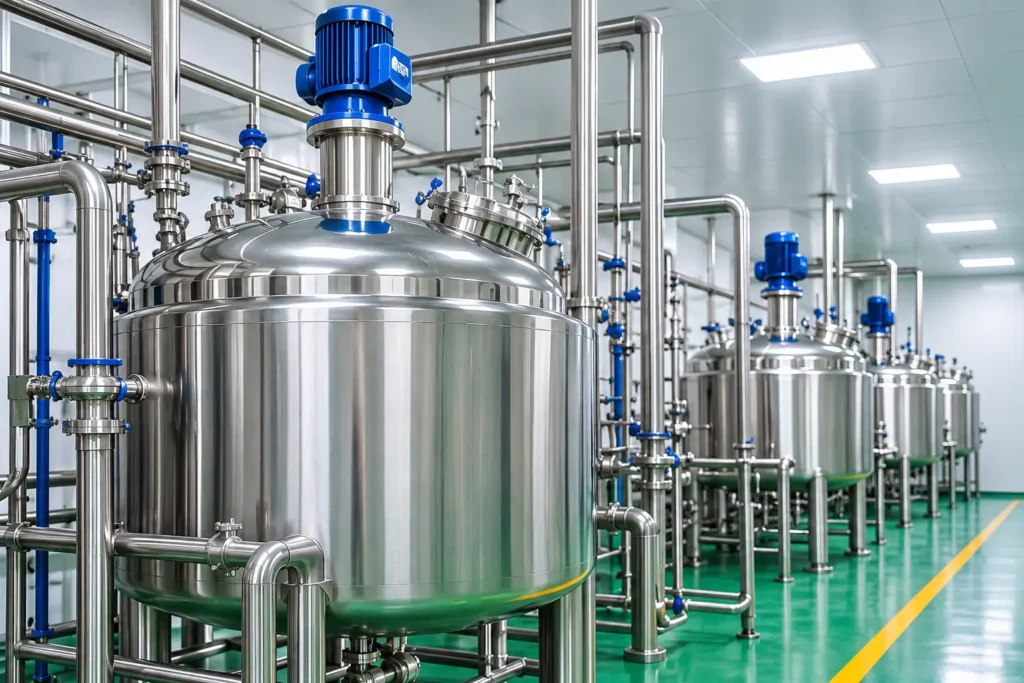
Fermentation-Based Curdlan Manufacturing in China
BSH Ingredients manufactures curdlan through controlled microbial fermentation, followed by downstream recovery, purification, drying, milling, sieving, and packaging. These processes are designed to control gel strength, curdlan assay, moisture, nitrogen content, and finished-powder consistency.
With an annual manufacturing capacity of 500 metric tons, BSH supports food manufacturers, ingredient importers, and distributors requiring bulk curdlan powder for commercial formulation and production. Buyers can discuss custom specifications, order quantities, packaging, production schedules, and shipping arrangements.
Our manufacturing capabilities support standard food-grade curdlan, high-gel-strength grades, and customized formulations for industrial food applications.
Annual Curdlan Manufacturing Capacity
BSH evaluates curdlan gel strength, assay, total nitrogen, moisture, and other quality parameters against product specifications. Batch-specific Certificates of Analysis help food manufacturers assess raw-material consistency.
Gel Strength · Assay · Nitrogen · COA
BSH supplies standard and high-gel-strength curdlan grades for food processing. Buyers can discuss custom gel strength, low-nitrogen specifications, particle size, packaging, and OEM supply according to their formulation and purchasing needs.
CY-1 · CY-2 · Custom Grades · OEM
BSH supports wholesale curdlan procurement for sausage manufacturers, food ingredient importers, and distributors. Buyers can request samples, quotations, specifications, and applicable export documentation, including shipping and quality records.
Bulk Orders · Samples · Export Documents
Contact BSH Ingredients for food-grade curdlan specifications, formulation samples, quality documentation, custom grades, and factory-direct wholesale quotations.
TECHNICAL FAQ & REFERENCES
Frequently Asked Questions About Curdlan in Sausages
1. What is curdlan used for in sausage manufacturing?
Curdlan is a fermentation-derived β-1,3-glucan used as a gelling agent, texturizer, and formulation aid in selected sausage products.
During heating, curdlan can form a gel network that influences firmness, elasticity, water retention, and cooking performance. It is particularly relevant to cooked sausages, Frankfurters, hot dogs, and emulsified meat products.
2. How much curdlan should be added to sausages?
Curdlan dosage depends on the meat formulation, gel strength, desired texture, and thermal processing.
A published Frankfurter study tested 0.1%–0.5% curdlan relative to meat weight and identified 0.3% as suitable for its specific formulation. Other research tested 0.5%–1.5% in low-fat model sausages.
These are research concentrations, not universal recommended dosages. Manufacturers should conduct controlled formulation trials and follow local food additive regulations.
3. How should curdlan powder be added to sausage meat?
Curdlan powder can be premixed with compatible dry ingredients or dispersed in cold water before incorporation into the meat batter.
Because curdlan is largely insoluble in cold water, uniform dispersion helps prevent clumping and uneven gel formation.
The addition sequence should be validated according to mixer design, salt concentration, protein extraction, batter temperature, and sausage processing conditions.
4. At what temperature does curdlan form a gel?
Curdlan has two typical heat-induced gelation behaviors.
Low-set gel: Heating an aqueous suspension around 55–65°C, followed by cooling, can form a thermoreversible gel.
High-set gel: Heating at approximately 80°C or above can form a stronger, thermoirreversible gel.
Actual behavior in sausages depends on heating time, product temperature, water availability, and the complete meat formulation.
5. Which types of sausages can be formulated with curdlan?
Curdlan can be evaluated in Frankfurters, hot dogs, cooked pork, chicken and beef sausages, emulsified sausages, and selected reduced-fat or reduced-salt formulations.
It may also be investigated in plant-based sausage formulations containing soy protein, pea protein, or wheat gluten.
Suitability depends on ingredient interactions, thermal processing, desired texture, and permitted uses in the target market.
6. Does curdlan improve water retention and reduce cooking loss?
Published studies on Frankfurter and low-fat model sausages have reported reduced cooking loss under selected experimental conditions.
Curdlan can affect water mobility and the structure of the heated meat protein matrix, helping retain moisture during processing.
The extent of improvement varies with dosage, meat composition, water addition, mixing, and cooking conditions.
7. Can curdlan be used in reduced-fat and reduced-salt sausages?
Curdlan has been studied in reduced-fat and reduced-salt model sausage formulations.
Research indicates that it can influence cooking yield, water-holding properties, hardness, and gel structure when fat or salt levels are adjusted.
However, curdlan cannot replace the food-safety functions of salt. Manufacturers must validate microbial safety, shelf life, protein extraction, and texture for each modified recipe.
8. Which curdlan gel strength is suitable for sausage manufacturing?
BSH Ingredients offers CY-2 with a minimum specified gel strength of 600 g/cm² and CY-1 with a minimum of 800 g/cm².
Both grades can be evaluated through sausage formulation trials. CY-1 is a candidate for applications requiring a firmer gel structure, while CY-2 provides another starting option.
Selection should consider cooking loss, elasticity, sensory quality, cost, batch COA, and target-market requirements. Higher powder gel strength does not always produce a better finished sausage.
9. Is curdlan E424 permitted in sausages in the EU?
Commission Regulation (EU) 2026/2298 authorizes curdlan (E424) in eligible heat-treated meat products under category 08.3.2 at a maximum level of 20,000 mg/kg (2%).
The regulation enters into force on November 8, 2026. Certain meat products are excluded, while category 08.2 meat preparations have narrower authorization conditions.
Sausage manufacturers must confirm the product's food category, applicable restrictions, and ingredient specifications.
10. Is curdlan permitted by the US FDA for sausages?
Curdlan is regulated under FDA 21 CFR §172.809, which permits qualifying curdlan for specified food functions under good manufacturing practice.
This provision does not establish one numerical maximum for all sausage products.
Meat and poultry processors must also comply with applicable USDA-FSIS requirements, product standards, ingredient specifications, and labeling rules.
11. What is the permitted curdlan level in China?
China's GB 2760-2024 lists curdlan under CNS 20.042 (INS 424).
For cooked meat products under category 08.03, which includes applicable cooked sausages, curdlan may be used according to production needs.
This is not an unlimited-use authorization. Manufacturers must follow the food additive usage principles and applicable ingredient quality standards.
12. Where can I buy bulk food-grade curdlan for sausages?
BSH Ingredients Limited is a China-based curdlan manufacturer with an annual manufacturing capacity of 500 metric tons.
Available grades include CY-1 high-gel-strength curdlan, CY-2 standard food-grade curdlan, and customized specifications subject to agreement.
Sausage manufacturers, ingredient importers, and distributors can request formulation samples, product specifications, batch-specific Certificates of Analysis (COA), and bulk wholesale quotations.
Scientific References
The following scientific studies support the discussion of curdlan in sausage manufacturing, including heat-induced gelation, meat protein interactions, cooking loss, water-holding capacity, low-fat formulations, and hydrocolloid comparison. Original research and review papers are listed with DOI links.
Curdlan Applications in Sausages and Meat Products
-
1
Jiang, S., Niu, H., Liu, Q., Zhang, H., & Kong, B. (2017). Effect of curdlan addition on the quality of Frankfurt sausage. Science and Technology of Food Industry, (19), 218–226.
Topic: Curdlan dosage, cooking loss, elasticity, water binding, and sausage gel microstructure.
https://doi.org/10.13386/j.issn1002-0306.2017.19.040 -
2
Jiang, S., Chen, Y., Cao, C., Zhang, S., Kong, B., & Liu, Q. (2018). Effect of curdlan and water addition on quality characteristics of Frankfurters. Food Science, 39(14), 57–66.
Topic: Water addition, emulsion stability, cooking loss, and water mobility.
https://doi.org/10.7506/spkx1002-6630-201814009 -
3
Lee, C. H., & Chin, K. B. (2019). Evaluation of physicochemical and textural properties of myofibrillar protein gels and low-fat model sausage containing various levels of curdlan. Asian-Australasian Journal of Animal Sciences, 32(1), 144–151.
Topic: Low-fat sausages, hardness, cooking loss, and curdlan concentrations of 0.5%–1.5%.
https://doi.org/10.5713/ajas.18.0585 -
4
Lee, C. H., & Chin, K. B. (2019). Evaluation of various salt contents on quality characteristics with or without curdlan of pork myofibrillar protein gels and the development of low-salt pork sausages. International Journal of Food Science & Technology, 54(2), 550–557.
Topic: Reduced-salt sausage formulations, protein gelation, cooking yield, and water-holding capacity.
https://doi.org/10.1111/ijfs.13969 -
5
Yang, Y., Chen, J., Hu, Z., Yang, X., Bu, H., & Zhou, W. (2025). Physicochemical properties of highly gelling curdlan and its effects on pork sausage quality. Meat Research, 39(6), 15–21.
Topic: Different curdlan gelling properties, pork sausage texture, freeze-thaw stability, and heat-processing performance.
https://doi.org/10.7506/rlyj1001-8123-20241031-291 -
6
Zhang, X., Guo, Y., Liu, H., Liang, B., He, H., Fu, X., Sun, C., Li, X., & Ji, C. (2023). Preparation, characterization of curdlan-based emulsion micro-gel particles and its application in low-fat pork sausages. LWT, 185, 115160.
Topic: Curdlan-based emulsion microgels as partial fat replacers. This is not equivalent to adding ordinary curdlan powder directly.
https://doi.org/10.1016/j.lwt.2023.115160
Curdlan Gelation, Structure & Food Safety
-
7
Funami, T., Funami, M., Yada, H., & Nakao, Y. (1999). Rheological and thermal studies on gelling characteristics of curdlan. Food Hydrocolloids, 13(4), 317–324.
Topic: Low-set and high-set curdlan gels, thermal transitions, rheology, and concentration effects.
https://doi.org/10.1016/S0268-005X(99)00014-4 -
8
Hou, X., Liu, X., Zhao, G., Zhang, B., Jiang, F., & Qiao, D. (2024). Self-assembly of curdlan molecules for the formation of thermally induced gels. Food Hydrocolloids, 156, 110335.
Topic: Molecular association, gel network structure, and thermal gelation behavior.
https://doi.org/10.1016/j.foodhyd.2024.110335 -
9
Jiang, S., Yan, R., Mo, F., Liu, Q., & Jiang, L. (2025). Regulating the gel structure and digestive function of myofibrillar protein: The distinct roles of pre-hydrated curdlan and β-glucan. Food Chemistry, 489, 144981.
Topic: Curdlan interactions with myofibrillar proteins, gel viscoelasticity, and structure.
https://doi.org/10.1016/j.foodchem.2025.144981 -
10
EFSA Panel on Food Additives and Flavourings (FAF). (2024). Safety evaluation of curdlan as a food additive. EFSA Journal, 22(9), e8985.
Topic: Food additive safety assessment, curdlan identity, proposed food uses, and exposure evaluation.
https://doi.org/10.2903/j.efsa.2024.8985
Other Hydrocolloids in Meat and Food Systems
-
11
Trius, A., & Sebranek, J. G. (1996). Carrageenans and their use in meat products. Critical Reviews in Food Science and Nutrition, 36(1–2), 69–85.
Topic: Carrageenan functionality, meat protein systems, and water retention.
https://doi.org/10.1080/10408399609527719 -
12
Verbeken, D., Neirinck, N., Van Der Meeren, P., & Dewettinck, K. (2005). Influence of κ-carrageenan on the thermal gelation of salt-soluble meat proteins. Meat Science, 70(1), 161–166.
Topic: Carrageenan, meat protein gel strength, and water-holding capacity.
https://doi.org/10.1016/j.meatsci.2004.12.007 -
13
Pietrasik, Z. (1999). Effect of content of protein, fat and modified starch on binding textural characteristics, and colour of comminuted scalded sausages. Meat Science, 51(1), 17–25.
Topic: Modified starch in sausages, water-holding capacity, cooking loss, and texture.
https://doi.org/10.1016/S0309-1740(98)00068-0 -
14
Zhang, T., de Vries, R., Xu, X., Xue, Y., & Xue, C. (2021). Microstructural changes during alkali- and heat induced gelation of konjac glucomannan. Food Hydrocolloids, 114, 106552.
Topic: Konjac glucomannan hydration, deacetylation, and thermal gelation.
https://doi.org/10.1016/j.foodhyd.2020.106552 -
15
Yan, B., Chen, T., Tao, Y., Zhang, N., Zhao, J., Zhang, H., Chen, W., & Fan, D. (2024). Fabrication, functional properties, and potential applications of mixed gellan–polysaccharide systems: A review. Annual Review of Food Science and Technology, 15, 151–172.
Topic: Gellan gum blends, gel structure, and polysaccharide interactions.
https://doi.org/10.1146/annurev-food-072023-034318 -
16
Sworn, G., & Stouby, L. (2021). Gellan gum. In Handbook of Hydrocolloids (3rd ed., pp. 855–885). Woodhead Publishing.
Topic: High-acyl and low-acyl gellan gum, ion-dependent gelation, texture, and food applications.
https://doi.org/10.1016/B978-0-12-820104-6.00009-7
Official Regulatory References
Official food additive regulations and quality standards governing curdlan (E424 / INS 424) in major international markets. These sources help sausage manufacturers, food ingredient importers, and distributors verify permitted uses, maximum levels, ingredient identity, purity requirements, and compliance documentation.
-
1
European Union — Regulation (EU) 2026/2298
European Commission. (2026). Commission Regulation (EU) 2026/2298 amending Annex II to Regulation (EC) No 1333/2008 and the Annex to Regulation (EU) No 231/2012 as regards the use of curdlan.
Covers EU E424 food categories, maximum permitted levels, ingredient identity and purity. Eligible heat-treated meat products under category 08.3.2 have a maximum level of 20,000 mg/kg, subject to exclusions. Enters into force on 8 November 2026.
View Official EU Regulation -
2
United States — FDA 21 CFR §172.809
U.S. Food and Drug Administration. Curdlan. Electronic Code of Federal Regulations, Title 21, Section 172.809.
Specifies curdlan identity, permitted technological functions, purity requirements, and good manufacturing practice conditions. Product-specific meat regulations must also be considered.
View FDA Curdlan Regulation -
3
United States — USDA-FSIS 9 CFR §424.21
U.S. Department of Agriculture, Food Safety and Inspection Service. Use of food ingredients and sources of radiation. Title 9, Section 424.21.
Addresses ingredient use in federally regulated meat and poultry products. Manufacturers should review applicable standards, restrictions, and labeling rules for their sausage formulations.
View USDA-FSIS Regulation -
4
China — GB 2760-2024
National Health Commission of China. (2024). National Food Safety Standard for Uses of Food Additives, GB 2760-2024.
Establishes food additive usage requirements in China. Curdlan is identified as CNS 20.042 / INS 424. Relevant provisions include category 08.03 Cooked Meat Products. Actual product classification and permitted usage conditions must be confirmed.
View GB 2760-2024 Official Notice -
5
China — GB 28304-2012 Food Additive Curdlan
Ministry of Health of China. (2012). National Food Safety Standard — Food Additive Curdlan, GB 28304-2012.
Defines the national quality specification for food-additive curdlan. Relevant checks include identity, physicochemical characteristics, analytical methods, and microbiological requirements.
View Official China Food Safety Standards Directory -
6
Japan — Official Curdlan Food Additive Specifications
Japan Consumer Affairs Agency. Japan's Specifications and Standards for Food Additives, Tenth Edition. Curdlan (カードラン).
Defines curdlan identity and quality requirements, including minimum assay, total nitrogen, purity, and microbiological criteria. Specific sausage use permissions and labeling requirements must be checked separately.
View Official Japanese Curdlan Specifications (PDF)
Additional Technical Guidance: FAO guidance on meat processing, ingredient handling and production methods: FAO Meat Processing Guidance . This is technical guidance, not a curdlan authorization.