
Curdlan for Noodles
- Firmness & Elastic Bite
- Reduced Cooking Loss
- Lower Noodle Breakage
- Custom Gel Strength
Home / Applications / Curdlan for Noodles
CURDLAN IN NOODLE PROCESSING
Why Use Curdlan in Noodle Manufacturing?
Curdlan for noodles is a heat-gelling food ingredient used to improve texture and processing stability. It is a fermentation-derived β-1,3-glucan (CAS No. 54724-00-4) with a repeating-unit formula of (C₆H₁₀O₅)ₙ. Unlike hydrocolloids that mainly increase viscosity, curdlan forms a gel when heated. This makes it a useful ingredient to evaluate in wheat noodles, rice noodles, and starch-based noodle formulations.
Noodle manufacturers face several production challenges. Noodles may become soft, sticky, or brittle during cooking. Excessive starch loss can make cooking water cloudy, while weak strand structure leads to breakage during processing, packaging, or reheating. Frozen storage and high-temperature sterilization can create further texture problems. Manufacturers need ingredients that help maintain a consistent bite and reduce these quality losses.
In wheat noodles, curdlan can interact with the gluten–starch network and help maintain its structure during cooking and frozen storage. Published research on frozen cooked noodles found that curdlan improved gluten network stability and helped protect noodle texture. These properties are relevant to fresh wheat noodles, frozen cooked noodles, and other formulations that require firmness and elasticity.
In rice noodles and starch-based noodles, curdlan works through a different mechanism. Rice starch forms a gel during cooling, but this structure can weaken during high-temperature processing. Curdlan forms a heat-induced gel that can strengthen the starch-based matrix. Studies on sterilized fresh rice noodles have reported lower cooking breakage, reduced cooking loss, and better tensile properties after curdlan addition.
For noodle manufacturers, the goal is not simply to increase firmness. The right formulation must balance chewiness, elasticity, cooking loss, strand integrity, water absorption, and sensory quality. Curdlan performance depends on its concentration, gel strength, flour or starch composition, water addition, and processing conditions. BSH Ingredients supplies food-grade curdlan for formulation trials, with standard and high-gel-strength grades available for evaluation in industrial noodle production.
NOODLE FORMULATION BENEFITS
Key Benefits of Curdlan in Noodle Manufacturing
Curdlan can enhance noodle firmness, springiness, and elastic bite by modifying the gel network. Research on frozen cooked wheat noodles reported improved hardness and springiness after curdlan addition. The right dosage helps manufacturers achieve the target texture without making noodles excessively hard.
Curdlan can help limit the release of starch and other solids into cooking water. Its heat-induced gel network supports noodle structure during boiling and thermal processing. Studies on sterilized rice noodles reported lower cooking loss, helping manufacturers evaluate cooking stability and finished-product quality.
Curdlan can improve strand integrity and resistance to breakage during cooking. Research on thermally sterilized fresh rice noodles found that curdlan increased tensile strain and reduced cooking breakage under controlled experimental conditions. This benefit is especially relevant to long rice noodles, vermicelli, and thermally processed noodle products.
Curdlan forms a heat-induced gel that can help maintain noodle structure during cooking and high-temperature sterilization. Unlike rice starch gels that may weaken under prolonged heating, curdlan can form a heat-stable network. This makes it a useful ingredient to evaluate in sterilized fresh noodles and other heat-treated formulations.
Curdlan can help protect the gluten network and control water migration in frozen cooked noodles. Published research found that curdlan reduced texture deterioration during frozen storage and improved resistance to freeze–thaw damage. These properties are relevant to frozen wheat noodles, frozen cooked noodles, and ready-to-heat products.
Curdlan can support two different noodle structures. In wheat noodles, it helps maintain the gluten–starch network during cooking and frozen storage. In rice noodles, it can form a complementary heat-set gel within the starch matrix. Both mechanisms may improve structural consistency, depending on the recipe and processing conditions.
Curdlan Applications in Different Types of Noodles
Curdlan is used or evaluated in wheat noodles, rice noodles, frozen cooked noodles, and other processed noodle formulations. As a heat-gelling β-1,3-glucan, curdlan can help modify noodle texture, gel structure, and cooking performance. Its function depends on the flour or starch base, water content, processing temperature, and curdlan concentration.
The following eight noodle applications show where food manufacturers can evaluate curdlan and which quality parameters matter most.

Curdlan for Fresh Wheat Noodles
Fresh wheat noodles require a balanced gluten–starch network to maintain firmness, elasticity, and strand integrity during boiling. Weak dough structure or excessive starch swelling can cause soft, sticky noodles with poor tensile strength.
Curdlan can modify the dough network and help improve hardness, chewiness, cohesiveness, and tensile performance. Published research on fresh wet noodles found improved textural properties at selected curdlan concentrations, although the results were not linear as the dosage increased.
Key quality indicators: Dough handling, noodle hardness, chewiness, tensile strength, cooking loss, and optimal cooking time.
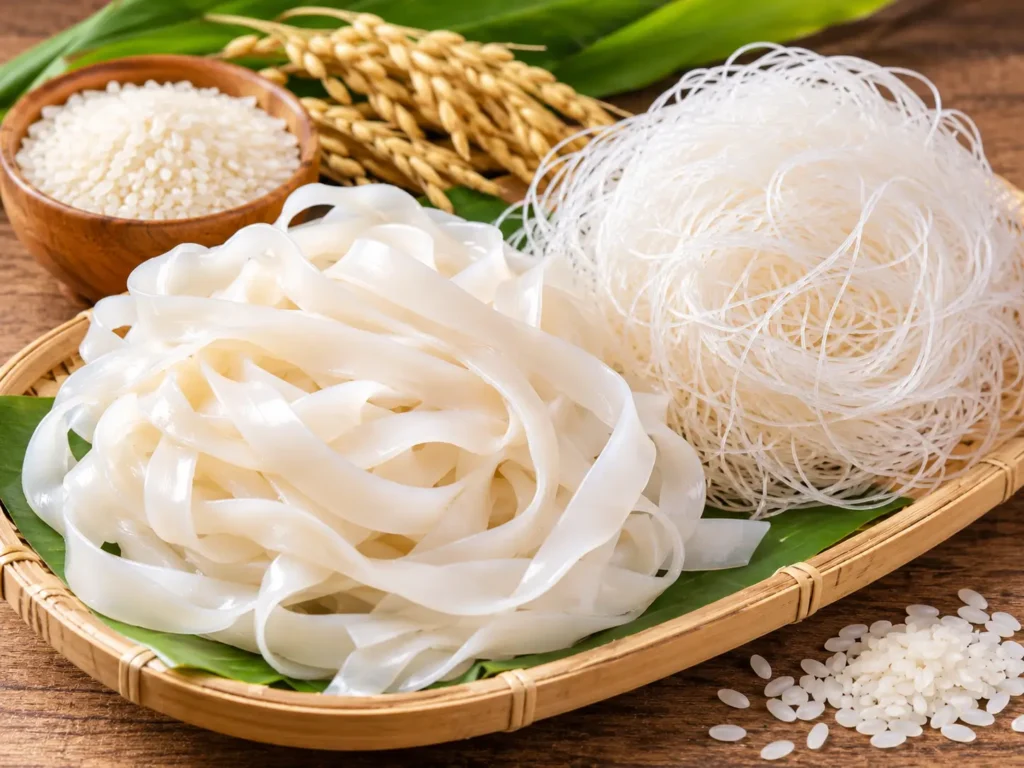
Curdlan for Rice Noodles & Rice Vermicelli
Rice noodles and rice vermicelli rely mainly on gelatinized rice starch rather than wheat gluten. Their texture depends on starch composition, retrogradation, water absorption, and the strength of the starch gel network. Common production problems include broken strands, excessive swelling, and weak texture after cooking.
Curdlan can form a heat-induced gel within the rice starch matrix. This may improve network cohesion, cooking resistance, and strand integrity. Research found that selected curdlan concentrations improved rice noodle texture and cooking quality, while lower concentrations sometimes produced less favorable results.
Key quality indicators: Cooking breakage rate, tensile strength, hardness, elasticity, water absorption, and starch retrogradation.

Curdlan for Udon & Thick-Cut Noodles
Udon and other thick wheat noodles are valued for their smooth surface, resilient bite, and characteristic chewiness. Manufacturers must control water distribution and gluten development to prevent excessive softening or uneven texture during cooking and hot holding.
Curdlan can be evaluated as a texture modifier in udon formulations. Commercial curdlan ingredient systems are used for udon to improve elasticity and help reduce excessive noodle elongation during boiling. The correct addition level should preserve the natural udon texture rather than create an overly firm or rubbery bite.
Key quality indicators: Elasticity, compression hardness, noodle elongation, surface smoothness, cooking yield, and texture after hot holding.
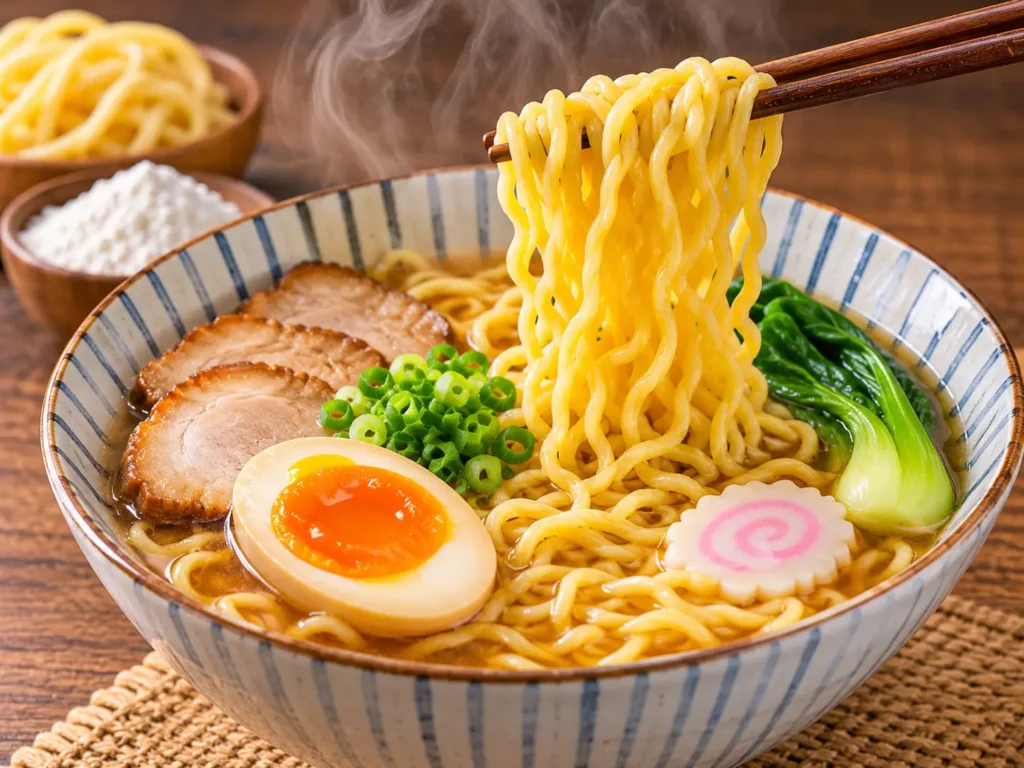
Curdlan for Ramen & Alkaline Wheat Noodles
Ramen and alkaline wheat noodles require a distinctive firm, springy texture. Alkaline salts affect dough pH, gluten behavior, color, and cooking characteristics. Formulators must maintain strand strength while controlling hydration and texture changes during storage or boiling.
Curdlan is a candidate for ramen texture adjustment because of its heat-induced gelation and water-binding behavior. However, alkaline ingredients can affect hydrocolloid dispersion and gel development. Manufacturers should evaluate curdlan under their actual kansui concentration, flour strength, mixing conditions, and cooking process before commercial use.
Key quality indicators: Dough pH, tensile strength, springiness, cooking loss, noodle color, and texture retention in hot broth.

Curdlan for Frozen Cooked Noodles
Frozen cooked noodles can lose their firmness and elasticity during frozen storage, thawing, and reheating. Ice crystal development, water migration, and changes in gluten protein structure may weaken the noodle network and reduce eating quality.
Curdlan has been studied directly in frozen cooked wheat noodles. Research found that selected curdlan additions helped maintain a more uniform gluten network, reduce water migration, and preserve hardness, springiness, and tensile properties during cooking or frozen storage.
Key quality indicators: Hardness, springiness, tensile fracture distance, freezable water, freeze–thaw stability, and texture after reheating.
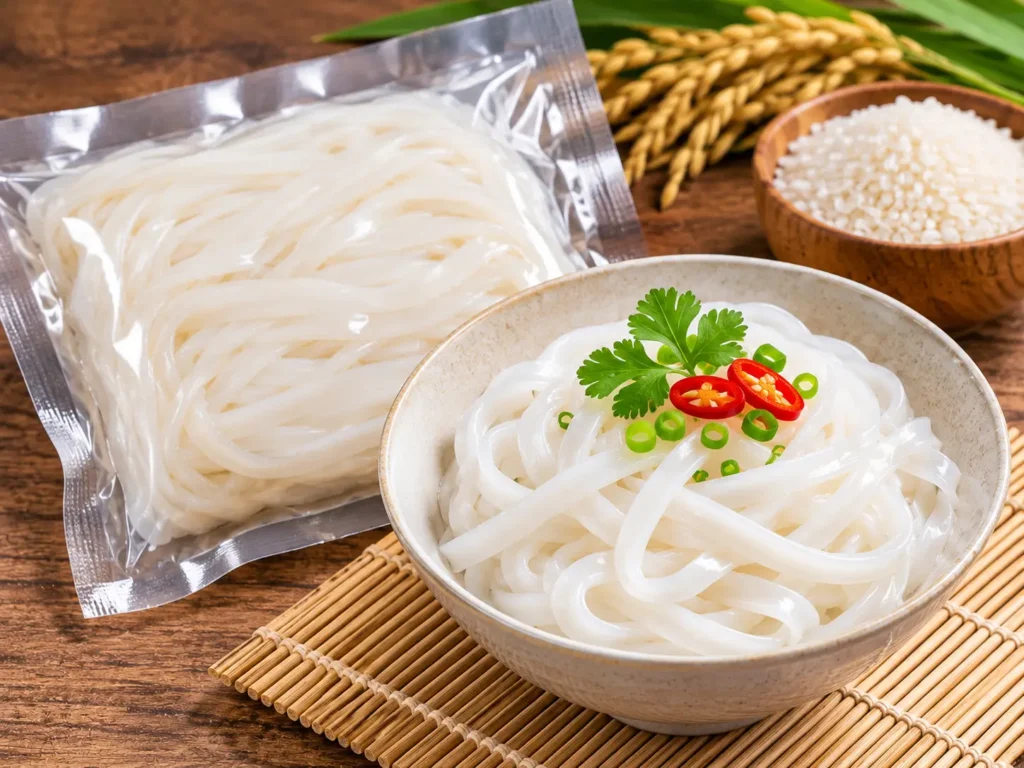
Curdlan for Thermally Sterilized Fresh Rice Noodles
Fresh rice noodles intended for ambient or extended refrigerated distribution may undergo thermal sterilization as part of a validated food safety process. High-temperature treatment can weaken the rice starch gel, increase cooking breakage, and reduce strand elongation.
Curdlan is particularly relevant to this application because suitable heating conditions can produce a heat-stable gel network. Research on sterilized fresh rice noodles found substantial reductions in cooking breakage and improvements in tensile properties after curdlan addition. Another study reported improvements in cooking loss, firmness, and springiness.
Key quality indicators: Sterilization-related texture changes, cooking breakage, cooking loss, tensile strain, gel firmness, and finished-product stability.

Curdlan for Instant & Pre-Cooked Noodles
Instant noodles and industrial pre-cooked noodles must withstand several processing stages, which may include steaming, drying, frying, cooling, packaging, and rehydration. Manufacturers need to balance fast preparation with sufficient firmness and acceptable cooking loss.
Curdlan can be investigated as a hydrocolloid for controlling noodle texture and structural integrity during heat processing and rehydration. Its performance may differ between fried instant noodles, non-fried noodles, and ready-to-eat pre-cooked products. Results from frozen or sterilized noodles should not be assumed to apply directly to these systems.
Key quality indicators: Rehydration time, water absorption, cooking loss, noodle firmness, strand breakage, and texture after preparation.

Curdlan for Gluten-Free & Alternative-Protein Noodles
Gluten-free and alternative-protein noodles require a suitable structure without relying on a conventional wheat gluten network. Rice flour, corn starch, potato starch, legume flour, and other ingredients may produce different hydration, gelation, and cooking behaviors.
Curdlan can be evaluated as a heat-gelling ingredient in these formulations. Its gel network may help reinforce starch-based structures and improve cooking performance when used at suitable concentrations. Research on high-tofu-content dried noodles has also examined curdlan in combination with controlled resting conditions to improve texture and cooking quality.
Key quality indicators: Dough or batter cohesion, strand formation, cooking loss, breakage rate, texture, and sensory acceptance.
How Curdlan Improves Noodle Texture and Cooking Stability
Curdlan forms a heat-induced gel that can support noodle structure and cooking stability. Its primary mechanism differs between wheat noodles, which rely on a gluten–starch network, and rice noodles, which depend mainly on starch gel formation.
Curdlan in Wheat Noodles
Supporting the Gluten–Starch Network
Wheat noodles rely on gluten proteins and starch to develop their structure. Gluten provides cohesion and elasticity, while starch absorbs water and gelatinizes during cooking.
Curdlan can help maintain gluten network continuity and influence water mobility. Studies on frozen cooked noodles reported improvements in network structure and texture under selected processing conditions.
Wheat Noodle Structure
Proteins + Wheat
Starch + Curdlan
Mixing, Heating & Cooling
Network cohesion · Water distribution · Texture stability
Primary Mechanism: Gluten network stabilization, water mobility control, and heat-induced gel formation.
Curdlan in Rice Noodles
Reinforcing the Starch Gel Network
Rice noodles rely mainly on starch gelatinization and gel formation. Unlike wheat noodles, they do not contain a conventional gluten network. Their structure depends on rice starch, water distribution, and processing.
During suitable heating, curdlan can form a gel within the rice starch matrix. Research on sterilized rice noodles has shown that starch–curdlan interactions can promote a more compact gel structure and help preserve strand integrity.
Rice Noodle Structure
Starch + Curdlan + Water
Gelatinization & Heat Treatment
Gel cohesion · Strand integrity · Thermal stability
Primary Mechanism: Formation of a complementary starch–curdlan gel network, improved structural cohesion, and resistance to thermal damage under suitable processing conditions.
Low-Set vs High-Set Curdlan Gelation
| Property | Low-Set Curdlan Gel | High-Set Curdlan Gel |
|---|---|---|
| Typical Temperature |
55–65°C
Followed by cooling |
Approximately 80°C or above |
| Gel Behavior | Thermoreversible | Thermoirreversible |
| Gel Structure | Relatively weak, temperature-sensitive gel | Stronger gel with greater resistance to reheating |
| Molecular Interactions | Hydrogen bonding contributes to gel formation | Hydrophobic association becomes more important, alongside other interactions |
| Noodle Manufacturing Relevance | Understanding temperature- dependent gel setting and cooling behavior | Relevant to cooked, reheated, and thermally sterilized noodle systems |
Processing Note: These temperatures describe typical gelation behavior in aqueous curdlan suspensions. Gel formation in noodle formulations depends on curdlan concentration, water availability, temperature, heating time, and other ingredients.
Technical Note: Low-set and high-set describe curdlan’s heat-induced gelation behavior, not BSH Ingredients’ CY-1 and CY-2 product grades. Actual noodle texture depends on curdlan dosage, gel strength, flour or starch composition, moisture content, and thermal processing. Manufacturers should evaluate both the noodle texture and cooking performance under controlled formulation conditions.
Curdlan Dosage and Formulation Guide for Noodles
The right curdlan dosage for noodles depends on the noodle type, flour or starch composition, curdlan grade, water content, and processing conditions. Published studies have evaluated different addition levels in fresh wheat noodles, rice noodles, frozen cooked noodles, and thermally sterilized rice noodles.
There is no single dosage that works for every noodle formulation. Manufacturers should use published research as a starting point, define the dosage calculation basis, and validate the finished product through controlled trials.
| Noodle Type | Studied Levels | Reported Findings | Dosage Basis / Interpretation | Source |
|---|---|---|---|---|
| Fresh Wet Wheat Noodles | 0.1%, 0.3%, 0.5%, 0.7%, 0.9% | 0.5% gave the best overall structure under the tested conditions. Tensile fracture distance peaked at 0.3%. | Study-reported addition levels. The exact denominator was not confirmed from the accessible abstract. | Chen et al. 2022 |
| Frozen Cooked Wheat Noodles | 0%, 0.5%, 0.9% | 0.5% supported gluten network stability and improved cooking-related texture. | Flour-weight basis (w/w). Explicitly stated in the published experimental method. | Liu et al. 2022 |
| Rice Noodles | 0%–1.0% | 0.4%–0.6% improved texture and cooking quality in the tested rice flour systems. | Curdlan was added to rice flour. Results varied by curdlan grade and concentration. | Li et al. 2021 |
| Thermally Sterilized Fresh Rice Noodles | 0.38%–1.13% | 1.13% reduced cooking breakage from 16.85% to 5.22%. | Reported as w/w. Verify the exact formulation denominator in the full experimental method before converting to factory batches. | Gao et al. 2024 |
| Thermally Sterilized Rice Noodles | 0%, 0.1%, 0.5%, 1.0%, 2.0% | 2.0% improved several cooking indicators most strongly. The authors selected 1.0% as the best overall level considering sensory quality. | Recipe-specific rice flour slurry system. Confirm the dosage calculation basis before transferring to an industrial formulation. | Wang et al. 2025 |
Research Note: These studies used different noodle formulations, ingredient grades, test conditions, and dosage definitions. Results should not be compared as if all concentrations shared an identical calculation basis.
100 kg
Wheat Flour Weight
0.5%
Trial Addition Rate (Flour-Weight Basis)
0.5 kg
Curdlan Required for the Test Batch
Calculation Example: For 100 kg of wheat flour, a 0.5% flour-basis addition requires 0.5 kg of curdlan. This is a calculation example, not a universal dosage recommendation. The same formula can be used with rice flour when the trial is explicitly defined on a rice-flour-weight basis.
How to Optimize Curdlan Dosage in Noodle Formulations
Record the flour or starch composition, water addition, salt level, processing conditions and current noodle quality without curdlan.
Choose a consistent dosage basis and test several curdlan concentrations, including a zero-curdlan control. Compare CY-1 and CY-2 separately if needed.
Maintain consistent mixing, hydration, dough resting, forming, cooking, freezing or sterilization conditions across the test batches.
Compare cooking loss, breakage rate, tensile strength, hardness, springiness and sensory acceptance. Select the most suitable formulation rather than the highest curdlan concentration.
Formulation & Regulatory Note: The curdlan addition levels presented above come from published experimental studies. They are not universal industrial specifications or legal maximum levels. A dosage expressed as a percentage of flour weight must not be treated as the same percentage of finished noodles. Manufacturers should confirm the formulation basis, food additive permissions, ingredient specifications, and finished-product performance before commercial use.
Curdlan Dosage and Formulation Guide for Noodles
The right curdlan dosage for noodles depends on the noodle type, flour or starch composition, curdlan grade, water content, and processing conditions. Published studies have evaluated different addition levels in fresh wheat noodles, rice noodles, frozen cooked noodles, and thermally sterilized rice noodles.
There is no single dosage that works for every noodle formulation. Manufacturers should use published research as a starting point, define the dosage calculation basis, and validate the finished product through controlled trials.
Dry premixing is a practical approach for incorporating curdlan into wheat flour dough. The following workflow is based on published frozen cooked noodle research and common wheat noodle operations.
Premix curdlan powder with wheat flour to promote uniform distribution.
Add the specified water and salt. Record dough hydration and mixing conditions.
Knead the dough and allow controlled resting to support gluten development and moisture distribution.
Form noodles to the required thickness and width. Check strand integrity and dough handling.
Cook and cool where required by the product. Test cooking loss, texture, and water uptake.
Apply the appropriate freezing, storage, or packaging process for the selected noodle product.
Rice noodle production relies on starch gelatinization and gel formation. Curdlan can be dispersed in water or incorporated into a controlled rice flour slurry before forming and heat treatment.
Disperse curdlan in water under controlled agitation to obtain a uniform suspension.
Prepare rice flour and, if required, a pregelatinized rice flour paste to support slurry cohesion.
Blend curdlan, rice flour, water, and prepared starch paste. Control solids, viscosity, and dispersion.
Form the noodle structure using suitable equipment. Apply controlled heating to gelatinize rice starch.
Cool the formed noodles. Monitor starch gel formation, strand cohesion, sticking, and finished texture.
For applicable products, use a validated heat-treatment and packaging process. Evaluate texture and safety requirements.
Monitor the following parameters during laboratory trials and industrial scale-up to evaluate curdlan distribution, noodle structure, and finished-product consistency.
| Processing Stage | Wheat Noodles | Rice Noodles | Quality Check |
|---|---|---|---|
| Curdlan Addition | Dry premixing with wheat flour | Water dispersion or controlled premixing | Uniform distribution; no persistent lumps |
| Water Addition | Dough hydration and mixing consistency | Slurry solids, water balance, and viscosity | Consistent moisture and processability |
| Mixing & Forming | Kneading, resting, sheeting, and cutting | Slurry preparation, gelatinization, and forming | Strand integrity, surface quality, and uniformity |
| Heating | Cooking conditions and starch gelatinization | Steaming, cooking, and applicable heat treatment | Product temperature, heating time, and texture |
| Cooling & Storage | Cooling, freezing, and frozen storage if applicable | Cooling, gel setting, and product-specific storage | Texture stability, sticking, and water migration |
| Finished Product | Firmness, springiness, and cooking loss | Breakage rate, tensile properties, and cooking loss | Sensory quality, batch consistency, and microbiological safety |
Scientific Research on Curdlan in Noodle Manufacturing
Published research has examined curdlan’s effects on cooking loss, water-holding capacity, gel strength, texture, and emulsion stability in Frankfurt sausages, low-fat pork sausages, and reduced-salt meat formulations. The findings provide a scientific basis for formulation development, but results depend on dosage, meat composition, and processing conditions.
Selected peer-reviewed studies investigated fresh wheat noodles, rice noodles, frozen cooked noodles, and thermally sterilized rice noodles. Their findings provide evidence for formulation development, not universal performance guarantees.
| Study | Noodle Type | Key Experimental Findings | Original Source |
|---|---|---|---|
| Li et al. (2021) | Rice noodles | 0.4%–0.6% curdlan improved texture and cooking quality in the studied rice flour systems. At 0.2%, some texture properties deteriorated. | View DOI |
| Chen et al. (2022) | Fresh wet wheat noodles | At 0.5%, hardness increased from 2,603.84 g to 5,694.77 g. Maximum tensile fracture distance was reached at 0.3%. | View DOI |
| Liu et al. (2022) | Frozen cooked wheat noodles | At 0.5%, hardness increased from 2,876.82 g to 3,371.08 g, while springiness increased from 0.85 to 0.91 during the tested cooking process. | View DOI |
| Liu et al. (2022) | Frozen cooked wheat noodles | Curdlan improved the uniformity of the gluten network and reduced water migration during cooking. The 0.5% treatment performed well in the studied system. | View DOI |
| Liang et al. (2022) | Frozen cooked wheat noodles | Curdlan helped protect gluten structure during frozen storage, limiting protein network deterioration and improving network continuity. | View DOI |
| Gao et al. (2024) | Thermally sterilized fresh rice noodles | At 1.13%, cooking breakage decreased from 16.85% to 5.22%, while tensile strain increased from 91.15% to 147.05%. | View DOI |
| Wang et al. (2025) | Thermally sterilized rice noodles | At 2.0%, relative cooking breakage and cooking loss decreased by 74.71% and 68.18%. The authors identified 1.0% as the best overall addition level. | View DOI |
Research Interpretation: These studies used different formulations, curdlan concentrations, experimental methods, and measurement conditions. Reported results should be interpreted within each study, not compared as equivalent product performance measurements.
Gao et al. (2024) · Thermally sterilized fresh rice noodles
Result: Cooking breakage decreased by 11.63 percentage points in the experimental formulation. Tensile strain also increased from 91.15% to 147.05%. The bar scale runs from 0% to 20%.
Source: Gao et al. (2024) — DOI
Liu et al. (2022) · Frozen cooked wheat noodles
Result: Instrumental hardness increased under the tested conditions. Springiness increased from 0.85 to 0.91, and tensile fracture distance increased from 90.60 mm to 94.29 mm. The bar scale runs from 0 to 4,000 g.
Source: Liu et al. (2022) — DOI
Wang et al. (2025) investigated how curdlan affects the cooking, rheological, textural, and sensory properties of thermally sterilized rice noodles.
74.71%
Relative reduction in cooking breakage at 2.0% curdlan
68.18%
Relative reduction in cooking loss at 2.0% curdlan
1.0%
Best overall addition identified by the authors across evaluated indicators
At 2.0% curdlan, the researchers also reported an increase of 19.82% in hardness and 18.75% in springiness compared with the sterilized control.
However, the best overall formulation was not the highest tested dosage. After considering product quality and sensory performance, the authors identified 1.0% curdlan as the preferred addition level for their studied rice noodle system.
Manufacturing Implication: Noodle manufacturers should balance cooking stability, firmness, elasticity, sensory quality, and ingredient cost instead of selecting a curdlan concentration based on one performance indicator.
Original Research: Wang et al. (2025). Curdlan Incorporation Enhances the Cooking, Rheological, and Textural Attributes of Thermally Sterilized Rice Noodles. DOI: 10.3390/foods14040674
Scientific Evidence Note: The results presented in this section come from independent published research on specific noodle formulations. Different studies used different curdlan grades, addition levels, processing conditions, and measurement methods. The figures do not represent BSH Ingredients’ own product testing or guaranteed performance. Manufacturers should validate the selected curdlan grade and dosage through controlled trials using their actual flour, starch, equipment, and finished-product specifications.
QUALITY CONTROL & TROUBLESHOOTING
Noodle Quality Testing and Troubleshooting with Curdlan
Noodle manufacturers must evaluate curdlan through controlled quality testing. Key measurements include cooking loss, cooking breakage rate, hardness, springiness, tensile strength, water absorption, surface stickiness, and texture stability after processing.
The right test depends on the noodle product. Fresh wheat noodles rely on the balance between gluten development and starch gelatinization. Rice noodles depend mainly on starch gel structure. Frozen cooked noodles and thermally sterilized rice noodles also require quality checks after their intended processing and storage conditions.
Use consistent laboratory methods to measure noodle cooking quality, texture, strand integrity, and stability after processing. Compare each curdlan formulation with its matching control sample.
| Quality Parameter | Testing Method | Measurement | Quality Interpretation |
|---|---|---|---|
| Cooking Loss | Cook a defined noodle sample, collect the cooking water, and determine the solids released during cooking. | Cooking loss (%) | Lower loss often indicates better retention of noodle components, provided the target texture is maintained. |
| Cooking Breakage Rate | Cook a standard sample. Measure broken strands using a defined length, mass, or count method. | Breakage rate (%) | Lower breakage indicates improved strand integrity. Important for rice noodles and thermally processed noodles. |
| Hardness & Firmness | Texture analyzer using a defined compression or cutting test. | Force (N or gf) | Indicates resistance to deformation. The preferred value depends on noodle style and sensory requirements. |
| Springiness & Chewiness | Texture Profile Analysis (TPA) using a controlled double-compression test. | Springiness ratio; chewiness from TPA | Helps assess elastic recovery and eating texture. Balanced results matter more than maximum values. |
| Tensile Strength & Elongation | Pull a noodle strand using a texture analyzer and tensile fixture until it breaks. | Breaking force and elongation or tensile strain | Indicates strand resistance to stretching and breakage during handling and cooking. |
| Water Absorption | Weigh the noodles before and after controlled cooking and surface draining. | Weight gain (%) | Shows hydration behavior. Excessive or insufficient water uptake may affect finished noodle texture. |
| Surface Stickiness | Use a standardized adhesion test or a controlled sensory sticking assessment. | Adhesion force or sensory score | Helps evaluate clumping, surface starch release, and handling quality. |
| Post-Processing Texture Stability | Repeat selected quality tests after freezing, thawing, reheating, or applicable heat treatment. | Change in texture, breakage, and cooking loss | Reveals quality deterioration caused by the actual processing and storage cycle. |
Useful Quality Testing Calculations
Water Absorption (%): [(Cooked Drained Weight - Initial Weight) / Initial Weight] × 100
Cooking Loss (%): (Total Dry Solids Recovered from Cooking Water / Initial Sample Weight) × 100
Mass-Based Cooking Breakage Rate (%): (Mass of Broken Noodle Fragments / Total Cooked Noodle Mass) × 100
Method Note: Define the sample weight basis, cooking conditions, drainage procedure, and fragment-length threshold before testing. Apply any required dilution correction when cooking water is measured using a subsample.
Reference Method: Wang et al. (2025) measured cooking loss, water absorption, breakage, texture, and sensory quality in thermally sterilized rice noodles. Their breakage calculation classified strands shorter than 10 cm as broken. Original Research — DOI
When a noodle formulation fails to meet its quality targets, investigate ingredient composition, curdlan dispersion, processing conditions, and final product performance before changing the curdlan dosage.
| Quality Problem | Possible Causes | Recommended Actions | What to Re-Test |
|---|---|---|---|
| High Cooking Loss | Weak starch or gluten structure, excessive cooking, starch leaching, or nonuniform ingredients. | Standardize cooking conditions. Review flour or starch quality, curdlan distribution, and water addition. Compare controlled dosage trials. | Cooking loss, turbidity, firmness |
| Frequent Strand Breakage | Weak starch gel, poor forming, incomplete structural development, or damage during heating and handling. | Check forming and heat history. Evaluate starch gelatinization, strand dimensions, cooling, and curdlan level. | Breakage rate, tensile properties |
| Noodles Too Hard or Tough | Excessive firmness from the formulation, low hydration, unsuitable flour characteristics, or inadequate cooking. | Review texture targets. Screen a lower curdlan concentration if appropriate. Adjust hydration and confirm cooking conditions. | Hardness, chewiness, sensory acceptance |
| Noodles Too Soft or Weak | Excess water, overcooking, insufficient gluten development, or weak rice starch gel structure. | Check water balance and processing. Review cooking time, starch composition, forming conditions, and controlled curdlan trials. | Firmness, tensile strength, cooking loss |
| Sticky or Clumped Noodles | Excessive surface starch, poor draining or cooling, overhydration, or unsuitable holding conditions. | Review surface processing. Optimize cooking, draining, cooling, and approved anti-sticking measures where applicable. | Surface adhesion, cooking loss, water absorption |
| Uneven Texture or Gel Lumps | Poor curdlan dispersion, localized powder accumulation, or uneven mixing before heating. | Improve ingredient distribution. Evaluate dry premixing or controlled aqueous dispersion before heat treatment. | Mixing uniformity, texture variation, visual defects |
| Texture Loss After Freezing | Water migration, ice crystal changes, temperature fluctuations, or damage to the gluten-starch structure. | Review freezing and storage. Monitor temperature history, packaging, and water balance. Compare curdlan-containing frozen noodle trials. | Hardness after reheating, water distribution, strand integrity |
| Texture Loss After Thermal Sterilization | Thermal damage to the rice starch gel, water redistribution, or insufficient formulation stability. | Compare pre- and post-treatment quality. Evaluate suitable curdlan formulations while maintaining a validated food safety process. | Breakage, cooking loss, TPA texture, sensory quality |
Recommended Troubleshooting Sequence
01 — Confirm the Problem: Repeat the test and verify that the failure is consistent.
02 — Review Processing Records: Check ingredient lots, curdlan dosage basis, mixing, water addition, and processing conditions.
03 — Conduct Controlled Trials: Change one major variable at a time while retaining a zero-curdlan control.
04 — Verify Product Quality: Repeat instrumental testing and sensory evaluation under identical conditions.
Technical References: Research on frozen cooked noodles shows the importance of gluten network stability and water migration. Rice noodle studies show that heat-induced starch gel damage can affect breakage and texture. See Liu et al. (2022) and Wang et al. (2025) .
Quality Control Checklist
Verify curdlan grade, COA, batch identification, flour or starch composition, moisture content, and ingredient storage conditions before production.
Record curdlan dosage, calculation basis, premixing method, water addition, mixing time, and dough or slurry uniformity.
Monitor forming dimensions, cooking time, heating temperature, cooling, freezing, and thermal treatment according to the noodle production process.
Compare cooking loss, breakage, hardness, springiness, tensile strength, sensory quality, and stability after the intended processing cycle.
Quality Control Note: The testing methods and troubleshooting recommendations above are intended for formulation development and manufacturing quality assessment. Acceptance limits must be established for each noodle product based on its specifications, sensory requirements, and processing conditions. Curdlan may improve selected texture and cooking properties, but it does not replace validated food safety controls, sterilization procedures, microbiological testing, or shelf-life verification.
GLOBAL FOOD ADDITIVE COMPLIANCE
Curdlan Regulations for Noodles: FDA, EU E424 & China GB 2760
Compare curdlan authorization, noodle food categories, use limits, and export specifications in the United States, European Union, and China.
UNITED STATES
21 CFR §172.809
Curdlan
No separate numerical limit for noodles in this provision. Use must comply with good manufacturing practice and the applicable conditions.
Total nitrogen ≤0.2%
FDA Regulatory Text
EUROPEAN UNION
Regulation (EU) 2026/2298
Category 06.5 — Noodles
Maximum authorized use level for the specified noodle category. New authorization takes effect on November 8, 2026.
Nitrogen ≤0.3%
EU Regulation
CHINA
GB 2760-2024
CNS 20.042 / INS 424
Use according to production needs in expressly listed categories, including fresh wet, raw dry, and instant noodle products.
Effective February 8, 2025
GB 2760 Curdlan Entries
Curdlan authorization depends on the destination market, the correct food category, and the permitted conditions of use. Always check the classification of the finished noodle product.
| Market | Food Category | Use Level | Regulatory Conditions |
|---|---|---|---|
| United States | Eligible foods, including qualifying noodle products | GMP | Under FDA 21 CFR §172.809. Must meet the ingredient definition and specifications. Applicable standards of identity must not prohibit use. |
| European Union | 06.5 — Noodles | 20,000 mg/kg | E424 authorized from November 8, 2026. Applies to the specified EU food category. |
| European Union | 06.4.2 — Dry Pasta | 20,000 mg/kg | Only gluten-free pasta and pasta intended for hypoproteic diets. Not a general authorization for all conventional dry pasta. |
| China |
06.03.02.01
Fresh wet wheat noodle products |
As needed | Use according to production needs under GB 2760-2024 and its general use principles. |
| China |
06.03.02.02
Raw dry wheat noodle products |
As needed | Expressly listed for curdlan in GB 2760-2024. |
| China |
06.07
Instant rice and wheat products |
As needed | Expressly listed for curdlan in GB 2760-2024. Confirm the product meets the category definition. |
| China | Other rice noodles, starch vermicelli, or frozen noodle products | Verify Category | Do not assume the authorizations listed above cover every rice, starch, or frozen noodle product. Review the applicable category and legal basis. |
Official References: FDA 21 CFR §172.809 ; EU Regulation 2026/2298 ; China GB 2760-2024 .
Food-grade curdlan must meet the identity, purity, and microbiological specifications applicable to its destination market. The following comparison highlights selected requirements.
| Parameter | United States FDA | European Union E424 |
|---|---|---|
| Regulatory Reference | 21 CFR §172.809 | Regulation (EU) 2026/2298, amending EU 231/2012 |
| CAS Number | 54724-00-4 | 54724-00-4 |
| Assay | ≥80% as anhydrous glucose | ≥80% as anhydrous glucose |
| Total Nitrogen | ≤0.2% | ≤0.3% |
| Gel Strength | ≥600 × 10³ dyne/cm² under the specified test | ≥600 g/cm² |
| pH | 6.0–7.5 (1% aqueous suspension) | 6.0–7.5 (1% aqueous suspension) |
| Loss on Drying | ≤10% | ≤10% |
| Lead | ≤0.5 mg/kg | ≤0.2 mg/kg |
| Methanol | No separate numerical limit stated in §172.809 | ≤10 mg/kg |
| Aerobic Plate Count | ≤1,000/g | ≤1,000 CFU/g |
| Production Organism | Alcaligenes faecalis var. myxogenes as specified in §172.809 | Rhizobium radiobacter biovar 1, strain NTK-u |
| Production Process | Must meet the defined identity and applicable specifications | EU definition specifies a production and purification process, including methanol crystallization |
Sources: FDA — 21 CFR §172.809 and EU Regulation 2026/2298 — Official Journal Text .
Export Compliance Checklist
Check batch-specific gel strength, nitrogen, assay, moisture, heavy metals, and microbiological results against the destination market's requirements.
Record curdlan dosage, calculation basis, premixing method, water addition, mixing time, and dough or slurry uniformity.
Verify the fermentation microorganism, manufacturing flow chart, purification process, traceability, and other evidence needed for the applicable regulatory definition.
Confirm the noodle classification, permitted use level, finished-product calculation basis, ingredient labeling, and applicable export requirements.
Regulatory Compliance Note: The information above summarizes selected curdlan food additive requirements in the United States, European Union, and China. Authorization depends on the ingredient identity, food category, applicable use conditions, and destination market. Manufacturers and importers must verify current regulations, batch-specific ingredient specifications, product classification, and labeling requirements before commercial use. BSH Ingredients’ curdlan grades should not be considered automatically compliant with every market without the necessary supporting documentation.
HYDROCOLLOID COMPARISON
Curdlan vs Other Hydrocolloids for Noodles
Curdlan, xanthan gum, guar gum, CMC, carrageenan, and konjac gum serve different roles in noodle manufacturing. Compare their gelation mechanisms, thickening behavior, water management, and suitability for wheat, rice, and gluten-free noodle formulations.
Hydrocolloids differ in hydration, thickening, gel formation, and response to heating. Select the ingredient according to the target noodle texture and processing method.
| Hydrocolloid | Primary Function | Gelation Behavior | Potential Noodle Applications | Processing Considerations |
|---|---|---|---|---|
|
Curdlan INS 424 |
Heat-induced gelation, texture reinforcement, structural support | Thermoirreversible high-set gel at approximately 80°C or above; weaker reversible low-set gel under different heating conditions | Cooked wheat noodles, frozen cooked noodles, rice noodles, and thermally processed starch-based noodles | Largely insoluble in cold water. Requires uniform dispersion. Gel performance depends on heating history and formulation. |
|
Xanthan Gum E415 |
Thickening, viscosity control, water management | Does not independently form a typical curdlan-like heat-set gel. May form gels in selected mixed systems. | Wheat noodle dough, rice flour slurry, gluten-free noodles, and specialty formulations | Strong viscosity development. Hydrates in cold water. Excess addition may change handling and mouthfeel. |
|
Guar Gum E412 |
Thickening, water retention, viscosity modification | Primarily a thickener; does not independently form a curdlan-type heat-set gel | Rice noodles, extruded noodles, composite flour noodles, and moisture-controlled dough | Hydrates in cold water. Viscosity depends on concentration and hydration. High levels may alter texture. |
|
CMC E466 |
Viscosity modification, water binding, texture support | Food-grade sodium CMC primarily thickens. It does not show the same thermal gelation as curdlan. | Instant noodles, rice noodles, composite flour noodles, and products needing hydration control | Grade and viscosity strongly influence behavior. Distinguish sodium CMC from thermogelling methylcellulose. |
|
Carrageenan E407 |
Gelling or thickening, depending on type | Kappa and iota types can form gels under suitable cooling and ionic conditions. Lambda is mainly a thickener. | Selected starch-based or specialty noodles requiring a tailored gel or texture profile | Gel properties depend on carrageenan type, ions, concentration, and temperature. |
|
Konjac Glucomannan E425 |
Water binding, viscosity control, conditional gelation | Can form thermoirreversible gels with suitable alkaline and heating treatment; may show different gelation in blends. | Konjac-based noodles, gluten-free noodles, and specialty starch formulations | Gelation depends on pH and processing. Not equivalent to curdlan's high-set mechanism. |
Regulatory Note: E-numbers identify additives in the European system; they do not establish authorization for every noodle category. Check the intended market, finished product category, and applicable use conditions.
If the main challenge is texture loss after cooking, reheating, or thermal treatment, evaluate curdlan's ability to form a heat-set gel within the noodle structure.
If the main objective is adjusting dough or slurry viscosity, hydration, and handling behavior, compare xanthan gum, guar gum, and food-grade sodium CMC.
For products without a gluten network, assess starch gelatinization, strand cohesion, gelation conditions, and finished texture. Curdlan, konjac glucomannan, or suitable gum systems may be worth testing.
When one ingredient cannot achieve the desired balance between firmness, water control, and sensory texture, investigate carefully designed hydrocolloid blends.
Research shows that hydrocolloid performance depends on the noodle formulation, addition level, cooking process, and measured quality target.
HOT-DRY WHEAT NOODLES · 2023
Liu and colleagues compared three microbial polysaccharides in hot-dry noodles. Selected additions of 0.2% curdlan, 0.5% gellan, and 0.5% xanthan improved quality indicators, including texture and tensile properties.
The tested concentrations differed, so these findings do not establish an equal-dosage performance ranking.
RED JASMINE RICE NOODLES · 2020
Kraithong and Rawdkuen evaluated hydrocolloids at 0.2% and 0.4% in extruded rice noodles.
The 0.2% guar gum sample had a cooking loss of 5.07% and the highest overall sensory acceptance in that experimental system.
Curdlan was not included in this comparison.
CURDLAN COMPOSITE GELS · 2024
Zhong and colleagues examined how several polysaccharides affected the heat-induced gelation of curdlan.
Konjac and guar did not produce identical effects. At 0.3% added guar gum, the tested mixture showed antagonistic effects on curdlan gel behavior.
These were model gel tests, not finished noodle trials.
Formulation Note: The hydrocolloid properties and research findings above provide guidance for noodle product development. Performance depends on ingredient grade, concentration, flour or starch composition, moisture content, pH, salt concentration, and processing temperature. Manufacturers should evaluate curdlan and competing hydrocolloids in controlled formulation trials. All selected additives must be permitted for the intended food category and destination market.
FACTORY-DIRECT CURDLAN SUPPLY
Why Choose BSH Ingredients as Your Bulk Curdlan Manufacturer in China
BSH Ingredients manufactures food-grade curdlan gum powder in China with a 500-ton annual capacity. We support noodle manufacturers and ingredient distributors with controlled microbial fermentation, custom gel strength and nitrogen specifications, batch quality testing, OEM services, and bulk export supply.
Metric Tons / Year
Annual curdlan manufacturing capacity
g/cm² Gel Strength
Reported result from a tested curdlan sample, not a standard batch guarantee
Custom Specifications
Gel strength, nitrogen targets, mesh size and bulk packaging
Specialized curdlan powder production in China for food manufacturers, importers, and ingredient distributors.
Fermentation and downstream processing designed to manage curdlan quality, purity, and functional consistency.
Discuss gel strength, nitrogen content, particle size, and formulation-specific targets before placing an order.
Assess gel strength, assay, nitrogen, moisture, pH, and relevant microbiological quality parameters.
Support commercial ingredient orders, customized packing requirements, and OEM supply arrangements.
Technical documents, commercial export paperwork, third-party testing options, and logistics coordination.
BSH Ingredients manufactures curdlan through controlled microbial fermentation followed by separation, purification, recovery, drying, milling, quality testing, and commercial packaging.
Control fermentation conditions to produce β-1,3-glucan polysaccharide.
Separate the fermentation product and prepare the curdlan material for downstream processing.
Apply controlled purification and recovery steps to obtain the required curdlan product.
Reduce moisture under controlled drying conditions to produce stable curdlan solids.
Process the dried material into powder and manage particle size for commercial applications.
Check the required specifications and prepare released batches for bulk packaging and export.
Manufacturing Note: The flow above summarizes the main manufacturing stages. Specific purification methods and process parameters depend on the agreed product specification and manufacturing requirements.
BSH Ingredients supports bulk curdlan sourcing for noodle manufacturers, food processors, ingredient importers, distributors, and OEM customers.
| Supply Item | BSH Ingredients Capability | Buyer Considerations |
|---|---|---|
| Manufacturing Capacity | 500 metric tons per year | Confirm order quantity, availability, production schedule, and lead time. |
| Product Form | Food-grade curdlan gum powder | Confirm application, grade, and permitted food category. |
| Gel Strength | Standard, high-strength, and custom targets. A tested sample exceeded 1,000 g/cm². | Specify the gel strength target and test method. Request batch-specific results. |
| Nitrogen & Purity | Custom specifications can be evaluated against buyer requirements. | Provide target limits for the destination market. Confirm feasibility and analytical results. |
| Particle Size | Custom mesh specifications can be discussed. | Define powder handling, premixing, and dispersion requirements. |
| OEM Services | Customized grades, supply specifications, and packaging arrangements. | Agree on product scope, technical feasibility, labeling, and batch size. |
| Bulk Packaging | Commercial bags, drums, and customized packing options. | Confirm pack weight, pallet requirements, labeling, and storage. |
| Quality Documents | COA, specification sheet, manufacturing flow chart, safety data and available test reports. | Request documents covering the agreed grade and production lot. |
| Certifications | Available food-safety and quality certification documentation. | Request current copies and verify certificate scope, site, and validity. |
| Third-Party Testing | Additional testing can be discussed according to requirements. | Confirm target analytes, laboratory, test methods, timing, and cost. |
| Export Documents | Commercial invoice, packing list, and applicable shipment documents. | Confirm destination, Incoterms, customs needs, and any special documents. |
Procurement Note: Specifications, packaging, testing, certification documents, delivery schedules, and OEM arrangements are subject to confirmation. Custom nitrogen targets must be supported by the relevant batch results and complete regulatory documentation.
BSH Ingredients supports noodle manufacturers and ingredient distributors seeking factory-direct bulk curdlan supply from China. Explore our Curdlan Manufacturing Factory, review our OEM Services, or contact BSH Ingredients to request samples, technical specifications, and a wholesale quotation.
TECHNICAL FAQ & REFERENCES
Frequently Asked Questions About Curdlan for Noodles
Find answers to common questions about curdlan for noodles, including dosage, gelation, texture improvement, wheat and rice noodle applications, manufacturing methods, FDA and EU regulations, and bulk curdlan powder sourcing.
What Does Curdlan Do in Noodle Manufacturing?
Curdlan is a heat-gelling β-1,3-glucan that can improve noodle texture, firmness, elasticity, cooking quality, and structural stability under suitable formulation conditions.
In wheat noodles, curdlan can support the gluten–starch network. In rice noodles, it can reinforce the starch-based gel structure. Performance depends on dosage, water content, heating, and processing conditions.
What Is the Recommended Curdlan Dosage for Wheat and Rice Noodles?
There is no universal curdlan dosage for all noodle formulations. Research on fresh wheat noodles and frozen cooked noodles has reported favorable results around 0.5% under selected conditions.
Rice noodle research has reported improvements at 0.4%–0.6%. Thermally sterilized rice noodle studies have also evaluated higher concentrations.
Always identify whether the dosage is based on flour weight, starch weight, or the total formulation. Confirm regulatory limits and use controlled trials to determine the appropriate addition level.
Can Curdlan Reduce Cooking Breakage in Thermally Sterilized Rice Noodles?
Yes. Published research has reported significant reductions in cooking breakage under specific experimental conditions.
Gao et al. (2024) found that 1.13% curdlan reduced the cooking breakage rate from 16.85% to 5.22%. Tensile strain increased from 91.15% to 147.05%.
These results support evaluating curdlan in thermally processed rice noodle formulations. Industrial performance requires validation.
Does Curdlan Improve Frozen Cooked Noodle Quality?
Research indicates that curdlan can improve the structural stability of frozen cooked wheat noodles. It can help maintain gluten network continuity and influence water distribution during processing and storage.
Liu et al. (2022) reported improvements in texture and gluten network stability. Liang et al. (2022) also examined protective effects on gluten structure during frozen storage.
Manufacturers should evaluate the finished noodles after the intended freezing, storage, and reheating cycle.
How Should Curdlan Powder Be Added to Wheat Noodle Dough or Rice Flour Slurry?
For wheat noodles, curdlan powder can be dry-premixed with wheat flour before water addition. This supports uniform powder distribution.
For rice noodles, curdlan can be dispersed in water before blending with rice flour or starch slurry, depending on the production method.
Curdlan is largely insoluble in cold water. Uniform suspension and dispersion are more important than attempting complete cold-water dissolution. Poor mixing may cause uneven noodle texture.
Is Curdlan Heat-Stable? What Is the Difference Between Low-Set and High-Set Gels?
Curdlan exhibits temperature-dependent gelation behavior. Heating an aqueous suspension to approximately 55–65°C, followed by cooling, can produce a relatively weak, thermoreversible low-set gel.
Heating to approximately 80°C or above can produce a stronger, thermoirreversible high-set gel.
High-set gelation can be useful for selected cooked, reheated, and thermally processed noodle products. Actual gel formation depends on heating time, water availability, curdlan concentration, and formulation.
Can Excessive Curdlan Make Noodles Too Hard or Tough?
Yes. Increasing curdlan concentration may increase noodle firmness and change chewiness. However, higher hardness does not always produce better eating quality.
Wang et al. (2025) found that 2.0% curdlan strongly improved several cooking and texture indicators in thermally sterilized rice noodles. However, the authors selected 1.0% as the best overall level in their study.
Manufacturers should balance firmness, springiness, cooking loss, breakage, and sensory acceptance when selecting a dosage.
How Does Curdlan Compare with Xanthan Gum, Guar Gum, CMC, and Konjac Gum?
Curdlan differs from many conventional noodle thickeners because it forms a heat-induced gel.
Xanthan gum, guar gum, and food-grade sodium CMC primarily modify viscosity, hydration, and water distribution. Carrageenan and konjac glucomannan can form gels under different conditions.
For heat-treated noodles, curdlan is worth evaluating for gel structure and cooking stability. For slurry viscosity and hydration control, other hydrocolloids may be useful.
The best ingredient or blend must be determined through comparative formulation trials.
Is Curdlan Approved by the FDA for Use in Noodles?
The U.S. FDA regulates curdlan under 21 CFR §172.809. Qualifying curdlan may be used under good manufacturing practice in eligible foods, provided the regulation's conditions are satisfied.
The FDA specifies a minimum assay of 80%, a maximum total nitrogen content of 0.2%, and additional identity, purity, and microbiological requirements.
The regulation does not establish a separate numerical use limit for noodles. Applicable food standards of identity must also be considered.
Is Curdlan E424 Permitted in Noodles in the European Union?
Commission Regulation (EU) 2026/2298 authorizes curdlan (E424) in specified food categories, including 06.5 — Noodles, at a maximum level of 20,000 mg/kg (20 g/kg).
The regulation enters into force on November 8, 2026.
It also permits E424 in category 06.4.2 — Dry Pasta, but only for specified gluten-free pasta and pasta intended for hypoproteic diets.
Manufacturers must also check E424 identity, purity, nitrogen, manufacturing, and finished-product requirements.
Is Curdlan Allowed in Noodle Products Under China's GB 2760-2024?
China's GB 2760-2024 identifies curdlan as CNS 20.042 / INS 424.
The standard lists relevant applications, including fresh wet noodle products, raw dry noodle products, and instant rice and wheat products. Use is subject to the applicable category and production needs.
This does not mean every rice noodle, starch vermicelli, or frozen noodle product is automatically covered. Manufacturers must verify the correct food category and current requirements.
Where Can I Buy Bulk Curdlan Powder for Noodle Manufacturing in China?
BSH Ingredients is a bulk curdlan gum manufacturer in China supplying food-grade curdlan powder to noodle manufacturers, ingredient importers, distributors, and food processors.
We offer standard and high-gel-strength curdlan grades, with custom gel strength, nitrogen targets, particle size, and packaging options available for discussion.
Buyers can request curdlan samples, Certificates of Analysis, technical specifications, OEM services, and wholesale quotations.
Please provide your noodle application, destination market, target specifications, and estimated order quantity.
Contact BSH Ingredients for Bulk Curdlan Samples & Factory Pricing
Scientific & Regulatory References
The following peer-reviewed research supports the discussion of curdlan gelation, noodle texture, cooking loss, strand breakage, gluten network stability, rice starch gel structure, and hydrocolloid formulation. Regulatory sources cover curdlan food additive requirements in the United States, European Union, and China.
Scientific Research References
- Chen, Z., Liang, Y., Wang, R., Liu, M., Zhang, X., & Wang, J. (2022). Effects of curdlan on quality of fresh wet noodles and moisture change during cooking. Journal of Henan University of Technology (Natural Science Edition), 43 (2), 56–62.
- Gao, L., Guan, M., Qin, Y., Ji, N., Wang, Y., Li, Y., Li, M., Xiong, L., & Sun, Q. (2024). Utilization of heat-induced curdlan gel to improve the cooking qualities of thermally sterilized fresh rice noodles. International Journal of Biological Macromolecules, 262 , 129693.
- Kraithong, S., & Rawdkuen, S. (2020). Effects of food hydrocolloids on quality attributes of extruded red Jasmine rice noodle. PeerJ, 8, e10235.
- Li, C., Chen, D., Lu, R., Gu, Z., Ban, X., Hong, Y., Cheng, L., & Li, Z. (2021). Effect of curdlan on processing and eating quality of rice noodles. Food Science, 42(16), 23–28.
- Liang, Y., Chen, Z., Liu, M., Qu, Z., Liu, H., Song, J., Zhu, M., Zhang, X., He, B., & Wang, J. (2022). Effect of curdlan on the aggregation behavior and structure of gluten in frozen-cooked noodles during frozen storage. International Journal of Biological Macromolecules, 205 , 274–282.
- Liu, H., Liang, Y., Guo, P., Liu, M., Chen, Z., Qu, Z., He, B., Zhang, X., & Wang, J. (2022). Understanding the influence of curdlan on the quality of frozen cooked noodles during the cooking process. LWT, 161, 113382.
- Liu, H., Liang, Y., Guo, S., Liu, M., Chen, Z., He, B., Zhang, X., & Wang, J. (2022). Understanding the strengthening effect of curdlan on the quality of frozen cooked noodles: Studies on water characteristics and migration during cooking. International Journal of Food Science & Technology, 57 (9), 5887–5896.
- Liu, Y., Liu, X., Wan, L., Xu, P., Deng, X., Ding, B., Wang, X., & Fu, Y. (2023). Study on the quality characteristics of hot-dry noodles by microbial polysaccharides. Food Research International, 163 , 112200.
- Wang, J., Liu, Y., Zhao, M., Sun, Q., Li, M., Wang, Y., Zhang, Y., & Xie, F. (2024). Effect of curdlan addition and thermal sterilization on the structural and properties of rice starch gel. International Journal of Biological Macromolecules, 271 , 132593.
- Wang, J., Liu, Y., Sun, Q., Li, M., Wang, Y., & Xie, F. (2025). Curdlan incorporation enhances the cooking, rheological, and textural attributes of thermally sterilized rice noodles. Foods, 14(4), 674.
- Zhong, G., Wang, Z., Chen, Q., He, Z., Zeng, M., Qin, F., & Chen, J. (2024). Effects of different non-ionic polysaccharides on the heat-induced gelling properties of curdlan. Polymers, 16(23), 3345.
Official Regulatory References
- U.S. Food and Drug Administration. (n.d.). 21 CFR §172.809 — Curdlan. Electronic Code of Federal Regulations.
- European Commission. (2026). Commission Regulation (EU) 2026/2298 of 16 October 2026 amending Annex II to Regulation (EC) No 1333/2008 and the Annex to Commission Regulation (EU) No 231/2012 as regards the use of curdlan. Official Journal of the European Union.
- European Parliament and Council of the European Union. (2008). Regulation (EC) No 1333/2008 on food additives. Official Journal of the European Union.
- National Health Commission of the People's Republic of China & State Administration for Market Regulation. (2024). GB 2760-2024 — National Food Safety Standard: Standard for Uses of Food Additives.
Scientific & Regulatory Note: Published study results are based on specific experimental formulations and do not guarantee the performance of BSH Ingredients' commercial curdlan grades. Regulatory requirements depend on ingredient identity, food category, permitted use, manufacturing specifications, and destination market. Always verify the latest applicable rules before commercial production.