

What the study found
Transglutaminase helped pork frankfurters hold their shape, but more juice escaped during cooking. Adding curdlan addressed that trade-off. In a study of ten formulations, Dongxue Yuan and colleagues found that 0.5% thermo-reversible curdlan lowered cooking loss from 5.50% with transglutaminase alone to 2.27%. That is a drop of 3.23 percentage points, or 58.73% relative to the enzyme-only formulation.
The researchers tested two heat-treated forms of curdlan in frankfurters made with 0.2% transglutaminase (TG). Thermo-irreversible curdlan also worked well at 0.5%, bringing cooking loss to 2.44%. The two 0.5% treatments belonged to the same statistical group for cooking loss. Microscopy and texture tests showed a clearer distinction between the two preparations.
Download the full PDF file on Improved quality profiles and decreased in vitro digestibility of frankfurters as influenced by synergistic effects of thermo-reversible/thermo-irreversible curdlan and transglutaminase
Cooking loss, fluid release and moisture at a glance
| Formulation | Cooking loss (%) | Total fluid released (%) | Moisture in cooked product (%) |
|---|---|---|---|
| Control (no TG or curdlan) | 4.23 | 3.49 | 58.75 |
| 0.2% TG alone | 5.50 | 4.49 | 56.72 |
| 0.2% TG + 0.5% thermo-reversible curdlan | 2.27 | 1.89 | 59.16 |
| 0.2% TG + 0.5% thermo-irreversible curdlan | 2.44 | 1.96 | 58.69 |
Why the curdlan preparation and dose mattered
- More curdlan did not keep improving yield. Raising the addition from 0.5% to 0.6% increased cooking loss to 3.56% with thermo-reversible curdlan and 3.70% with thermo-irreversible curdlan.
- The way curdlan was heated changed the gel. The researchers prepared the reversible form at 55°C and heated the irreversible form further to 80°C. The reversible form integrated more closely with muscle proteins during cooking. Microscopy showed a finer, more uniform network. The irreversible form mainly filled spaces in the protein gel.
- The texture difference was perceptible. Overall scores from 16 trained panelists peaked at 0.5% for both forms. Increasing curdlan to 0.6% reduced springiness, gumminess, chewiness and resilience.
- The denser gels slowed protein breakdown in vitro. At the same concentration, the reversible form showed lower digestibility than the irreversible form. Peptide analysis identified 1,158 distinct peptides in the control, 953 with TG alone, 1,091 with TG plus 0.5% reversible curdlan and 1,036 with TG plus 0.5% irreversible curdlan. These counts describe the variety of fragments recovered. The digestion assay measured how much protein was broken down.
Conclusion for frankfurter formulation
Among the levels tested, 0.5% of either curdlan preparation gave the best combination of cooking yield, texture and sensory scores with 0.2% TG. The reversible form produced the lowest measured cooking loss and a more uniform protein network. The same network limited digestive enzyme access in laboratory tests. How that affects amino acid absorption in people remains an open question.
Full study
Improved quality profiles and decreased in vitro digestibility of frankfurters as influenced by synergistic effects of thermo-reversible/thermo-irreversible curdlan and transglutaminase
Dongxue Yuan¹, Yutong Liu¹, Cheng Li¹, Baohua Kong¹, Chuanai Cao¹, Hongwei Zhang¹, Huailiang Zhang², Qian Liu¹˒³ and Yangyang Feng¹
¹ College of Food Science, Northeast Agricultural University, Harbin, Heilongjiang 150030, China
² Yangxin Huayang Group Co., Ltd., Binzhou, Shandong 251808, China
³ Heilongjiang Green Food Science & Research Institute, Harbin, Heilongjiang 150028, China
Corresponding authors: Qian Liu (liuqian@neau.edu.cn) and Yangyang Feng (fengyy@neau.edu.cn).
Meat Science, volume 240 (2026), article 110165. Published online 24 June 2026. https://doi.org/10.1016/j.meatsci.2026.110165
Received 9 February 2026. Revised 20 June 2026. Accepted 23 June 2026.
© 2026 Elsevier Ltd. All rights are reserved, including those for text and data mining, AI training, and similar technologies.
Study keywords: Frankfurters, transglutaminase, curdlan, quality profiles, protein digestibility.
Abstract
This study investigated the influence of transglutaminase (TG, 0.2%) in combination with varying levels (0.3%– 0.6%) of thermo-reversible curdlan (TRC) or thermo-irreversible curdlan (TIRC) on gel network, quality profiles and in vitro digestibility of frankfurters. Spectroscopic and microstructural analyses revealed that TIRC underwent unwinding relative to TRC. The combined use of TRC/TIRC with TG markedly decreased cooking loss and enhanced emulsion stability of frankfurters (P < 0.05). Moreover, the addition of 0.5% TRC or TIRC together with TG yielded superior texture properties and a denser gel network compared to using TG alone in frankfurters (P < 0.05). Furthermore, the incorporation of TRC and TIRC moderated the covalent crosslinking degree induced by TG and facilitated the transition of the meat protein structure from α-helix to β-sheet (P < 0.05). Hydrogen bonds and disulfide bonds were the primary interactions stabilizing the frankfurter structure in the presence of TRC/TIRC and TG. Peptidomics analysis revealed that TG induced covalent crosslinking of lysine residues in myosin, thereby inhibiting trypsin hydrolysis. In contrast, TRC and TIRC suppressed this crosslinking and modulated the digestibility of frankfurters. In conclusion, our results offer scientific support for the combined use of TRC/TIRC and TG in emulsified meat products.
1. Introduction
Frankfurters are widely valued by consumers for their desirable sensory and nutritional attributes (Yuan et al., 2023). However, their quality profiles can be compromised by various external factors, such as raw meat quality and processing conditions, which can lead to the texture deterioration and juice loss (Cao et al., 2022). Recently, several approaches have been explored to enhance the quality attributes of frankfurters, including physical technology (e.g., ultra-high pressure, ultrasound), chemical strategies (e.g., polyphenol addition, aldehyde-mediated modification), and biological methods (e.g., enzymatic crosslinking) (Yang et al., 2025; Yuan et al., 2026; Zhang et al., 2021).
Among these approaches, introducing biological covalent crosslinking is regarded as one of the most effective and safe strategies. Transglutaminase (TG) catalyzes the generation of stable isopeptide bonds by crosslinking glutamine and lysine residues (Wang et al., 2025). Such crosslinking can reinforce the meat protein gel network and enhance product textural attributes (Zhu, Wang, et al., 2024). However, TG-induced covalent crosslinking has been reported to strengthen protein-protein interactions while weakening protein-water interactions, potentially increasing cooking loss in meat products (Lesiow et al., 2017).
Therefore, it is crucial to explore some strategies to mitigate cooking loss in TG-treated frankfurters while maintaining their improved texture properties. Hydrocolloids typically possess high viscosity and contain abundance of hydrophilic groups, which enable them to bind substantial amounts of water molecules by hydrogen bonds (Abubaker et al., 2025; Bhuiyan et al., 2025). This feature demonstrates their potential to reduce the cooking loss in TG-treated frankfurters. For example, Gao et al. (2024) reported that konjac glucomannan with TG enhanced hydrophobic interactions among myofibrillar proteins (MPs), facilitating the construction of a stable gel network and consequently improving water retention of the MP gel.
Similarly, our previous study demonstrated that κ-carrageenan not only formed hydrogen bonds with MPs but also moderated covalent crosslinking degree induced by TG. The combined effects contributed to the generation of a more compact gel network, which captured moisture and fat within the frankfurter matrix (Feng, Liang, Zhang, et al., 2024). These findings collectively demonstrated that hydrocolloids could effectively mitigate the cooking loss in TG-treated frankfurters. Compared with other hydrocolloids, curdlan exhibits unique gelling behavior: two distinct types can be formed based on heating treatment (Xu et al., 2024).
After heating at 55 °C, a thermo-reversible curdlan (TRC) can be obtained, while subsequent heating above 80 °C to form a thermo-irreversible curdlan (TIRC) (Jiang et al., 2020). Although curdlan has been used in meat products to enhance water retention and texture, existing studies are mostly limited to investigating the effect of curdlan addition level, whereas comparative research between different curdlan types (TRC and TIRC) remains scarce. In particular, the regulatory effects of TRC and TIRC on TG-induced covalent crosslinking in MP gels are still insufficiently explored.
Moreover, in vitro protein digestibility is regarded as a key criterion for evaluating the nutritional properties of meat products (Nie et al., 2025). Previous research confirmed that TG-mediated crosslinking could influence protein digestion characteristics. For instance, Wang et al. (2022) indicated that TG-modified structural modifications altered the exposure of hydrophobic groups, which served as preferred cleavage sites for digestive enzymes. Feng, Liang, Zhang, et al. (2024) demonstrated that TG-induced crosslinking hindered digestive enzymes from binding to MP, leading to reduced protein digestibility in frankfurters.
Therefore, we hypothesize that different curdlan types (TRC or TIRC) may differentially modulate TG-induced covalent crosslinking and the protein gel network, potentially influencing the accessibility of digestive enzymes. However, the specific effects of TRC and TIRC on in vitro digestibility of TG-treated frankfurters remain unexplored. Therefore, this work will investigate the influence of distinct types of curdlan (TRC and TIRC) and amounts (0.3%–0.6%) of curdlan on the cooking loss and texture of frankfurters containing TG.
The underlying mechanisms will be elucidated by evaluating the protein conformation, crosslinking degree, and molecular forces. Additionally, in light of the significance of nutritional quality, the influence of TRC and TIRC on digestive properties of TG-treated frankfurters will be assessed. This includes measurements of in vitro protein digestibility, digestion kinetics, and microscopic characteristics of digestion products, with a detailed mechanistic analysis using peptidomics.
This work will provide practical guidance for the combined application of TRC/TIRC and TG in meat products.
2. Materials and methods
2.1. Materials and chemicals
Post-rigor lean pork shoulder meat and pork back fat from Northeast Min pigs (slaughtered at six months of age) were bought from the Dazhuangyuan Meat Co., Ltd. (Harbin, Heilongjiang, China). The slaughter date was unified as one day before the experiment, and the raw meat was transported to the laboratory under 0–4 °C cold chain. Curdlan (cat. Number 281–80531), with a molecular formula of (C₆H₁₀O₅)ₙ, was obtained from (Taixing, Jiangsu, China). Its quality met the specifications set by the Standardization Administration of China (SAC) standard GB 28304–2012.
As per the inspection report, the physicochemical properties of curdlan were as follows: Mw = 3.0 × 10⁵ Da, Mn = 4.8 × 10⁴ Da, Mw/Mn = 6.2, a purity of >85%, a moisture content of 5.06%, an ash content of 3.50%, a total nitrogen content of 1.47%, a lead content of <0.06 mg/kg, a pH of 7.03 ± 0.02 (for a 1% suspension), and a gel strength of 635 g/cm². TG (100 U/g) was obtained from Yuantai Food Biotechnology Co., Ltd. (Shandong, China). Pepsin (400 U/mg) and trypsin (4000 U/mg) were bought from Sigma-Aldrich (St.
Louis, MO, USA). The spices used in frankfurters preparation were obtained from Vemis Spices Co., Ltd. (Taizhou, Jiangsu, China). All chemical reagents were analytical grade.
2.2. Preparation of TRC and TIRC
Dry curdlan powder was dispersed into deionized water to prepare a 20% (w/w) curdlan suspension. The mixture was stirred at 1000 rpm for 15 min at room temperature (25 °C) using a constant-temperature water bath. The resulting homogeneous curdlan suspension was defined as CP. The preparation of TRC and TIRC followed the method of Xu et al. (2024). Briefly, dry curdlan was dissolved in deionized water at 20% (w/w) and maintained at 55 °C with stirring at 1000 rpm for 15 min. The mixture was heated to 80 °C and stirred for another 15 min to obtain TIRC.
The resulting TRC and TIRC were rapidly cooled at 4 °C and then refrigerated for 12 h at 4 °C to promote hydration. Notably, the differences in heating temperature and procedure directly result in distinct structural and functional properties between TRC and TIRC. TRC, with a partially retained triple-helix structure, exhibits better compatibility and binding ability with myofibrillar proteins. TIRC, with a fully unwound single-helix structure, mainly acts as a physical filler in meat gel systems.
This structural and functional distinction provides the core basis for comparing their effects on frankfurter quality and digestibility in this study.
2.3. Preparation of frankfurters
For each experimental replicate, a total of 6.0 kg of lean pork and 3.0 kg of backfat were used, which were evenly divided into ten portions corresponding to the ten treatment groups. Three independent batches of frankfurters were prepared on separate days. The formulation of frankfurters was presented in Table S1. The frankfurters were prepared following our previously established method (Yuan et al., 2022). Briefly, lean pork and backfat were ground and then blended with ice water, spices, TG, and varying concentrations of either TRC or TIRC in a chopper.
The resulting meat batters were stuffed into 18 mm collagen casings to form sausages. The sausages were then placed in an automatic smoking chamber (BYXX-50 L, Expro Mechanical Engineering Co., Ltd., Jiaxing, Zhejiang, China) for drying (45 °C, 20 min) and smoking (60 °C, 30 min). The frankfurters were then thermally cooked until their core temperature reached 74 °C, which was monitored using an internal thermometer. Each batch of frankfurters, with an approximate total weight of 1.0 kg, was divided into individual sausages weighing about 80 g.
All samples were subsequently vacuum-packaged and stored at 4 °C until further tests.
2.4. Fourier transform infrared (FTIR) spectroscopy
FTIR spectrum was acquired based on the method of Yuan et al. (2026). Briefly, different curdlan and frankfurters were performed via an FTIR spectrometer (Nicolet iS50, Thermo Fisher Scientific, MA, USA) with a spectral range of 4000–500 cm⁻¹.
2.5. X-ray diffraction (XRD) analysis
The crystalline structure of the freeze-dried powder of CP, TRC, and TIRC was examined by an X-ray diffractometer (D8-Advance, Bruker, Germany) using Cu-Kα radiation (λ = 0.154 nm). Diffraction patterns were collected over a 2θ interval of 5–80° with a step-scanning rate of 5°/min.
2.6. Atomic force microscopy (AFM)
The molecular chain configurations of different curdlan samples were characterized using a Dimension Icon PT atomic force microscope (Bruker, Malaysia). The acquired AFM images were processed and analyzed with Nanoscope software (Nanoscope Analysis 3.00).
2.7. Transmission electron microscopy (TEM)
The microstructure of different curdlan samples was examined with a H-7650 TEM (Hitachi, Japan). Prior to observation, the samples were negatively stained using 2.0% phosphotungstic acid for 1 min.
2.8. Proximate composition
The proximate composition contents of frankfurters were quantified by the official methods of analysis (AOAC, 2012).
2.9. Cooking loss and emulsion stability
Cooking loss and emulsion stability were determined following the procedure of Yuan et al. (2022). The cooking loss was expressed as the percentage of weight loss relative to the initial sample weight. Emulsion stability was assessed by measuring total release, water release, and fat release. About 35 g of raw meat batter was centrifuged (3500 rpm, 5 min) followed by heating in an 80 °C water bath for 30 min. The released fluid was completely transferred to a pre-weighed aluminum box and the total weight was recorded.
The box was then dried at 105 °C and re-weighed. The parameters were calculated using the following formulae:
Total released (%) = [(W₃ − W₂) / W₁] × 100
Released water (%) = [(W₃ − W₄) / W₁] × 100
Released fat (%) = [(W₄ − W₂) / W₁] × 100
W₁: weight of initial meat batter; W₂: weight of empty aluminum box; W₃: weight of aluminum box with collected fluid; W₄: weight of dried aluminum box.
2.10. Texture profile analysis (TPA)
TPA was performed according to the procedure of Yuan, Liang, et al. (2024). Prior to analysis, frankfurters were equilibrated to room temperature for 1 h. Measurements were conducted by a TA-XT plusC texture analyzer (Stable Micro Systems Co., Ltd., Godalming, UK) fitted with a P/50 probe. And the test speed was set to 1 mm/s, with a trigger force of 5 g.
2.11. Scanning electron microscopy (SEM) and pore size
Microstructure of frankfurters was observed in accordance with Lin, Sun, et al. (2025). Frankfurters were first sliced into thin sections and fixed in the glutaraldehyde solution for at least 24 h. Subsequently, they were rinsed with 0.1 M PBS and dehydrated using a graded ethanol series. SEM imaging was performed by a field emission SEM (Hitachi High Technologies Corp., Tokyo, Japan) at 2000× magnification. An analysis of the microstructural pore size was conducted with ImageJ software.
2.12. Crosslinking degree
To evaluate the crosslinking degree induced by TG is reflected by the consumption of free amino groups, which was measured according to Zhang et al. (2025). Prior to analysis, proteins were extracted from the frankfurters. The extracted protein solution was diluted to 3 mg/mL with 10 mM PBS. Subsequently, an o-phthaldialdehyde (OPA) solution was freshly formulated. For the assay, 200 μL of the diluted protein solution was mixed with 4 mL OPA solution, incubated in the dark for 10 min, and the absorbance was measured at 340 nm.
The formula for crosslinking degree induced by TG was calculated as follows:
Crosslinking degree (%) = (1 − M₂ / M₁) × 100
where M₁ and M₂ are free amino acid contents in the un-crosslinked and crosslinked samples, respectively.
2.13. Molecular forces
Molecular forces were analyzed based on the method of Yuan et al. (2023). Four different solutions were prepared to selectively disrupt specific molecular interactions. For each treatment, samples were mixed with corresponding solution at a ratio of 1:9 and homogenized for 1 min. Following heating at 80 °C for 1 h and subsequent cooling, the homogenate was centrifuged at 10,000 g for 15 min. The protein solubility in each solution supernatant was measured, with the value indirectly indicating the relative strength of the corresponding molecular force.
2.14. Sensory evaluation
The sensory evaluation was conducted using a fuzzy logic mathematical model to minimize the inherent subjectivity and data fuzziness (Yuan, Liang, et al., 2024). A fuzzy logic evaluation system was established, comprising five sensory indicators: interior color, flavour, juiciness, texture, and uniformity. The relative importance of each indicator was assigned a corresponding weight (0.1, 0.1, 0.3, 0.2, and 0.3, respectively). The overall score was then calculated by integrating evaluators’ scores with the predetermined weights.
Prior to evaluation, frankfurters from each treatment group were sliced and placed on white plates labeled with random three-digit codes. The samples were served to the panelists, who were provided with drinking water to cleanse their palates between samples. A panel of 16 panelists (8 male and 8 female) was chosen from graduate students with proven expertise in the sensory analysis of meat products. All panelists underwent a structured training program focused on sample familiarization, consisting of four two-hour sessions per week over a two-week period.
Upon completion of the training, each panelist demonstrated proficiency in standard sensory evaluation procedures and reached a consensus on the interpretation of the defined attributes in accordance with the study’s objectives. Frankfurters were then evaluated according to the sensory criteria detailed in Table S2.
2.15. In vitro gastrointestinal digestion
An in vitro digestion simulation of frankfurters was performed following the method of Feng, Liang, Zhang, et al. (2024). Simulated gastric fluid (SGF) and simulated intestinal fluid (SIF) were prepared according to the detailed compositions in Table S3. Pepsin (final activity 4800 U/mL) and trypsin (final activity 19,740 U/mL) were used as digestive enzymes. Briefly, 5 g of frankfurters were homogenized with 5 mL of PBS for 1 min, and the pH was adjusted to 3.0 using 1.0 M HCl.
The pH value was monitored and recorded every 30 min and maintained stable at 3.0 ± 0.05 during the entire gastric digestion period. The mixture was incubated with SGF at 37 °C for 2 h with continuous shaking at 200 rpm. After the gastric phase, SIF was introduced to initiate the intestinal digestion phase, and the pH was monitored every 30 min and stabilized at 7.0 ± 0.05 throughout intestinal digestion.
2.15.1. Protein digestibility and digestion kinetics
The protein digestibility of frankfurters was calculated using the following formula:
Protein digestibility (%) = [(M₁ − M₂) / M₀] × 100
where M₀, M₁, and M₂ represented the protein content of initial frankfurters, digested samples, and the blank group, respectively. The digestion kinetics were analyzed based on the model described by Zhang et al. (2023):
C (%) = Cf(1 − e−kt)
where C (%) is in vitro protein digestibility at any time, Cf (%) is estimated digestion plateau at infinite time, and k is the estimated reaction rate constant.
2.15.2. Particle size and distribution of digestive products
Particle size and distribution of samples was measured based on the method of Yuan et al. (2023). Prior to measurement, the original frankfurters were diluted to a protein concentration of 10 mg/mL, and the digestive product was diluted to 1 mg/mL.
2.15.3. Super-resolution microscopy images of digestive products
Microstructure of digestive products was observed following the method of Feng, Liang, Zhang, et al. (2024). The samples were stained with a 0.1% Nile blue solution and subsequently examined using a DeltaVision OMX SR system (General Electric Company, Healthcare, Massachusetts, USA).
2.15.4. Liquid chromatography–tandem mass spectrometry (LC–MS/MS)
The digestion solution was centrifuged at 12,000 ×g for 10 min. The resulting supernatant was filtered through a 10 kDa ultrafiltration tube, and the filtrate was desalted using a C18 column. After desalting, the sample was dried using a centrifugal concentrator and then analyzed by LC–MS/MS as described by Fang et al. (2021). The LC-MS/MS data were processed using Proteome Discoverer 24 software (Thermo Fisher Scientific). The amino acid sequence of myosin was obtained from the UniProt database (https://www.uniprot.org/).
A Venn diagram was constructed using Venny 2.1.0 (http://www.liuxiaoyuyuan.cn/).
2.16. Statistical analysis
Frankfurters were prepared in three independent batches on separate days. Measurements for each batch were performed in triplicate. Data are expressed as mean ± standard error (SE). Differences among groups were analyzed by one-way analysis of variance (ANOVA), followed by Duncan’s multiple range test, with statistical significance set at P < 0.05. Analyses were performed using IBM SPSS Statistics (version 25.0, IBM Corp., Chicago, USA). Changes in the quality parameters were described using a mixed model, different formulations (control, TG, TG + TRC-0.3%, TG + TRC-0.4%, TG + TRC-0.5%, TG + TRC-0.6%, TG + TIRC-0.3%, TG + TIRC-0.4%, TG + TIRC-0.5%, and TG + TIRC-0.6%) were included as fixed terms, and each data set for the replicates as the random terms.
For the statistical analysis of each sensory attribute (interior color, flavour, juiciness, texture, and uniformity), a mixed-effects model was applied. The model treated the different treatment groups as the fixed effect, while panelist, replicate batch, tasting order, and sample (nested within treatment and batch) were included as random effects. The sensory evaluation data were analyzed using the gray correlation method. The panelists’ scores and index weights served as the input data via MATLAB software (Ver. 9.11.0, R2021b, MathWorks Inc., USA), while the overall score was used as the output data.
Hierarchical cluster analysis (HCA) was conducted via Chiplot software.
3. Results and discussion
3.1. Structural characteristics of curdlan
3.1.1. FTIR and XRD
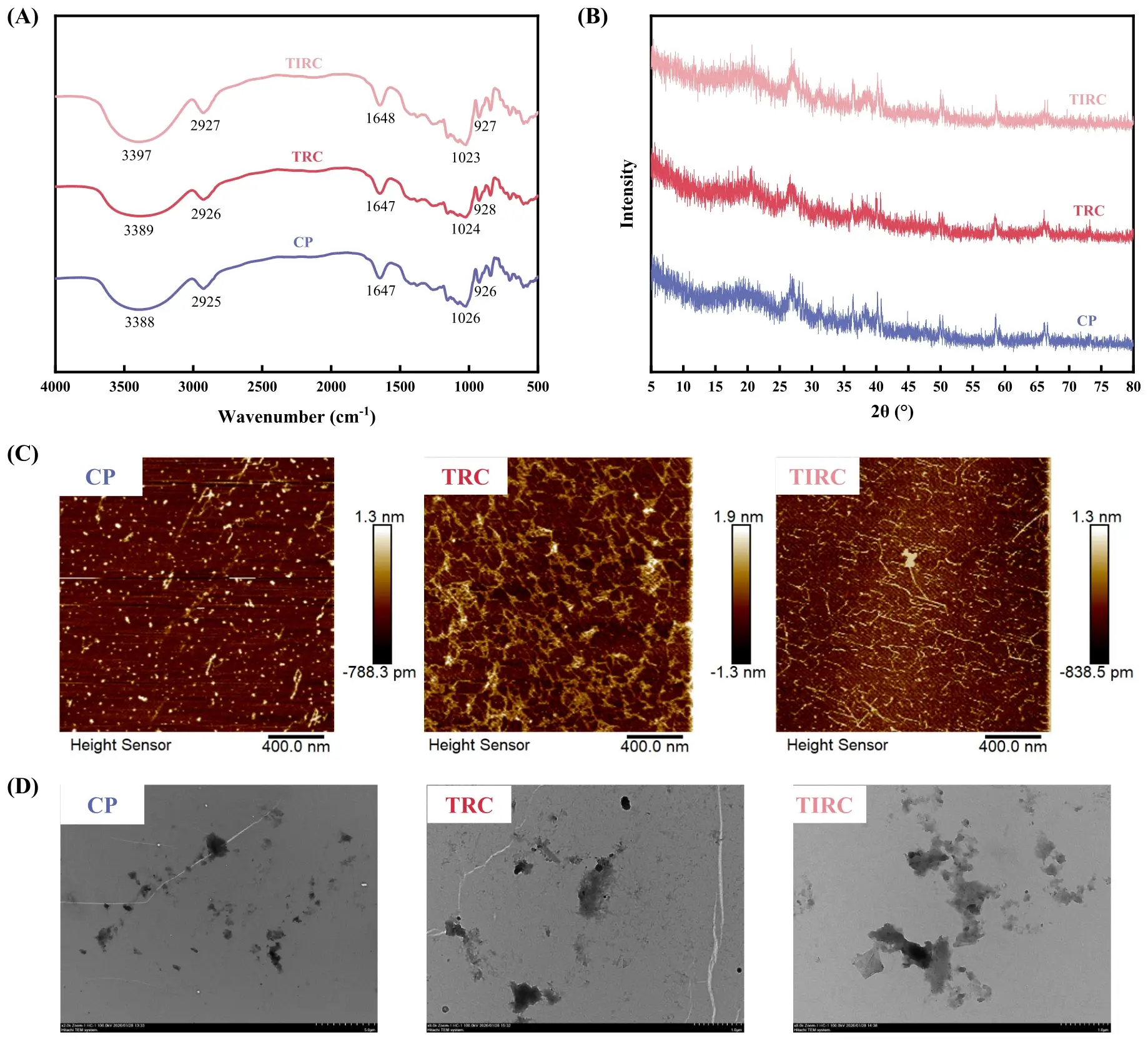
Fig. 1A displays the FTIR spectra of CP, TRC, and TIRC. The broad peak observed in CP at 3388 cm⁻¹ was primarily due to the stretching and vibration of -OH bonds along its molecular chain. Compared to CP, TRC showed only a marginal shift in this region, whereas TIRC exhibited a noticeable red shift to 3397 cm⁻¹ along with peak narrowing. This is likely due to the disruption of intermolecular hydrogen bonds and the unwinding of the triple-helix of curdlan. Native curdlan possesses a rigid triple-helix conformation stabilized by abundant intermolecular and intramolecular hydrogen bonds (Ailiesei et al., 2025).
Heating at 55 °C (for TRC preparation) only breaks partial intermolecular hydrogen bonds, while retaining most of the triple-helix structure. Under this condition, molecular chains tend to form short crosslinked networks without complete unwinding. In contrast, further heating to above 80 °C (for TIRC preparation) destroys most of the intramolecular hydrogen bonds within the curdlan triple-helix structure, leading to irreversible dissociation of the triple-helix into single-helix conformation.
The peak at 2925 cm⁻¹ in CP, corresponding to -CH₃ stretching vibration, became significantly more intense in TIRC, which may result from the exposure of -CH₃ groups following the unfolding of the helical conformation (Du et al., 2023). The absorption at 1647 cm⁻¹ indicated the presence of bound water in CP, and its enhancement in TIRC suggested the formation of new hydrogen bonds (Zhao et al., 2025). The peak at 1026 cm⁻¹ represented the vibrational mode of C-O-C glycosidic bonds, while the signal at 926 cm⁻¹ was characteristic of β-structure absorption (Li et al., 2025).
The crystalline structures of the various curdlan samples were analyzed by XRD (Fig. 1B). All three samples displayed diffraction peaks at approximately 2θ = 6° and 20°, consistent with a helical conformation and low crystallinity typical of curdlan samples. Notably, TIRC exhibited more diffuse peaks compared to the other two samples, which suggested a greater degree of structural uncoiling (Chen, Liu et al., 2025). Among the samples, TRC showed the smallest integrated diffraction peak area and the lowest crystallinity, reflecting a stronger tendency to form multi-junction points and short-range networked structures (Li et al., 2025), as also visualized in the corresponding AFM images (Fig. 1C).
3.1.2. AFM and TEM images
Fig. 1C presents the AFM images of the different curdlan samples. At room temperature, the CP group exhibited a granular morphology with a small amount of fibrous structure, indicating its poor solubility in water under these conditions. TRC showed a network structure consisting of loosely aggregated dense zones interconnected by thinner bridging regions. The chains within these two types of regions formed thinner single helices, whereas the main framework of the network retained a thicker triple-helix conformation.
This morphology, characterized by multiple junction points and a short-range networked architecture, aligns with the XRD results discussed earlier. In contrast, TIRC displayed finer and longer fibrous structures, suggesting that most of the triple-helix configuration had unwound into single helices. These thin fibers were entangled with each other, forming an irregular and discontinuous network. Therefore, it is speculated that TRC is more conducive to the formation of a denser gel network in emulsified meat products than TIRC.
TEM images of the different curdlan samples are presented in Fig. 1D. The partial aggregation observed in the CP group at room temperature confirmed its poor solubility in water. TRC displayed faint, short fibers that assembled into a network-like structure. In contrast, TIRC showed extensive irregular aggregation, suggesting that thermal treatment promoted the formation of an irregular, entangled network from these fibers. In summary, the temperature conditions during gel preparation served as the key factor driving the molecular conformational transition of curdlan.
Low-temperature heating (55 °C) produced TRC with a partial triple-helix structure and a dense network, while high-temperature secondary heating (>80 °C) caused irreversible helix unwinding, forming the fibrous structure of TIRC. These molecular-level structural differences further determine their distinct interaction modes with meat proteins in frankfurters.
3.2. Proximate composition
The proximate composition of frankfurters is shown in Table 1. Compared with the control group, adding TG alone remarkably reduced the moisture content (P < 0.05), which is in agreement with the increased cooking loss observed in TG-treated samples (Table 2). This reduction could be attributed to TG-induced covalent crosslinking between MPs, which weakened protein-water interactions and promoted water release during thermal processing (Dong et al., 2020). No significant differences were found in protein, fat, or ash content between the control and TG groups (P > 0.05).
With the further incorporation of TRC or TIRC, the moisture content increased markedly compared to TG group (P < 0.05), reaching the highest values at 0.5% addition levels. This was likely due to the hydrophilic nature of TRC/TIRC, which facilitated water retention through hydrogen bonding within the gel matrix. Moreover, the combination of TG with TRC or TIRC did not result in significant changes in protein, fat, or ash content across all treatment groups (P > 0.05). These results indicate that the variations in texture and in vitro protein digestibility stem from structural modifications caused by TG and TRC/TIRC within the protein gel network, rather than from compositional differences among treatments.
| Treatment | Moisture (%) | Protein (%) | Fat (%) | Ash (%) |
|---|---|---|---|---|
| Control | 58.75 ± 0.30AB | 20.71 ± 0.14A | 13.49 ± 0.12A | 1.25 ± 0.12A |
| TG | 56.72 ± 0.32D | 20.20 ± 0.08B | 13.22 ± 0.13A | 1.37 ± 0.07A |
| TG + TRC-0.3% | 57.57 ± 0.21C | 20.42 ± 0.04AB | 13.55 ± 0.16A | 1.33 ± 0.03A |
| TG + TRC-0.4% | 58.08 ± 0.34BC | 20.46 ± 0.08AB | 13.56 ± 0.14A | 1.21 ± 0.13A |
| TG + TRC-0.5% | 59.16 ± 0.33A | 20.41 ± 0.05AB | 13.56 ± 0.09A | 1.31 ± 0.08A |
| TG + TRC-0.6% | 58.47 ± 0.07AB | 20.43 ± 0.04AB | 13.53 ± 0.13A | 1.31 ± 0.03A |
| TG + TIRC-0.3% | 57.48 ± 0.12C | 20.33 ± 0.23AB | 13.38 ± 0.01A | 1.29 ± 0.03A |
| TG + TIRC-0.4% | 57.58 ± 0.23C | 20.29 ± 0.10B | 13.46 ± 0.14A | 1.34 ± 0.04A |
| TG + TIRC-0.5% | 58.69 ± 0.08AB | 20.60 ± 0.14AB | 13.49 ± 0.12A | 1.38 ± 0.06A |
| TG + TIRC-0.6% | 57.56 ± 0.19C | 20.32 ± 0.13AB | 13.33 ± 0.04A | 1.36 ± 0.04A |
Values are means ± standard error from triplicate determinations. Within each column, values with no superscript letter in common differ significantly (P < 0.05).
3.3. Cooking loss and emulsion stability
As shown in Table 2, compared to the control group, the addition of TG remarkably increased the cooking loss and impaired the emulsion stability (P < 0.05). This phenomenon was due to covalent crosslinking between MPs induced by TG, which reduced the water retention capacity of MPs (Dong et al., 2020). As the amount of TRC/TIRC added increased, the cooking loss, released water, released fat and total released initially decreased and then increased, reaching the lowest values at 0.5% TRC/TIRC addition (P < 0.05).
This was attributed to curdlan’s capacity to absorb water and oil, thereby reducing the juice loss during thermal processing (Liu et al., 2026). In addition, curdlan could interact with MPs through non-covalent interactions, which was helpful to the generation of a more uniform gel network that effectively retained more water and fat (Jiang et al., 2025). Zhu, Liu, et al. (2024) reported that carrageenan helped maintain the integrity of the MP gel network, facilitating better immobilization of water molecules.
Compared with the TG group, the TG + TRC-0.5% and TG + TIRC-0.5% groups reduced cooking loss by 58.73% and 55.63%, respectively, demonstrating optimal water retention capacity. When the curdlan concentration was increased to 0.6%, cooking loss increased by 56.83% for the TG + TRC-0.5% group and 51.64% for the TG + TIRC-0.5% group. This reversal could be due to overfilling of curdlan within the MP gel network, leading to the displacement and expulsion of water and fat (Yu & Zhang, 2025).
Additionally, curdlan had a relatively high molecular weight and promoted self-aggregation at elevated concentrations. This could cause the thermodynamic incompatibility between curdlan and MPs, resulting in microphase separation (Zhang et al., 2024). Consequently, the gel network became uneven, reducing the water holding capacity of frankfurters (Jiang et al., 2020).
| Treatment | Cooking loss (%) | Total released (%) | Released water (%) | Released fat (%) |
|---|---|---|---|---|
| Control | 4.23 ± 0.16B | 3.49 ± 0.09B | 3.30 ± 0.09B | 0.19 ± 0.01BC |
| TG | 5.50 ± 0.25A | 4.49 ± 0.08A | 4.25 ± 0.09A | 0.24 ± 0.02A |
| TG + TRC-0.3% | 3.79 ± 0.02C | 2.68 ± 0.04CD | 2.51 ± 0.04CD | 0.17 ± 0.01C |
| TG + TRC-0.4% | 3.35 ± 0.05D | 2.42 ± 0.06D | 2.25 ± 0.05E | 0.17 ± 0.02C |
| TG + TRC-0.5% | 2.27 ± 0.06E | 1.89 ± 0.04E | 1.75 ± 0.04F | 0.14 ± 0.02D |
| TG + TRC-0.6% | 3.56 ± 0.07CD | 2.46 ± 0.09D | 2.25 ± 0.09E | 0.20 ± 0.01B |
| TG + TIRC-0.3% | 3.90 ± 0.04BC | 2.77 ± 0.03C | 2.65 ± 0.04C | 0.14 ± 0.01D |
| TG + TIRC-0.4% | 3.39 ± 0.06D | 2.47 ± 0.07D | 2.30 ± 0.08DE | 0.17 ± 0.01C |
| TG + TIRC-0.5% | 2.44 ± 0.04E | 1.96 ± 0.06E | 1.81 ± 0.04F | 0.12 ± 0.02D |
| TG + TIRC-0.6% | 3.70 ± 0.05CD | 2.57 ± 0.07CD | 2.36 ± 0.06DE | 0.19 ± 0.01BC |
Values are means ± standard error from triplicate determinations. Within each column, values with no superscript letter in common differ significantly (P < 0.05).
3.4. Texture
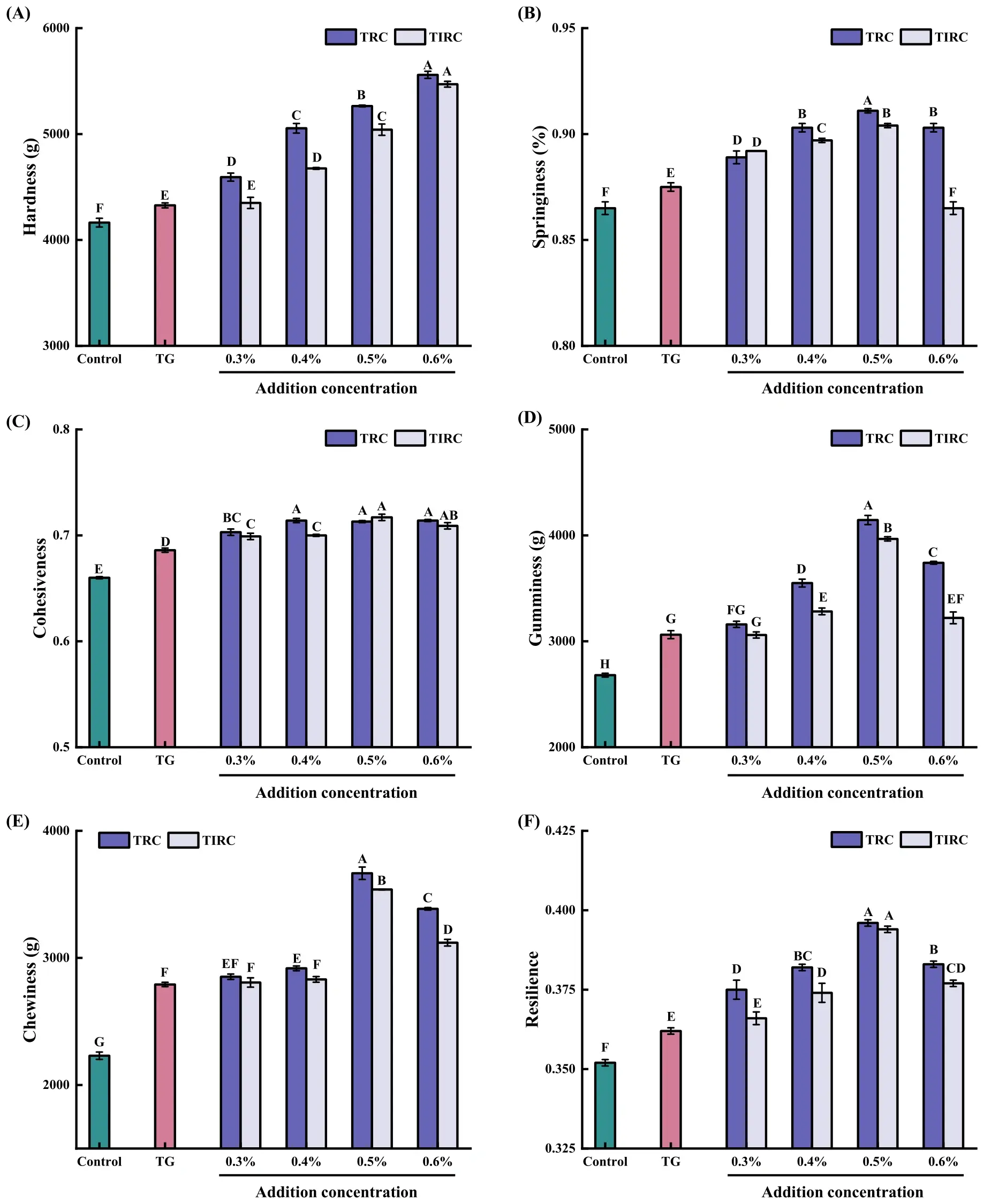
As shown in Fig. 2, when compared with the control group, the addition of TG markedly enhanced all texture parameters of samples (P < 0.05). The hardness of the control group was 4163.94 ± 41.17 g, while that of the TG group increased to 4326.81 ± 23.31 g, representing an increase of 3.91%. Springiness and chewiness increased by 1.16% and 25.15%, respectively. This improvement likely stemmed from TG-induced covalent crosslinking of MPs, promoting the transition of protein structures from a flexible to a rigid state (Zhu, Wang, et al., 2024).
Yu et al. (2025) indicated that TG-induced covalent crosslinking shortened the protein-protein distance and altered protein conformation, thereby refining the gel network. Du et al. (2022) observed that TG addition promoted the formation of larger protein aggregates, contributing to improved texture properties of the products. With further incorporation of TRC/TIRC, all texture parameters of frankfurters showed additional increases (P < 0.05). This was due to the role of TRC/TIRC to fill pores within the gel network after TG crosslinking, obtaining in a more compact matrix.
Supportively, Li, Qi, et al. (2024) reported that gellan gum could occupy pores in protein gels and generate a denser composite gel network. Yu and Zhang (2025) also found that the pectin promoted MP polymerization, leading to a polymer network with superior mechanical properties. In addition, FTIR spectroscopy confirmed that the curdlan and TG treatment promoted a notable α-helix-to-β-sheet transition, which in turn contributed substantially to superior textural properties (Huang et al., 2024).
However, when TRC/TIRC concentration exceeded 0.5%, significant reductions were observed in the springiness, gumminess, chewiness, and resilience of frankfurters (P < 0.05). At high concentrations, the high molecular weight of curdlan promoted polymer entanglement, which induced phase separation within the protein gel matrix, leading to structural discontinuity and weakened mechanical properties (Zhang et al., 2024). Notably, TRC exhibited superior texture parameters compared to TIRC at the same concentration.
This can be linked to its structural properties observed in our initial characterization (FTIR, XRD, and AFM), particularly the thermal expansion of its triple-helix structure, which promoted better integration into the MP gel network (Zhu, Wang, et al., 2024). Xu et al. (2024) demonstrated that TRC could promote stronger molecular interactions compared to TIRC, thereby increasing the gel strength of MP gels.
3.5. SEM images and pore size
To examine gel network structures of frankfurters, SEM images and pore size are presented in Fig. 3. The control group exhibited a porous and uneven structure, characterized by numerous pores within the gel matrix (circled in Fig. 3). This structural feature may account for the inferior texture parameters of frankfurters. Following the addition of TG, the microstructure showed significant aggregation due to covalent crosslinking, yet it remained rough and irregular. This aggregation contributed to form a tighter and more robust network, thereby enhancing texture properties.
Song et al. (2025) indicated that the network of MP gels added with TG became more distinct and rougher, which was due to increased heterogeneity and the formation of large aggregates. Notably, the pore size from TG group was larger than the control group (P < 0.05), possibly due to irregular protein aggregation caused by TG, leading to the formation of larger pores. These larger pores may explain the water and fat loss observed in frankfurters. Moreover, the supplement of TRC and TIRC led to a noticeably more compact microstructure, accompanied by an obvious decrease in pore size (P < 0.05).
This was due to the fact that both TRC and TIRC effectively filled the pores within the gel matrix and mitigated the excessive aggregation caused by TG crosslinking. This structural refinement was conducive to enhancing the flexibility of the MP gel network, thus improving the cohesiveness and gumminess of the products. Xu et al. (2024) found that curdlan could promote non-covalent interactions among MPs and facilitate the generation of a more uniform gel network. Furthermore, the TG + TRC-0.5% group exhibited a slightly smaller pore size than the TG + TIRC-0.5% group.
This was attributed to the distinct structural properties of the two polysaccharides. Based on our structural characterization (section of 3.1.1 and 3.1.2) and relevant studies, TRC undergoes a conformational transition from triple-helix to single-helix structure during the heating treatment (Xiao et al., 2017), allowing it to penetrate and integrate more effectively into the MP gel network. In contrast, TIRC retains a more rigid conformation and primarily acts in a “filling” mode within the gel matrix (Xu et al., 2024).

3.6. FTIR analysis
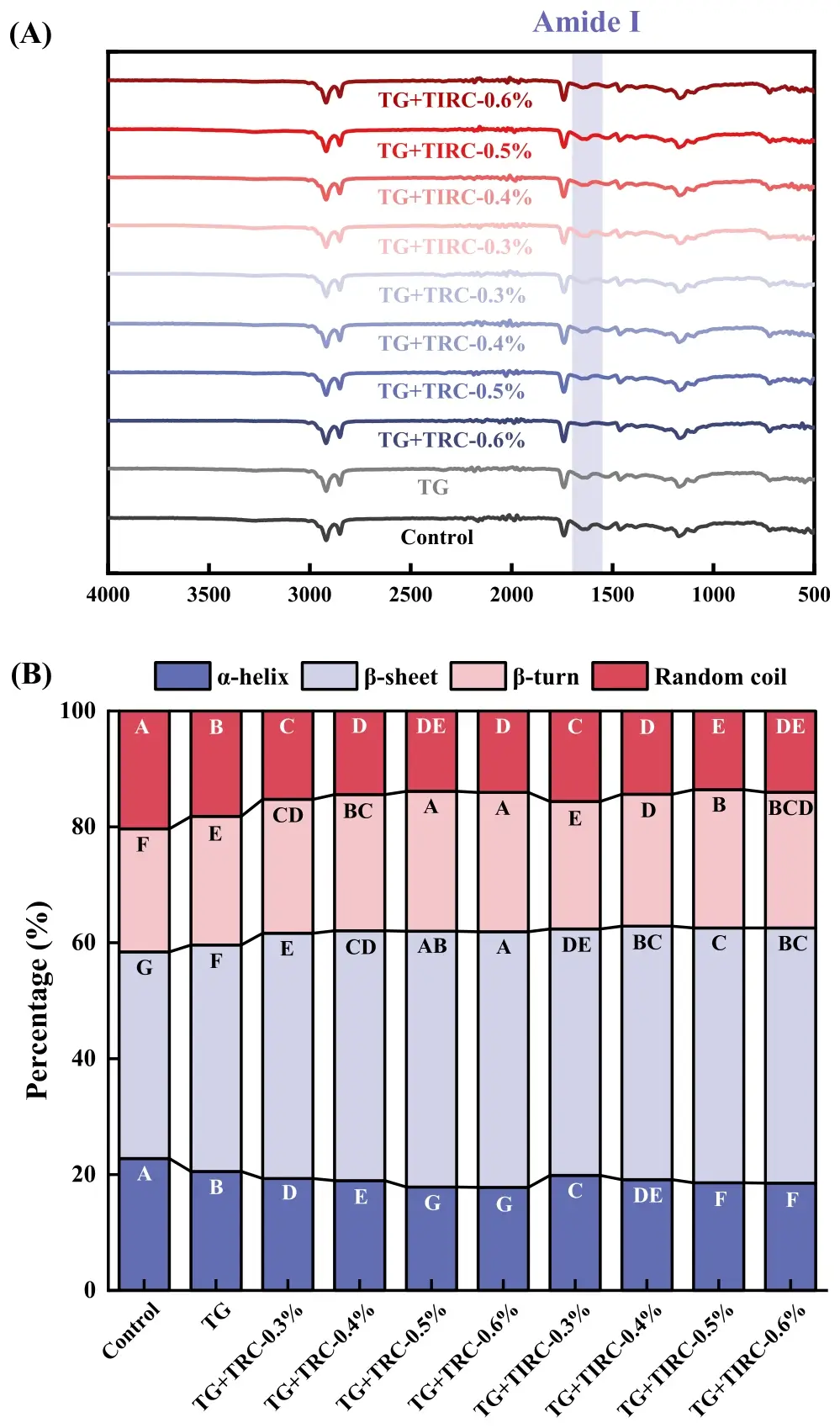
The FTIR spectra are presented in Fig. 4A. Upon addition of TG, the peak intensity of amide I band decreased noticeably, and this reduction became more pronounced with further incorporation of TRC and TIRC, suggesting an unfolding of the MP molecular conformation (Yuan et al., 2026). The percentage of protein secondary structures derived from the amide I band is shown in Fig. 4B. Compared to the control group, adding TG markedly reduced the content of α-helix and random coil, while increasing β-sheet and β-turn contents (P < 0.05).
This primarily due to TG-induced crosslinking that facilitated the unfolding, dissociation, and recombination of MPs (Zou et al., 2022). Gao et al. (2024) observed that TG enhanced the interaction between MPs and increase the β-sheet content, primarily attributed to strong hydrophobic interactions. As TRC/TIRC amounts increased, the protein structure continuously shifted from α-helix and random coil to β-sheet and β-turn (P < 0.05). This may be due to the rearrangement of intramolecular hydrogen bonds, leading to an increase in α-helix and a decrease in β-sheet (Li, Li, et al., 2024).
Zhou et al. (2024) indicated that the β-sheet possessed a larger surface compared to the α-helix, which could promote water molecule hydration via hydrogen bonding and facilitate the formation of a stronger gel network. These changes help explain the observed improvements in cooking loss and texture. However, at concentrations exceeding 0.5%, changes in secondary structure plateaued, with no significant variation (P > 0.05), mainly due to steric hindrance effects (Yuan et al., 2026).
3.7. Crosslinking degree
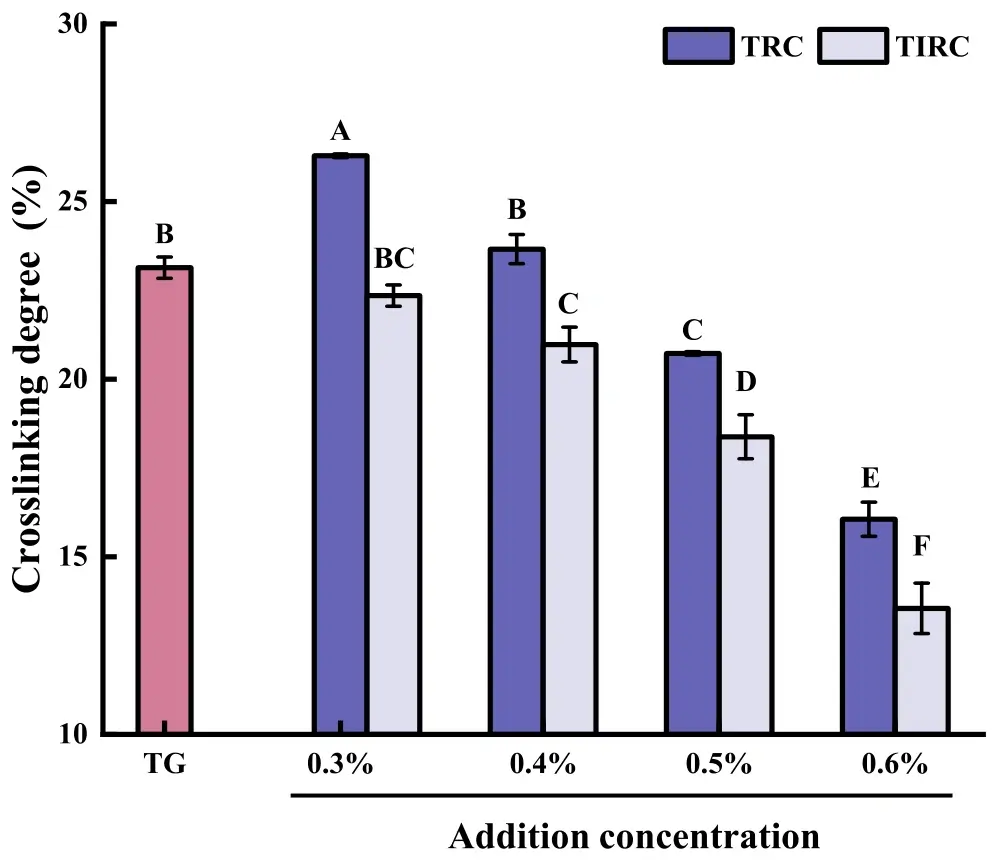
The degree of covalent crosslinking induced by TG was assessed by measuring residual amino acid content, as it correlates directly with the mechanical strength of MP gels. As presented in Fig. 5, the crosslinking degree in frankfurters with added TG was approximately 23%, confirming that TG promoted the formation of isopeptide bonds between lysine and glutamine. Zhu et al. (2022) noted that such bond formation enhanced gel mechanical strength, aligning with the texture trends observed here.
Exception for the TG + TRC-0.3% group, the supplement of TRC and TIRC significantly decreased the crosslinking degree (P < 0.05). After the addition of 0.5% TRC and TIRC, the crosslinking degree decreased to 10.41% and 20.57%, respectively, compared with the TG group. This reduction was resulted from the steric hindrance imposed by TRC and TIRC, which interfered with TG-induced interactions among MPs. In addition, non-covalent interactions between TRC/TIRC and MPs possibly diminished the extent of covalent crosslinking in the system (Feng, Liang, Zhao, et al., 2024).
Although covalent crosslinking is crucial for the mechanical strength of protein gels, excessive crosslinking may disrupt network order and continuity (Ruzengwe et al., 2020). In this context, the supplement of TRC and TIRC may fill the pores within the TG-treated MP gel matrix by physical entanglement, promoting a more continuous network. This could also be proven through the microstructure mentioned above. Notably, TG established a strong covalent framework for intermolecular linkages, while TRC and TIRC regulated molecular arrangement via non-covalent interactions (Chen, Lan et al., 2025).
This synergistic interaction enhanced the structural integrity of MP gels and improve the quality profiles of frankfurters. Interestingly, at equivalent concentrations, TIRC resulted in a lower degree of covalent crosslinking compared to TRC (P < 0.05). This difference may arise from the thermal transition of TRC from a triple-helix to a single-helix structure during heating, allowing it to integrate more thoroughly into the MP gel network (Xiao et al., 2017). In contrast, TIRC’s higher thermal stability may limit it to a filler role, exerting stronger steric hindrance that further inhibits TG-mediated crosslinking.
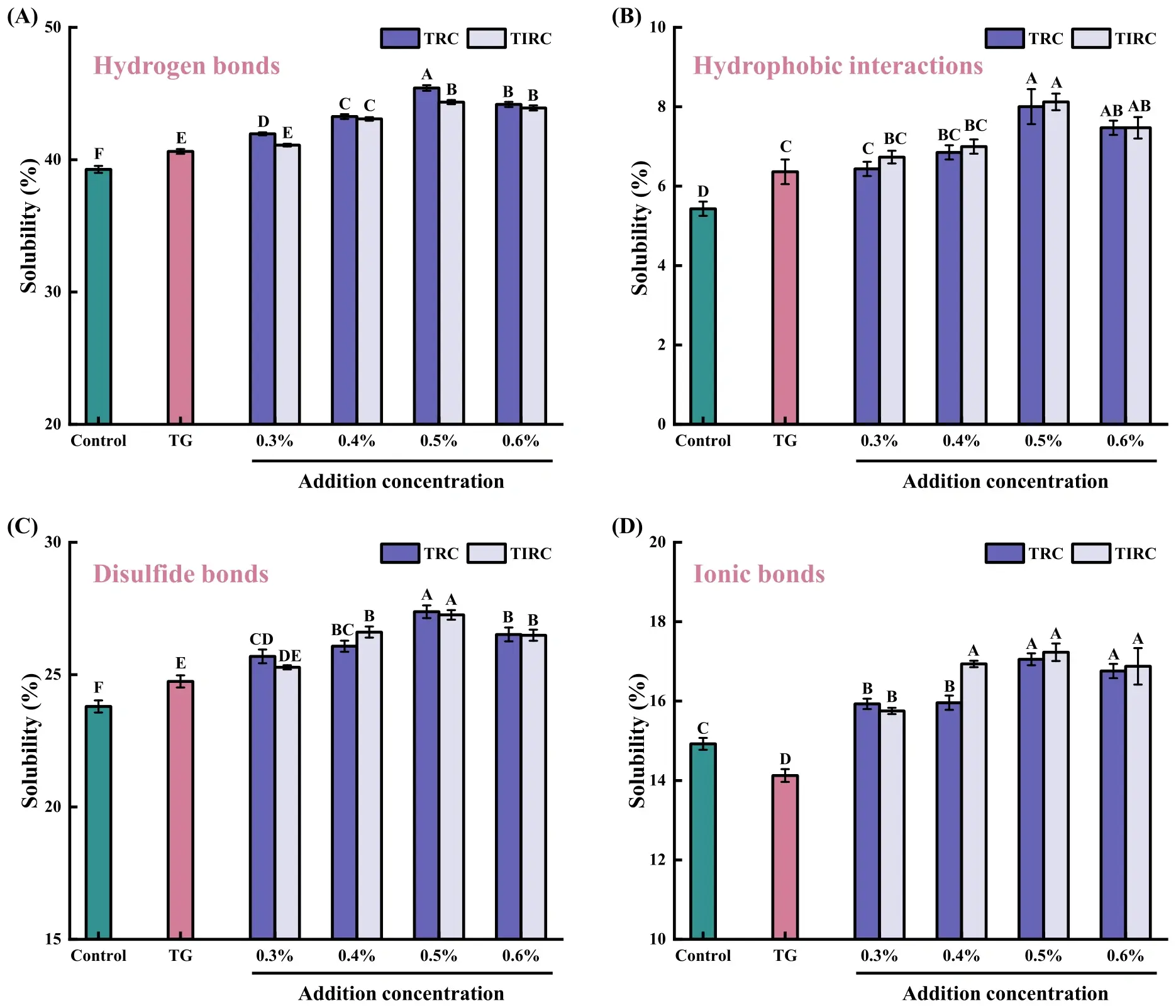
3.8. Molecular forces
As illustrated in Fig. 6, molecular interactions in frankfurters formulated with TRC/TIRC and TG were analyzed. Among the four interaction types measured, hydrogen bond was remarkably higher than the others, indicating its key role in stabilizing the frankfurter matrix. This aligns with earlier findings in similar systems (Yuan et al., 2023). Moreover, hydrogen bond content was markedly greater in TG-treated frankfurters compared to the control group (P < 0.05). This was resulted from the unfolding of protein molecules induced by TG, which led to tyrosine leakage and its subsequent participation in hydrogen bond formation within a polar environment (Li et al., 2021).
Sun et al. (2025) indicated that TG promoted intermolecular interactions among adjacent proteins. With increasing TRC/TIRC levels, hydrogen bonding initially rose and then declined, achieving its peak at a TRC/TIRC concentration of 0.5% (P < 0.05). Xu et al. (2024) reported that hydrogen bonds were formed between the abundant hydroxyl groups of TRC/TIRC and the polar side chains of MPs (e.g. serine, threonine, glutamine, asparagine). This finding corroborates earlier observations of synergistic enhancement between carrageenan and TG in MP gels (Feng, Liang, Zhao, et al., 2024).
This trend likely results from interactions between hydroxyl groups in TRC/TIRC and polar side chains of MPs (Xu et al., 2024), and corroborates earlier observations of synergistic enhancement between carrageenan and TG in MP gels (Feng, Liang, Zhao, et al., 2024). According to Cao et al. (2018), the hydrogen bond was generally positively correlated with gel strength. In addition, hydrophobic interactions were also significantly stronger in TG-treated frankfurters than in the control (P < 0.05), likely due to TG-induced crosslinking exposing hydrophobic groups (Zou et al., 2022).
Yu et al. (2025) indicated that TG promoted meat protein interactions and enhanced hydrophobic bonding within the gel matrix. TRC and TIRC further increased hydrophobic interaction content (P < 0.05), which can be attributed to protein unfolding and the exposure of internal hydrophobic regions. The ordered arrangement of water molecules around these hydrophobic surfaces reduces entropy, thereby driving protein aggregation and promoting gel network formation (Ye et al., 2024; Yuan, Zhnag et al., 2024).
The disulfide bond content was notably higher in TG-treated frankfurters than in the control group (P < 0.05). This likely resulted from the exposure of buried sulfhydryl groups during TG-induced crosslinking, which subsequently oxidized to form disulfide bonds upon heating (Chen et al., 2024). Disulfide bonds are generated between cysteine residues of MPs during thermal processing, which are enhanced by TG-induced protein unfolding. A similar TG-promoted disulfide bond formation was observed by Farooq et al. (2025).
With TRC and TIRC addition, disulfide bond content first increased and then decreased, peaking at the 0.5% addition level (P < 0.05). Since disulfide bonds were linked to improved gel properties, this trend helped explain the favorable texture characteristics observed at 0.5% TRC/TIRC. Beyond this level, disulfide bond content declined significantly (P < 0.05), possibly due to steric hindrance impeding bond formation. Notably, TG addition significantly reduced ionic bond content (P < 0.05).
Ionic bonds arise from electrostatic interactions between ionized acidic and basic amino acid side chains. TG catalyzed covalent crosslinks involving lysine residues, which may reduce the number of ionizable groups and weaken electrostatic interactions (Yang et al., 2025). In contrast, increasing TRC and TIRC levels gradually enhanced ionic bond content (P < 0.05), consistent with findings that these polysaccharides alter charge distribution in the protein gel matrix (Xu et al., 2024).
Interestingly, the effects of TRC and TIRC on the four molecular forces did not show a clear directional trend, suggesting that different curdlan types have minimal systematic influence on the dominant molecular forces in the frankfurter system.
3.9. Sensory evaluation
As shown in Fig. 7, incorporating TG and TRC/TIRC had minimal impact on the interior color and flavour of frankfurters (P > 0.05), largely because these compounds are inherently low in color and odor intensity. Compared to the control, TG addition reduced juiciness scores, likely due to increased cooking loss that decreased moisture and fat content. In contrast, TRC and TIRC progressively enhanced juiciness score, peaking at 0.5% concentration (P < 0.05), which aligns with cooking loss results.
Furthermore, TG significantly improved texture and uniformity scores (P < 0.05), primarily due to covalent crosslinking reinforcing the MP gel network. When TRC and TIRC were included, these scores increased further (P < 0.05). This improvement can be due to TRC and TIRC acting as inert fillers within the MP gel matrix, contributing to a more cohesive and uniform structure—consistent with earlier texture and microstructure analyses. Lin, Roos, and Miao (2025) similarly reported that κ-carrageenan enhanced juiciness, springiness, and hardness scores in frankfurters.
The overall sensory score, calculated via a fuzzy logic model (Fig. 7), was slightly higher in TG-treated frankfurters than the control group (P > 0.05). With combined TRC and TIRC incorporation, the overall score increased further, reaching a maximum at 0.5% concentration (P < 0.05). These results indicate that TRC and TIRC can act synergistically with TG to improve sensory attributes of frankfurters by enhancing their structural and textural properties.

3.10. Protein digestibility
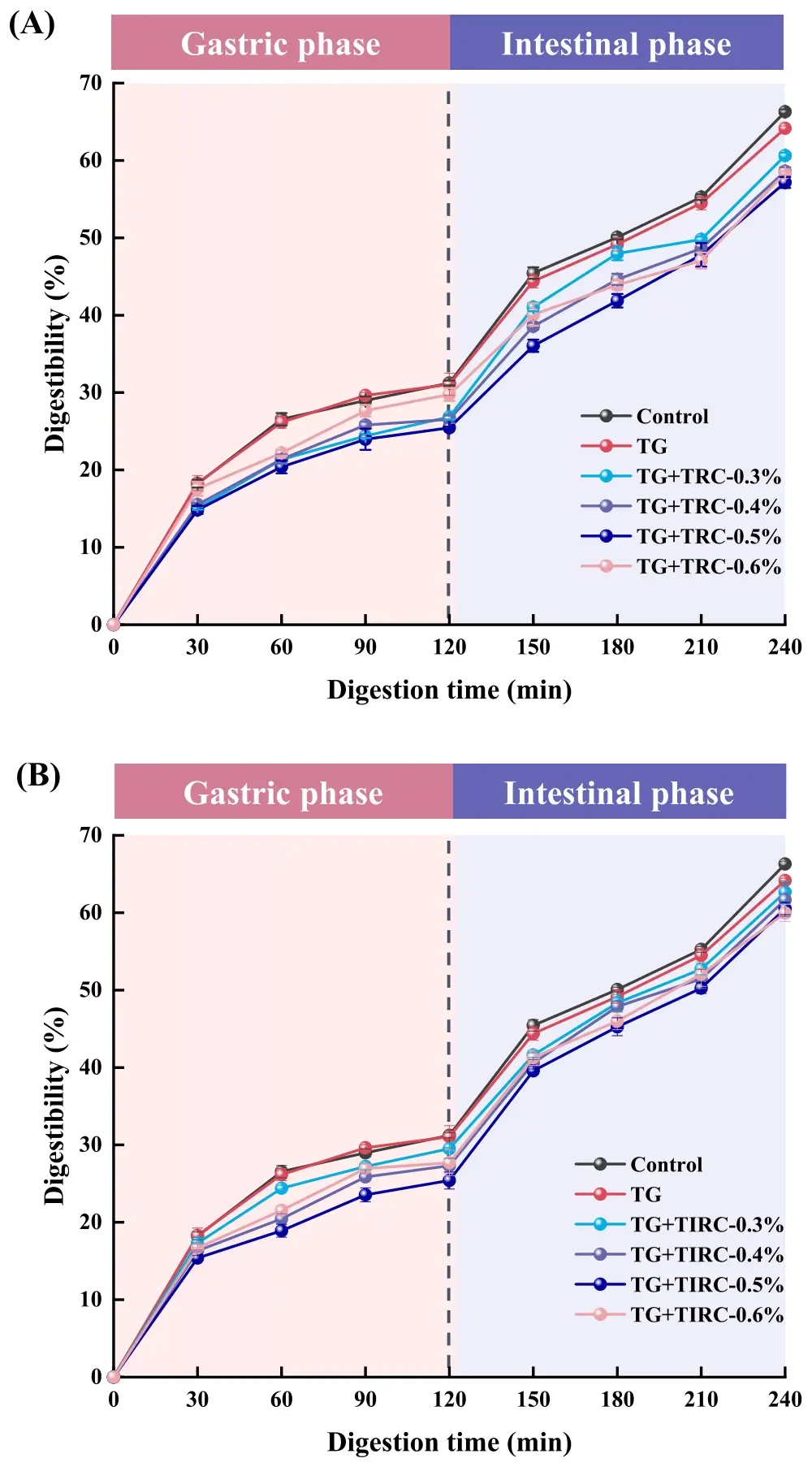
As shown in Fig. 8, with prolonged digestion time, in vitro protein digestibility gradually increased, reflecting the hydrolysis of proteins into peptide fragments by gastrointestinal enzymes (Wei et al., 2023). During simulated gastric digestion, no significant difference in digestibility was observed between control and TG-treated groups (P > 0.05). In the subsequent intestinal phase, however, the control group showed higher digestibility than the TG group (P < 0.05). This suggested that during early digestion, gastric proteases could access sufficient cleavage sites in the MP matrix.
In later stages, TG-catalyzed isopeptide bonds likely altered protein conformation or shielded cleavage sites, limiting trypsin accessibility and thus reducing digestibility. Additionally, trypsin specifically targets arginine and lysine residues, while TG-mediated isopeptide bond formation between lysine and glutamine can sterically hinder trypsin hydrolysis (Wang et al., 2022). Similar findings were noted by Lin, Roos, and Miao (2025), who noted that isopeptide bonds could impede enzyme diffusion and substrate accessibility.
Fang et al. (2021) observed that TG-induced crosslinking increased gel density, thereby affecting protease digestion. Moreover, with the further incorporation of TRC and TIRC, protein digestibility initially decreased and then increased (P < 0.05). This was resulted from the formation of a denser gel network through physical filling by TRC and TIRC, which concealed digestive sites and reduced enzyme accessibility (Hu et al., 2017). Jiang et al. (2024) suggested that the incorporation of polysaccharide altered the ionic strength of the MP gel system, which could weaken the protein binding and complicate the enzymatic digestion.
Additionally, the transformation of protein structure from α-helix to β-sheet reduced the exposure of trypsin-specific cleavage sites, thus leading to lower protein digestibility. Undigested protein-polysaccharide complexes can serve as key substrates for colonic microbial fermentation, thereby regulating the intestinal environment and influencing the composition of the gut microbiota (Wang et al., 2026). However, when addition amounts exceeded 0.5%, a consequent increase in protein digestibility was observed, which was mainly due to the overfilling that disrupted the gel network, thus exposing more digestive sites (Cao et al., 2022).
Furthermore, at the same concentration, frankfurters treated with TRC exhibited lower digestibility than those with TIRC (P < 0.05). This difference may be explained by the heat-induced conformational transition of TRC into a denser three-dimensional network, which could more effectively shield digestive enzymes from their substrate.
3.11. Digestion kinetics
Generally, the supplement of TG and hydrocolloids obviously influences digestion kinetics of meat products. As shown in Fig. 9, the R² values were higher than 0.95, implying that the model provided a good fit and could effectively describe the digestive behavior under gastrointestinal conditions. Throughout digestion, the in vitro protein digestibility increased gradually over time due to the action of digestive enzymes. However, compared with the control group, samples containing TG showed a lower digestibility.
This may be due to the generation of covalent bonds that limited enzyme access to cleavage sites. The effect was more pronounced when TG was combined with TRC and TIRC, indicating that the obtained denser gel network further impeded enzymatic hydrolysis. Moreover, among all formulations, the TG + TRC-0.5%, TG + TIRC-0.4%, and TG + TIRC-0.5% groups exhibited lower K values compared to the others, implying that these samples required more time to reach the digestion endpoint. This delay was due to the development of a more uniform gel network by TG and TRC/TIRC, which hindered digestive enzymes from reaching their substrates.
In support of this, Zhang et al. (2018) noted that the incorporation of TG restricted polysaccharide mobility, leading to a rigid network structure that prolonged digestion time and reduced the overall digestibility. It is worth noting that a lower rate constant (k) and a higher final plateau (Cf) indicate a slower digestion rate rather than a permanent reduction in amino acid availability. Such a digestion pattern helps delay gastric emptying and enhance satiety. Therefore, controlled protein digestibility is meaningful for the development of satiety-enhanced meat products.

3.12. Particle size and distribution of digestive products
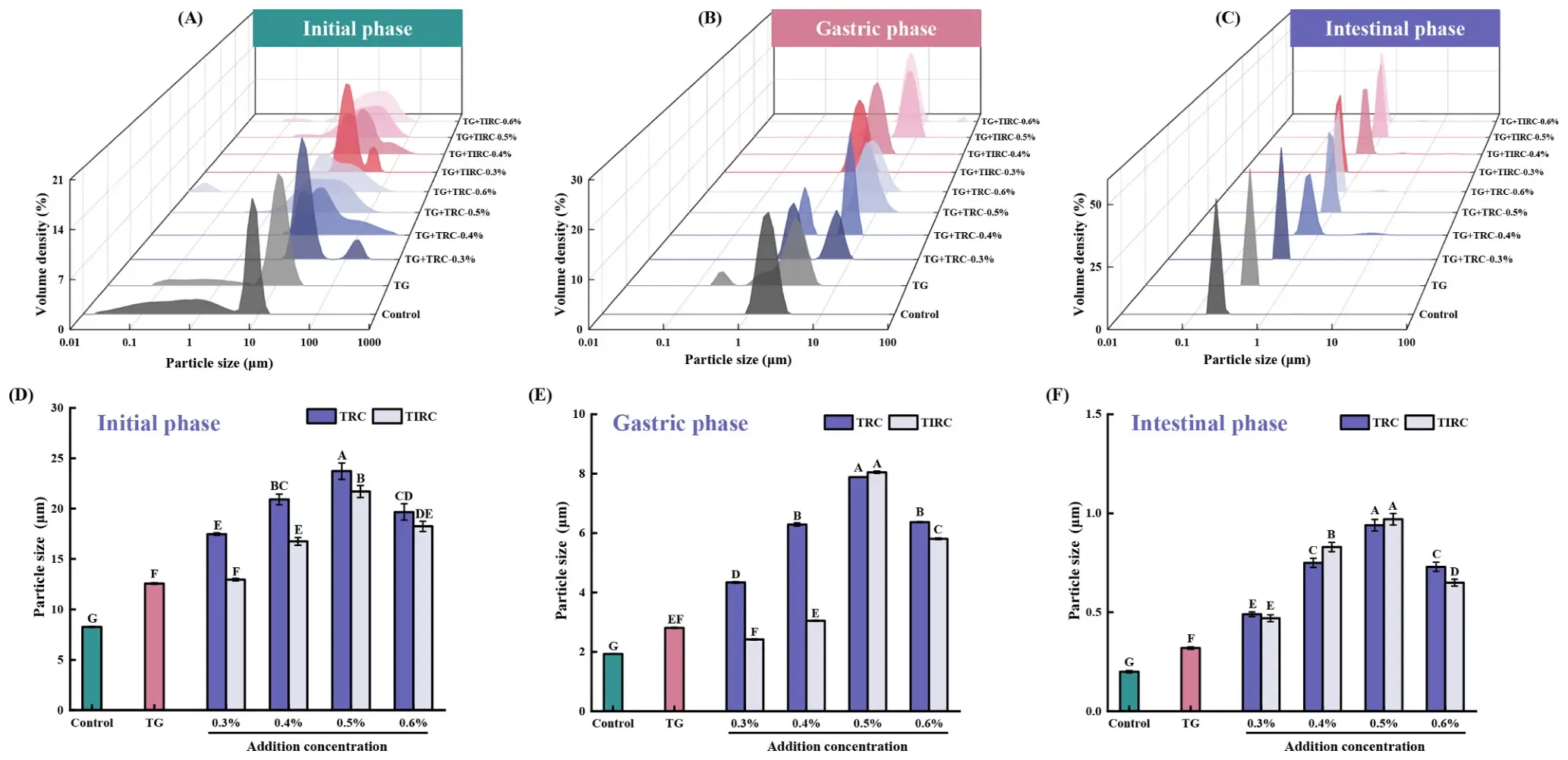
To further evaluate sample digestibility, particle size and distribution of the digestive products were analyzed (Fig. 10). Prior to in vitro digestion, the initial samples containing TG exhibited significantly larger particle sizes than the control group (P < 0.05), with a noticeable rightward shift in the particle size distribution peak. This increase likely resulted from the formation of macromolecular aggregates through TG-induced covalent crosslinking, consistent with Feng et al. (2025), who reported that TG promoted MP aggregation and sedimentation.
The supplement of TRC or TIRC led to a continued growth in particle size (P < 0.05) and shifted the distribution peak further rightward, primarily due to physical entanglement between polysaccharides and MPs via molecular interactions. During gastrointestinal digestion, the particle size of the control group decreased to 0.20 μm, indicating the breakdown of large protein molecules into smaller peptides. Concurrently, the particle size distribution peak became narrower and more intense, reflecting a more uniform dispersion of fine particles.
After gastric and intestinal digestion, the particle size of the TG group was 0.32 μm, which was 60% higher than that of the control group, likely because covalent crosslinking hindered digestive enzyme access to protein cleavage sites. The inclusion of TRC and TIRC further increased particle size (P < 0.05), along with a rightward shift in the distribution peak, indicating reduced protein digestibility and the presence of incompletely hydrolyzed particles. However, at TRC and TIRC concentrations above 0.5%, the particle size of the digestive products decreased (P < 0.05).
This reversal may be due to the formation of a weak protein gel structure, which exposed more enzyme cleavage sites and allowed more extensive hydrolysis into smaller particles.
3.13. Super-resolution microscopy images of digestive products
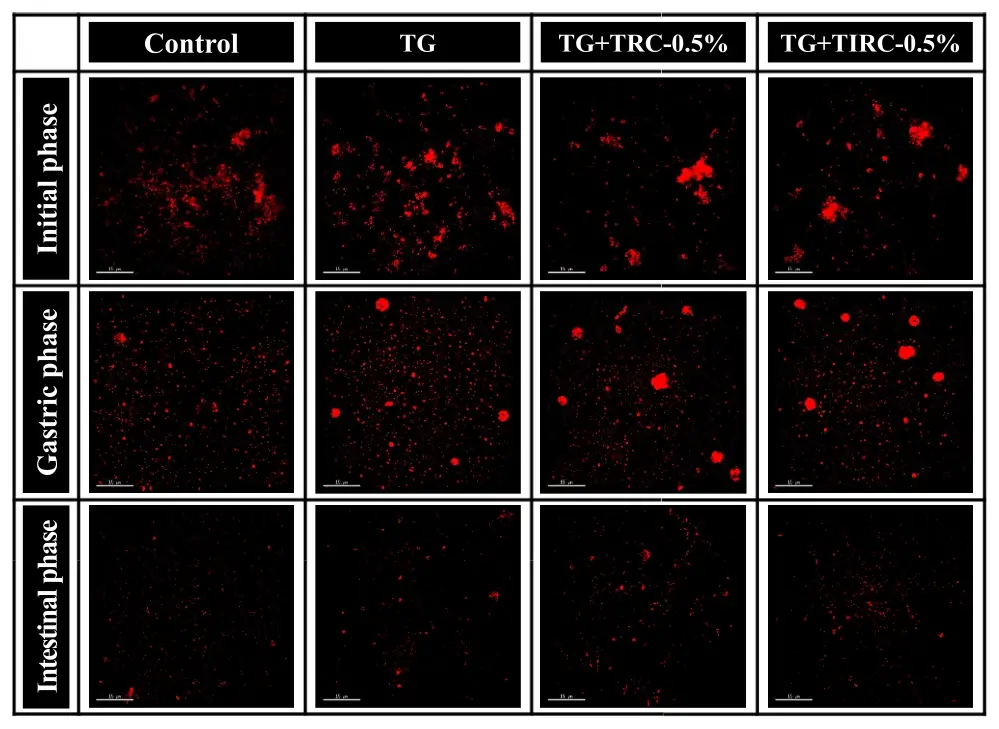
The microstructure of samples before and after digestion was further examined, as shown in Fig. 11. In undigested samples, the control showed small, uniformly distributed red fluorescent spots. By contrast, the TG group displayed larger, aggregated spots, indicating TG-induced covalent crosslinking promoted MP aggregation. Combined addition of TG with TRC or TIRC intensified this aggregation, implying larger MP aggregates formed through combined covalent and non-covalent crosslinking—consistent with prior particle size results.
For gastric digestive products, the control exhibited numerous small fluorescent spots, reflecting hydrolysis of MPs into smaller peptides. TG addition resulted in scattered large red spots, likely representing undigested protein or peptide aggregates. Inclusion of TRC/TIRC further increased the size and number of these spots, indicating reduced digestibility. After simulated intestinal digestion, particle size markedly decreased in all samples due to trypsin action. Changes in microscopic distribution aligned with post-gastric patterns.
As expected, the control displayed the smallest, most uniform spots, reflecting extensive hydrolysis. TG addition notably increased the size of some digestive particles. This aligns with reports that TG-catalyzed isopeptide bonds involving lysine can hinder tryptic cleavage at lysine residues (Wang et al., 2022). Further introduction of TRC/TIRC produced larger and more abundant red fluorescent spots, consistent with the observed decrease in protein digestibility.
3.14. Peptide profile analysis
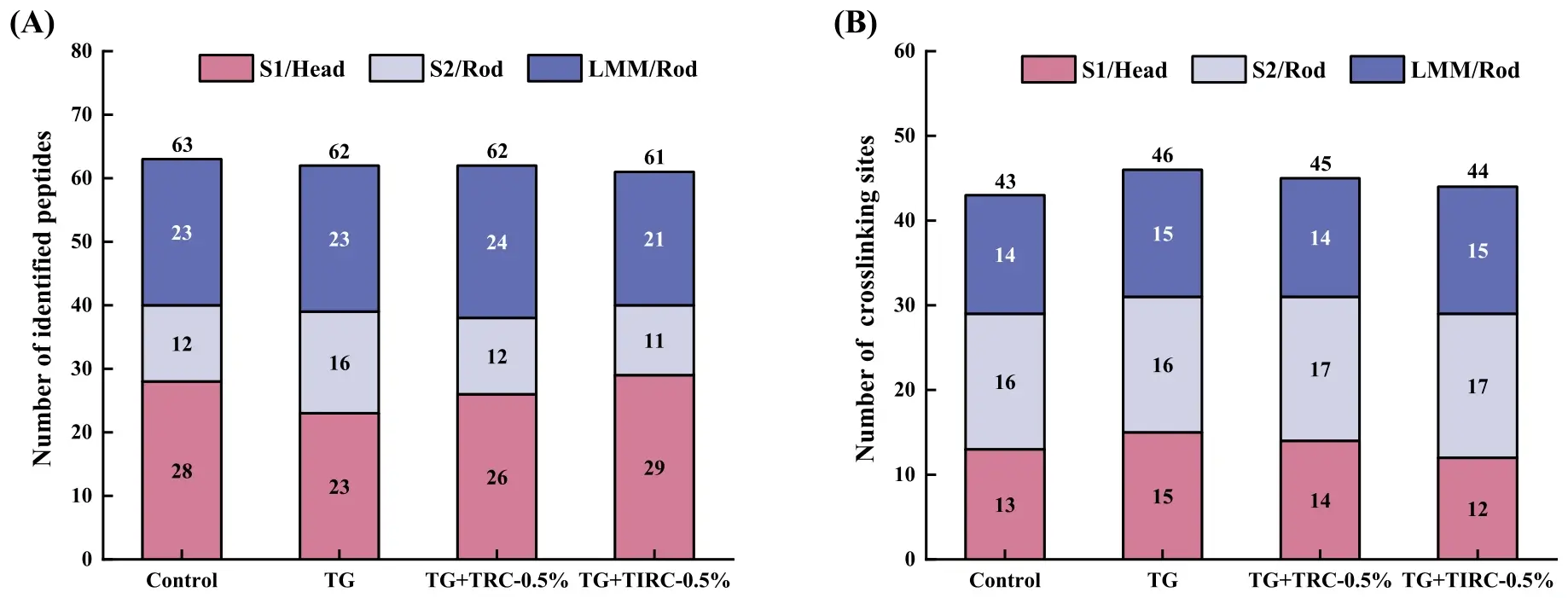
Peptidomic analysis was conducted to reveal the intrinsic mechanism by which TG combined with TRC/TIRC regulates the in vitro digestibility of frankfurters. The number of identified peptides of different samples is presented in Fig. 12A. Specifically, the peptide count decreased from 1158 in the control group to 953 in the TG group. This reduction was because covalent crosslinking caused by TG hindered trypsin-mediated cleavage at lysine sites. In contrast, the peptide numbers in the TG + TRC-0.5% and TG + TIRC-0.5% groups increased to 1091 and 1036, respectively, likely due to the steric hindrance exerted by TRC and TIRC, which suppressed TG-induced crosslinking.
The molecular weight distribution of these peptides is shown in Fig. 12B. Across all samples, approximately 80% of the peptides had molecular weights within the range of 1000–2000 Da, indicating that trypsin preferentially generated peptides of short-to-moderate length. Notably, most of these peptides fell into the low-molecular-weight range that can be efficiently absorbed by the small intestine via the paracellular transporter pathway, ensuring effective amino acid uptake (Fang et al., 2021).
Compared with the control group, the TG group exhibited a decreased proportion of peptides in the 500–2000 Da range and an increased proportion in the 2000–3000 Da range, which may be explained by TG-mediated crosslinking leading to longer peptide segments. Following the addition of TRC and TIRC, the molecular weight of peptide segments decreased. This suggests that curdlan incorporation provides broader access for digestive enzymes to cleavage sites, thereby facilitating the production of more small-molecule peptides.
This shift toward smaller peptides further supports that the reduced digestibility observed in this study reflects delayed digestion rather than impaired bioavailability, as these small peptides remain highly absorbable and nutritionally available. Furthermore, the Venn diagram in Fig. 12C reveals that 368 peptides were common to all samples, with 223, 145, 186, and 129 unique peptides detected in the control, TG, TG + TRC-0.5%, and TG + TIRC-0.5% groups, respectively. Fang et al. (2021) reported that changes in total and unique peptides were associated with TG-induced covalent crosslinking.
The sources of these peptides are analyzed in Fig. 12D. Among the digestive products, myosin-derived peptides constituted the largest proportion, followed by peptides from actin and other sources. Compared with the control group, the proportion of myosin-derived peptides decreased in the TG group but increased again upon TRC and TIRC addition. We speculate that this phenomenon arises because TG-induced covalent crosslinking occurs predominantly in myosin. Therefore, we further analyzed the amino acid sequences of myosin-derived peptides.

3.15. Potential crosslinking mechanism
The amino acid sequences of myosin-derived peptides from the digestive products of different samples are displayed in Fig. S1. In this figure, gray shading indicates the identified peptides in each sample, and the number of these peptides is quantified in Fig. 13A. The distribution of identified peptides suggested a relatively uniform dispersion of trypsin cleavage sites. Compared with the control group, the TG group exhibited a decreased number of identified peptides, indicating a reduction in accessible trypsin cleavage sites.
As reported by Du et al. (2022), trypsin specifically hydrolyzed peptide bonds at lysine and arginine residues. However, within the myosin amino acid sequence, the formation of isopeptide bonds between lysine and glutamine prevented the identification of lysine residues involved in TG-induced crosslinking. Therefore, by comparing the unidentified lysine residues across different samples, potential TG-induced crosslinking sites can be indirectly inferred. In Fig. S1, unidentified isopeptide bonds involving lysine are highlighted in bright colors, and their corresponding counts within distinct myosin domains are presented in Fig. 13B.
The number of crosslinking sites increased from 43 in the control group to 46 in the TG group, with the additional sites localized in the myosin head and the light meromyosin (LMM) region of the myosin rod. This indicated that TG induced covalent crosslinking in these regions, thereby inhibiting trypsin cleavage at these sites. Notably, the incorporation of TRC and TIRC significantly reduced the number of potential crosslinking sites in myosin compared with the TG-only group. This reduction was attributed to the steric hindrance formed by TRC/TIRC molecules surrounding the protein chains, which limited TG’s access to its target sites, consequently re-exposing the cleavage sites to trypsin.
Collectively, these results confirmed that TRC and TIRC modulated the gel network structure and protein digestibility of frankfurters by reducing the number of TG-induced potential crosslinking sites on myosin. This moderate crosslinking not only preserved the improved textural properties conferred by TG but also alleviated the obstruction of enzyme–substrate interactions caused by excessive crosslinking. Thus, it provides a direct molecular explanation for the recovery of in vitro protein digestibility following the incorporation of TRC or TIRC.
3.16. HCA analysis
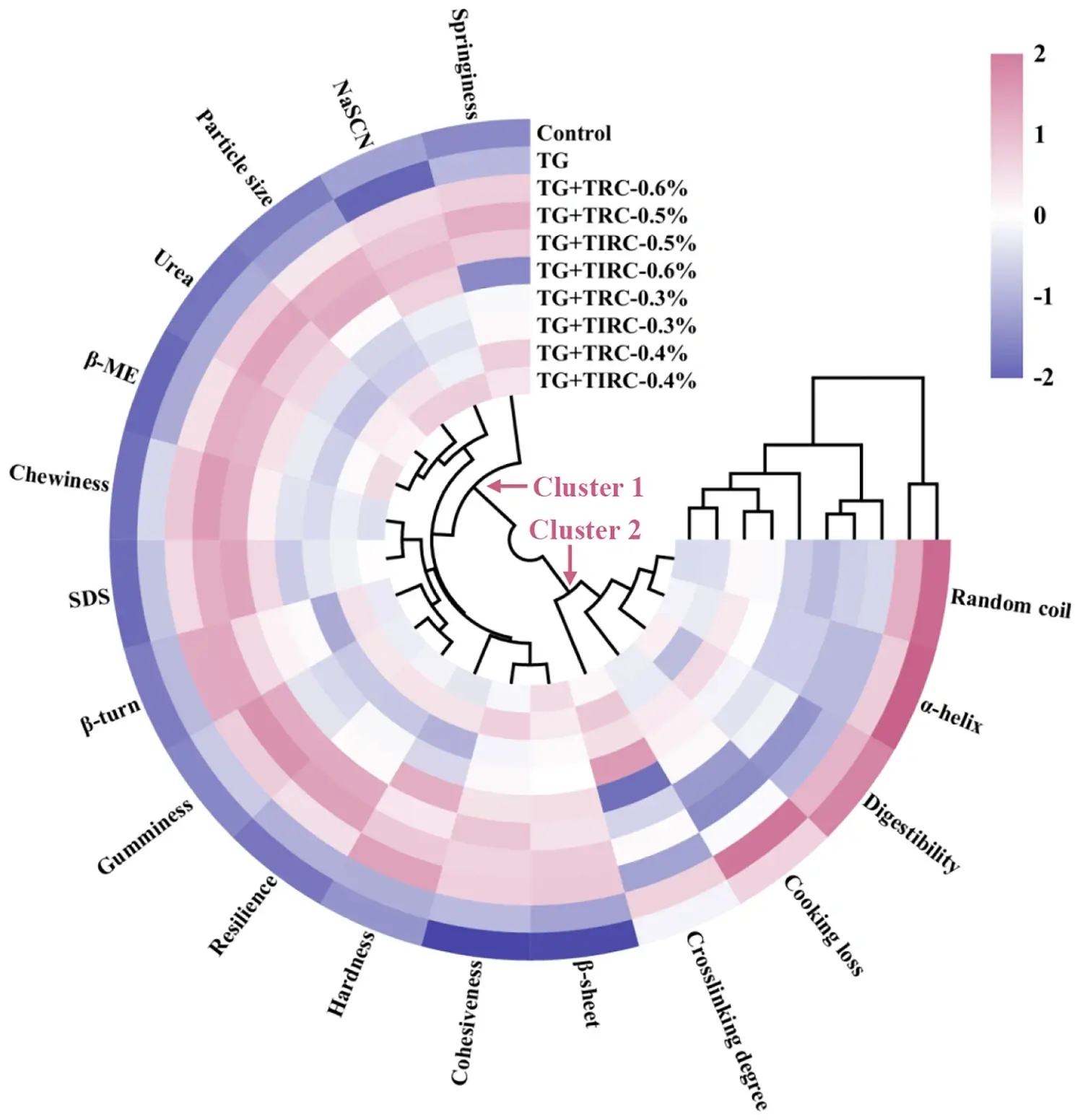
HCA was performed to evaluate relationships among the experimental groups, as presented in Fig. 14. The resulting circular dendrogram revealed distinct clustering patterns. Cluster 1 included the control and TG groups, which exhibited a notable downregulating trend in texture properties, β-sheet, β-turn, and molecular forces. In contrast, groups containing both TG and TRC/TIRC showed only a slight downregulating trend or even an upregulating trend in these parameters. Cluster 2 comprised the control and TG groups, which displayed a clear upregulating trend in cooking loss, protein digestibility, α-helix, random coil, and crosslinking degree, whereas the remaining groups exhibited a downregulating trend in these indicators.
Furthermore, the control group clustered closely with the TG group. When the addition level of TRC or TIRC was below 0.5%, samples with the same concentration of TRC or TIRC were grouped together, suggesting that at lower concentrations, the concentration had a greater influence on the product properties than the type (TRC and TIRC).
3.17. Schematic mechanism
A potential schematic diagram was proposed as illustrated in Fig. 15. The control group exhibited a discontinuous gel network with large pores in frankfurters, which contributed to its soft texture, as well as the loss of moisture and fat. The incorporation of TG facilitated covalent crosslinking between proteins via isopeptide bonds, leading to a more rigid MP gel matrix and thereby enhancing texture properties of frankfurters. Although the TG-treated gel displayed a relatively integrated structure, its regularity and homogeneity remained suboptimal due to the dominant role of covalent bonds.
Moreover, the TG-induced crosslinking also weakened protein–water interactions, leading to an increased cooking loss in MP gel matrix. The TRC or TIRC incorporation complemented the covalent crosslinking caused by TG via non-covalent interactions, effectively modulating interactions among MP molecules. This synergy facilitated a more compact gel network, ultimately improving the overall quality profiles of final products. Comparative analysis indicated that the incorporation of TRC formed a more regular gel network in frankfurters than that of TIRC.
This difference could be attributed to the thermo-reversible nature of TRC, which enabled the transition from a triple-helix to a single-helix structure during heat-induced gelation. Such structural transition allowed TRC to penetrate more deeply into the MP gel matrix, contributing to a more ordered network. In contrast, the thermal stability of TIRC limited its role to that of a “filler”, merely occupying interstitial spaces within the MP gel matrix. Furthermore, the incorporation of TG reduced in vitro digestibility in frankfurters.
This was attributed to the covalent crosslinking formed by TG between lysine and glutamine residues, which consequently limited trypsin accessibility to its specific cleavage sites. The reduction in protein digestibility was further prominent when TG was combined with TRC/TIRC, as their synergistic effect contributed to the establishment of a denser gel network, thereby more effectively shielding the enzymatic cleavage sites.

4. Conclusions
The TRC or TIRC incorporation efficaciously mitigated the increased cooking loss and reduced emulsion stability in frankfurters resulting from the addition of TG alone. Meanwhile, TRC/TIRC cooperated with TG markedly improved texture properties of frankfurters, optimally at a 0.5% concentration. Moreover, TRC and TIRC not only reduced the degree of covalent crosslinking induced by TG but also synergistically enhanced non-covalent interactions within the MP gel matrix. Furthermore, TRC formed a more uniform and dense gel network in frankfurters than TIRC, mainly because its triple-to-single helix transition facilitated more effective interactions with MP.
However, this dense network also significantly reduced the in vitro digestibility of frankfurters, as it limited the accessibility of digestive enzymes. These results provide a scientific basis and technical support for the quality improvement of emulsified meat products. In future research, the relationship between gel structure, in vitro digestibility and in vivo nutritional bioavailability will be deeply analyzed, achieving a balance between processing quality and nutritional properties.
Statement for studies in humans/animals
This study did not involve human subjects or animal experiments.
CRediT authorship contribution statement
Dongxue Yuan: Writing – original draft, Methodology, Investigation. Yutong Liu: Software, Investigation, Data curation. Cheng Li: Validation, Methodology. Baohua Kong: Visualization, Resources. Chuanai Cao: Software, Methodology. Hongwei Zhang: Software, Investigation. Huailiang Zhang: Validation, Resources. Qian Liu: Writing – review & editing, Supervision, Funding acquisition, Conceptualization. Yangyang Feng: Visualization, Methodology, Investigation.
Declaration of competing interest
The authors declared that they have no conflicts of interest to this work.
Acknowledgements
This study was supported by National Natural Science Foundation of China (Grant No. 32472383), Youth Fund (Category C) of Natural Science Foundation of Heilongjiang Province (Grant No. QC2025C011), Key Projects of Natural Science Foundation of Heilongjiang Province (Grant No. ZD2025C013) and Taishan Industrial Experts Program (Grant No. tscx202507113).
Appendix A. Supplementary data
Supplementary material (Tables S1–S3 and Figure S1) is available through the publisher’s article page.
Data availability
The data that has been used is confidential.
References
- Abubaker, M. A., Zhang, D. D., Liu, G. X., Ma, H. R., He, Y., Mala, A., … Liu, Y. F. (2025). Polysaccharides as natural enhancers for meat quality, preservation, and protein functionality: A comprehensive review. Food Chemistry, 468, Article 142428.
- Ailiesei, G. L., Popescu, I., Avadanei, M., Bercea, M., Suflet, D. M., Ferariu, A. C., & Fundueanu, G. (2025). Water-soluble hydroxypropyl curdlan derivatives with thermosensitive properties. Carbohydrate Polymers, 368, Article 124209.
- AOAC. (2012). Official methods of analysis (19th ed.). Maryland, USA: Association of Official Analytical Chemistry.
- Bhuiyan, M. H. R., Yeasmen, N., & Ngadi, M. (2025). Effect of food hydrocolloids on 3D meat-analog printing and deep-fat-frying. Food Hydrocolloids, 159, Article 110716.
- Cao, C. A., Yuan, D. X., Kong, B. H., Chen, Q., He, J. J., & Liu, Q. (2022). Effect of different κ-carrageenan incorporation forms on the gel properties and in vitro digestibility of frankfurters. Food Hydrocolloids, 129, Article 107637.
- Cao, H. W., Fan, D. M., Jiao, X. D., Huang, J. L., Zhao, J. X., Yan, B. W., … Zhang, H. (2018). Effects of microwave combined with conduction heating on surimi quality and morphology. Journal of Food Engineering, 228, 1–11.
- Chen, T. T., Liu, D. H., Li, L. Q., Y, J. M., Yu, Y. H., & Yan, J. K. (2025). Enhancement of gel characteristics of curdlan thermo-irreversible gels by β-cyclodextrin and its possible mechanisms. Food Chemistry, 467, Article 142320.
- Chen, Y. F., Lan, S. Q., Gao, X. J., Ding, J. Y., Zhou, X. X., Liu, S. L., & Ding, Y. T. (2025). Dual crosslinking approach of K+ and TGase to enhance the thermal stability and intestinal delivery efficiency of emulsion gels. Food Chemistry, 486, Article 144365.
- Chen, Z. H., Dai, Z. C., Liu, C. H., Wang, S., Li, J., & Mao, X. Z. (2024). Microbial transglutaminase promotes cross-linking for enhancing gelation of myofibrillar protein in frozen Litopenaeus vannamei through deamination reaction. Food Hydrocolloids, 147.
- Dong, X. P., Pan, Y. X., Zhao, W. Y., Huang, Y., Qu, W. H., Pan, J. F., … Prakash, S. (2020). Impact of microbial transglutaminase on 3D printing quality of Scomberomorus niphonius surimi. LWT – Food Science and Technology, 124, Article 109123.
- Du, H., Ji, Q., Xing, Y. C., Ma, X. M., & Xia, Y. Z. (2023). A general route to strong, conductive and antibacterial curdlan-based purely natural eutectohydrogels with self-assembled layer-by-layer network structure. Carbohydrate Polymers, 316, Article 121035.
- Du, J. J., Cao, J. X., Zhou, C. Y., Pan, D. D., Geng, F., & Wang, Y. (2022). Insight into the mechanism of myosin-fibrin gelation induced by non-disulfide covalent crosslinking. Food Research International, 156, Article 111168.
- Fang, M. X., Xiong, S. B., Yin, T., Hu, Y., Liu, R., Du, H. Y., … You, J. (2021). In vivo digestion and absorption characteristics of surimi gels with different degrees of cross-linking induced by transglutaminase (TGase). Food Hydrocolloids, 121, Article 107007.
- Farooq, A., Ahmad, M. I., Zheng, S. J., Ali, U., Abdullah, Xue, J. W., … Zhang, H. (2025). Fabrication and characterization of double-network meat analogs based on camellia oleosomes and soy protein-wheat gluten induced by transglutaminase and calcium alginate. International Journal of Biological Macromolecules, 310, Article 143322.
- Feng, Y. Y., Liang, X., Zhang, J. M., Shi, P. R., Cao, C. A., Zhang, H. W., … Kong, B. H. (2024). Underlying mechanisms and combined effects of transglutaminase and κ-carrageenan on the quality profiles and in vitro digestibility of frankfurters. Food Hydrocolloids, 147, Article 109344.
- Feng, Y. Y., Liang, X., Zhao, Z. H., Kong, B. H., Xia, X. F., Cao, C. A., … Sun, F. D. (2024). Mechanisms and effects of different crosslinking degrees on gelling properties and in vitro digestibility of heat-induced microbial transglutaminase-mediated myofibrillar protein gels with or without κ-carrageenan. Food Hydrocolloids, 152, Article 109964.
- Feng, Z. L., Li, C., Zhang, L. T., Xue, C. F., Pei, Z. S., & Shen, X. R. (2025). Transglutaminase–mediated engineering of myofibrillar proteins for enhanced stability and rheology in high internal phase Pickering emulsions. LWT – Food Science and Technology, 230, Article 118284.
- Gao, Y. F., Zhuang, D., Ye, J. R., Guo, Y. J., & Zhu, J. (2024). Modulation of sodium distribution and digestion properties in low salt myofibrillar protein gel incorporating γ-polyglutamic acid and transglutaminase: Conformation and microstructure. Food Hydrocolloids, 153, Article 110007.
- Hu, B., Chen, Q., Cai, Q. M., Fan, Y., Wilde, P. J., Rong, Z., & Zeng, X. X. (2017). Gelation of soybean protein and polysaccharides delays digestion. Food Chemistry, 221, 1598–1605.
- Jiang, S., Mo, F., Liu, Q., & Jiang, L. (2024). Insights into the in vitro digestibility and rheology properties of myofibrillar protein with different incorporation types of curdlan. Food Chemistry, 459, Article 140255.
- Jiang, S., Yan, R. Y., Mo, F., Liu, Q., & Jiang, L. (2025). Regulating the gel structure and digestive function of myofibrillar protein: The distinct roles of pre-hydrated curdlan and β-glucan. Food Chemistry, 489, Article 144981.
- Jiang, S., Zhao, S. C., Jia, X. W., Zhang, H., Liu, Q., & Kong, B. H. (2020). Thermal gelling properties and structural properties of myofibrillar protein including thermo-reversible and thermo-irreversible curdlan gels. Food Chemistry, 311, Article 126018.
- Lesiow, T., Rentfrow, G. K., & Xiong, Y. L. (2017). Polyphosphate and myofibrillar protein extract promote transglutaminase-mediated enhancements of rheological and textural properties of PSE pork meat batters. Meat Science, 128, 40–46.
- Li, D. Y., Li, N., Wang, Y. F., Zhang, K. X., Tan, Z. F., Liu, H. L., … Zhou, D. Y. (2024). Effect of konjac glucomannan on gelling and digestive properties of myofibrillar protein in Litopenaeus vannamei based on molecular docking. Food Hydrocolloids, 149, Article 109595.
- Li, J. L., Munir, S., Yu, X. Y., Yin, T., You, J., Liu, R., … Hu, Y. (2021). Double-crosslinked effect of TGase and EGCG on myofibrillar proteins gel based on physicochemical properties and molecular docking. Food Chemistry, 345, Article 128655.
- Li, L. Q., Pan, L. Y., Liang, T. X., Jin, M. Y., Yu, Y. H., Liu, X. Z., … Yan, J. K. (2025). Improvement of the gel properties of curdlan gel by hydrogen bonding interaction with trehalose. Food Hydrocolloids, 159, Article 110671.
- Li, Y. L., Qi, X., Rong, L. Y., Li, J. W., Shen, M. Y., & Xie, J. H. (2024). Effect of gellan gum on the rheology, gelling, and structural properties of thermally induced pea protein isolate gel. Food Hydrocolloids, 147, Article 109379.
- Lin, S. W., Sun, Z. G., Li, C., Kong, B. H., Cao, C. A., Xia, X. F., … Liu, Q. (2025). Quantitative proteomics provides new insights into the mechanism underlying textural property improvement in frankfurters by ultrasound treatment combined with κ-carrageenan. Food Hydrocolloids, 159, Article 110633.
- Lin, Y. C., Roos, Y. H., & Miao, S. (2025). Transglutaminase crosslinked fish gelatin emulsion gels: Structure, rheology behaviors, and delivery functionality. Food Hydrocolloids, 162, Article 111001.
- Liu, Y. X., Li, X. Y., Chen, L. Y., Feng, F., Sun, C., Xu, Y. C., & Wang, Y. F. (2026). Curdlan modulates potato starch gelatinization and gelation: Mechanisms of interaction, structural enhancement, and texture improvement in hydrogel foods. Food Hydrocolloids, 172, Article 112033.
- Nie, C. L., Zhong, H. T., Shi, H. B., Tomasevic, I., Zheng, J. B., & Sun, W. Z. (2025). Myofibrillar protein gel incorporated with soybean dietary fiber and sodium substitutes: Synergetic effect on gel properties and in vitro gastric digestion. Food Chemistry, 492, Article 145601.
- Ruzengwe, F. M., Amonsou, E. O., & Kudanga, T. (2020). Transglutaminase-mediated crosslinking of Bambara groundnut protein hydrogels: Implications on rheological, textural and microstructural properties. Food Research International, 137, 1–8.
- Song, F. T., Gu, Q. P., Liu, L., Xu, T. J., Li, L. L., Yang, Q. L., & Lv, L. T. (2025). Study on the allergenicity and gel properties of transglutaminase cross-linked shrimp myofibrillar protein. Food Chemistry, 488, Article 144910.
- Sun, Z. L., Zhang, W. H., Zhang, F. K., Chiu, I., Li, D., Wu, X. H., … Zheng, H. Y. (2025). Physicochemical modulation of soy-hemp-wheat protein meat analogues prepared by high-moisture extrusion using transglutaminase. Food Research International, 208, Article 116229.
- Wang, K. N., Jia, Y. Y., Meng, X., Hou, J. Y., Lu, F. P., & Liu, Y. H. (2025). Improving the physicochemical properties of microbial transglutaminase-induced fish gelatin gels by incorporating sanxan as a novel way. Food Hydrocolloids, 166, Article 111370.
- Wang, X. X., Wang, J., Hu, F., Liu, D. Y., Ke, S., & Zhou, Z. K. (2026). The effect and mechanism of resistant starch type and concentration on the digestion and fermentation characteristics of myofibrillar protein gels. Food Chemistry, 510, Article 148702.
- Wang, Y. X., Xin, Q. P., Miao, Y. J., Zeng, X. M., Li, H., Shan, K., … Li, C. B. (2022). Interplay between transglutaminase treatment and changes in digestibility of dietary proteins. Food Chemistry, 373, Article 131446.
- Wei, S. M., Liang, X., Kong, B. H., Cao, C. A., Zhang, H. W., Liu, Q., & Wang, H. (2023). Investigation of the effects and mechanism of incorporation of cross-linked/acetylated tapioca starches on the gel properties and in vitro digestibility of kung-wan. Meat Science, 204, Article 109265.
- Xiao, M., Jiang, M. F., Wu, K., Yang, H., Ni, X. W., Yan, W. L., … Jiang, F. T. (2017). Investigation on curdlan dissociation by heating in water. Food Hydrocolloids, 70, 57–64.
- Xu, Y. N., Liang, X., Kong, B. H., Sun, F. D., Xia, X. F., Zhang, H. W., … Cao, C. A. (2024). Evaluating the effect of thermo-reversible and thermo-irreversible curdlan gels on the gelling properties and in vitro digestibility of myofibrillar protein gels under low-salt condition. Food Research International, 181, Article 114115.
- Yang, J., Zhao, W., Yu, R. X., Ren, Y. P., & Qian, J. Y. (2025). Insights into transglutaminase on structural and rheological properties of gels from adzuki bean protein pretreated by electric fields. Food Hydrocolloids, 161, Article 110885.
- Ye, T., Chen, X., Li, Q., Chen, Z. N., Lin, L., Zheng, Z., & Lu, J. F. (2024). Towards more sustainable surimi gels: Deciphering the hybrid gelation of myofibrillar/plant proteins. Food Hydrocolloids, 146, Article 109189.
- Yu, H., & Zhang, J. (2025). Emulsion co-stabilized with high methoxyl pectin and myofibrillar protein: Used to enhance the application in emulsified gel. Food Chemistry, 475, Article 143359.
- Yu, Y. L., Huo, N., Guo, M., Fan, Y. T., Jiang, X. Y., Chang, Y. J., & Gao, F. (2025). A method for improving the gelation properties and 3D printing performance of reduced-sodium chicken breast paste: The addition of tiger nut protein, transglutaminase, and calcium chloride. Food Hydrocolloids, 160, Article 110846.
- Yuan, D. X., Cao, C. A., Kong, B. H., Sun, F. D., Zhang, H. W., & Liu, Q. (2022). Micronized cold-pressed hemp seed cake could potentially replace 50% of the phosphates in frankfurters. Meat Science, 189, Article 108823.
- Yuan, D. X., Li, C., Liu, Y. T., Cao, C. A., Kong, B. H., Sun, F. D., … Feng, Y. Y. (2026). Thermo-reversible/thermo-irreversible curdlan enhanced rheological behaviours and gelling properties of meat batters containing transglutaminase before and after thermal treatment. Food Hydrocolloids, 170, Article 111699.
- Yuan, D. X., Liang, X., Kong, B. H., Sun, F. D., Li, X., Cao, C. A., & Liu, Q. (2023). In-depth insight into the mechanism of incorporation of Abelmoschus manihot gum on the enhancement of gel properties and in vitro digestibility of frankfurters. Foods, 12, Article 1507.
- Yuan, D. X., Liang, X., Kong, B. H., Xia, X. F., Cao, C. A., Zhang, H. W., … Li, X. (2024). Influence of seaweed dietary fibre as a potential alternative to phosphates on the quality profiles and flavour attributes of frankfurters. Meat Science, 213, Article 109511.
- Yuan, D. X., Zhang, J. M., Zhao, Z. H., Kong, B. H., Chen, J. X., Zhang, D., … Cao, C. A. (2024). Tracking protein aggregation behavior and molecular interactions induced by conformational alterations in the formation of myofibrillar protein-Abelmoschus manihot gum mixed gels during heating process. Food Hydrocolloids, 157, Article 110481.
- Zhang, C., Chen, L., & Teng, H. (2024). Phase behavior of the gelation process of myofibrillar protein-curdlan blended system: Discussion based on rheology and gel properties. Food Chemistry, 437, Article 137839.
- Zhang, F. X., Yue, Q., Li, X., Kong, B. H., Sun, F. D., Cao, C. A., … Liu, Q. (2023). Mechanisms underlying the effects of ultrasound-assisted alkaline extraction on the structural properties and in vitro digestibility of Tenebrio molitor larvae protein. Ultrasonics Sonochemistry, 94, Article 106335.
- Zhang, F. X., Zhao, H. L., Cao, C. A., Kong, B. H., Xia, X. F., & Liu, Q. (2021). Application of temperature-controlled ultrasound treatment and its potential to reduce phosphate content in frankfurter-type sausages by 50%. Ultrasonics Sonochemistry, 71, Article 105379.
- Zhang, J. M., Li, X., Li, C., Kong, B. H., Sun, F. D., Cao, C. A., … Huang, X. N. (2025). Incorporation of transglutaminase potentially promoted the gelling properties and sensorial attributes of lysine-rich salt-reduced frankfurters. Food Research International, 202, Article 115731.
- Zhang, X. W., Wang, W. H., Wang, Y. A., Wang, Y. B., Wang, X., Gao, G. X., … Liu, A. J. (2018). Effects of nanofiber cellulose on functional properties of heat-induced chicken salt-soluble meat protein gel enhanced with microbial transglutaminase. Food Hydrocolloids, 84, 1–8.
- Zhao, J. W., Wu, P., He, H., Zhao, Y. G., & Fang, Y. P. (2025). Microstructure and mechanical behavior of curdlan hydrogels: The role of thermal pre-treatment temperature. Carbohydrate Polymers, 367, Article 123982.
- Zhou, Q. X., Lv, S. X., Wang, W. Q., Zhu, S. L., Xu, J. X., Zheng, M. M., & Xiao, Y. Q. (2024). Remodeling mechanism of gel network structure of soy protein isolate amyloid fibrils mediated by cellulose nanocrystals. Carbohydrate Polymers, 332, Article 121919.
- Zhu, J. C., Liu, Z. P., Chen, L., & Zheng, B. (2022). Impact of protein network restructured with soy protein and transglutaminase on the structural and functional characteristics of whole-grain highland barley noodle. Food Hydrocolloids, 133, Article 107909.
- Zhu, S. C., Wang, Y. Y., Ding, Y. C., Xiang, X. W., Yang, Q., Wei, Z. P., … Zhou, X. X. (2024). Improved texture properties and toughening mechanisms of surimi gels by double network strategies. Food Hydrocolloids, 152, Article 109900.
- Zhu, X. W., Liu, X. Y., Ouyang, Z. H., Shi, Y. Q., Weng, M. C., Li, X. Y., … Y. X.. (2024). Co-stabilization effects of gluten/carrageenan to the over-heated myofibrillar protein: Inhibit the undesirable gel weakening and protein over-aggregations. International Journal of Biological Macromolecules, 282, Article 136722.
- Zou, P. R., Hu, F., Ni, Z. J., Zhang, F., Thakur, K., Zhang, J. G., & Wei, Z. J. (2022). Effects of phosphorylation pretreatment and subsequent transglutaminase cross-linking on physicochemical, structural, and gel properties of wheat gluten. Food Chemistry, 392, Article 133296.